

Description
Black-Eyed Susan Seeds
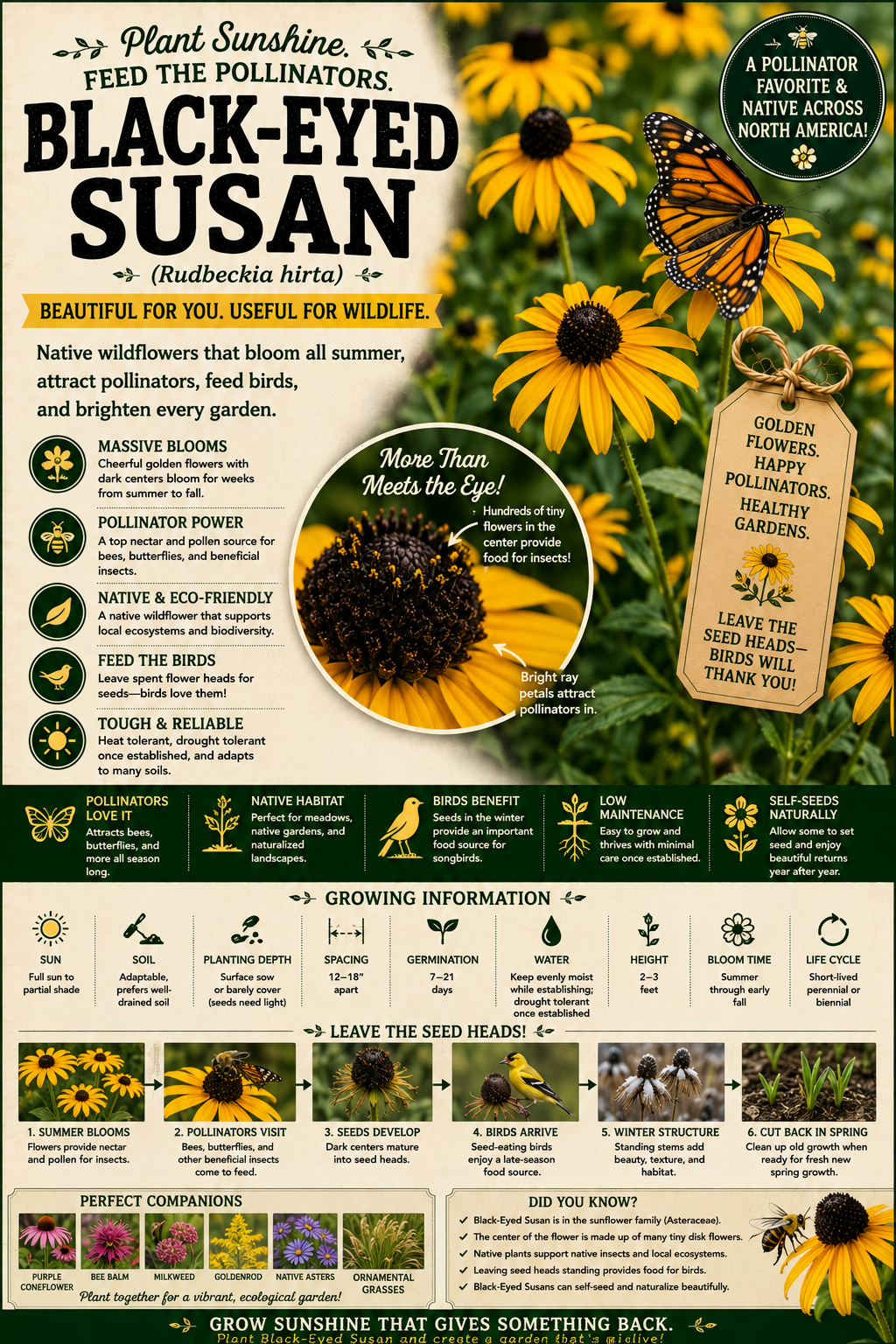
Plant Sunshine. Feed the Pollinators.
Golden-yellow petals.
Dark chocolate centers.
And weeks of flowers buzzing with life.
Black-Eyed Susan is one of North America’s most recognizable native wildflowers—and one of the easiest ways to bring color, pollinators, and wildlife into your garden.
These cheerful flowers bloom abundantly through summer, tolerate tough conditions once established, and provide food for insects while flowering and seeds for birds afterward.
Beautiful. Resilient. Ecologically useful.
What’s not to love?
Why Grow Black-Eyed Susan?
🌼 Masses of golden flowers.
Bright yellow, daisy-like blooms with dramatic dark centers create an incredible display from summer into fall.
🐝 A pollinator favorite.
Flowers attract native bees, butterflies, and other beneficial insects searching for pollen and nectar.
🦋 Grow native habitat.
Rudbeckia hirta is native across a broad portion of North America, making it an excellent addition to pollinator gardens, meadows, and naturalistic landscapes.
🐦 Don’t cut everything down!
Allow spent flower heads to remain after blooming and seed-eating birds can visit them later in the season.
☀️ Remarkably tough.
Once established, Black-Eyed Susan tolerates heat, periods of drought, and a wide range of soils.
More Than a Pretty Flower
A Black-Eyed Susan isn’t simply decoration.
Look closely at the dark center of the flower and you’ll discover hundreds of tiny individual flowers packed together.
This structure provides an accessible feeding platform for numerous insects.
Later, when flowering ends, those centers develop seeds.
That means the same plant can provide summer food for pollinators and later-season food for birds.
Growing Information
Sun: Full sun to partial shade
Soil: Adaptable to many soils; prefers well-drained conditions
Planting Depth: Surface sow or barely cover—seeds need light for good germination
Spacing: Approximately 12–18 inches apart
Germination: Approximately 7–21 days under favorable conditions
Water: Keep evenly moist while establishing; mature plants tolerate periods of drought
Height: Approximately 2–3 feet
Bloom: Summer through early fall
Life Cycle: Short-lived perennial or biennial, often flowering in its first year under favorable conditions
Growing Tip
Black-Eyed Susan seeds often benefit from cold, moist stratification, particularly when you’re aiming for consistent germination.
One easy approach is to sow outdoors in late fall or winter and let nature provide the cold period.
For spring planting, seeds can be cold-stratified before sowing.
Once established, plants may self-seed, creating an increasingly natural-looking patch over time.
Perfect For
- Pollinator gardens
- Native plant gardens
- Wildflower meadows
- Cottage gardens
- Cut flower gardens
- Wildlife habitats
- Naturalized landscapes
- Low-maintenance borders
Pair Black-Eyed Susan with Purple Coneflower, Bee Balm, Blazing Star, Milkweed, Goldenrod, native asters, and ornamental grasses for an incredible pollinator planting.
Leave the Seed Heads!
When the flowers fade, resist the temptation to immediately clean everything up.
🌼 Summer
Flowers provide pollen and nectar for insects.
🐝 Pollinators Visit
Bees, butterflies, and other insects move among the blooms.
🌱 Seeds Develop
The dark flower centers mature into seed heads.
🐦 Birds Arrive
Seed-eating birds can forage from the dried plants.
❄️ Winter Structure
Standing stems and seed heads add texture and habitat to the winter garden.
Cut the old growth back when you’re ready for new spring growth.
Did You Know?
🌻 It’s related to the sunflower. Black-Eyed Susan belongs to the enormous Asteraceae family alongside sunflowers, asters, daisies, and coneflowers.
🔬 What looks like one flower is actually many. The center contains numerous tiny disk flowers surrounded by the showy yellow ray flowers.
🐝 Native flowers support native insects. Adding a diversity of flowering native plants helps provide food across different parts of the growing season.
🐦 The garden doesn’t stop being useful when flowers fade. Leaving seed heads standing extends the ecological value of the planting.
🌱 Black-Eyed Susans can naturalize. Allow some plants to set seed and they may return and spread through suitable areas.
Grow a Garden That’s Alive.
Plant Black-Eyed Susan for the golden flowers.
Then watch what happens.
Bees arrive.
Butterflies stop to feed.
Seeds develop.
Birds investigate.
And a patch of ordinary ground becomes a little ecosystem.
Plant Black-Eyed Susan—and grow sunshine that gives something back.