

Description
White Cherry (OG) Tomato Seeds
The Cherry Tomato Nobody Expects.
Not every tomato needs to be red.
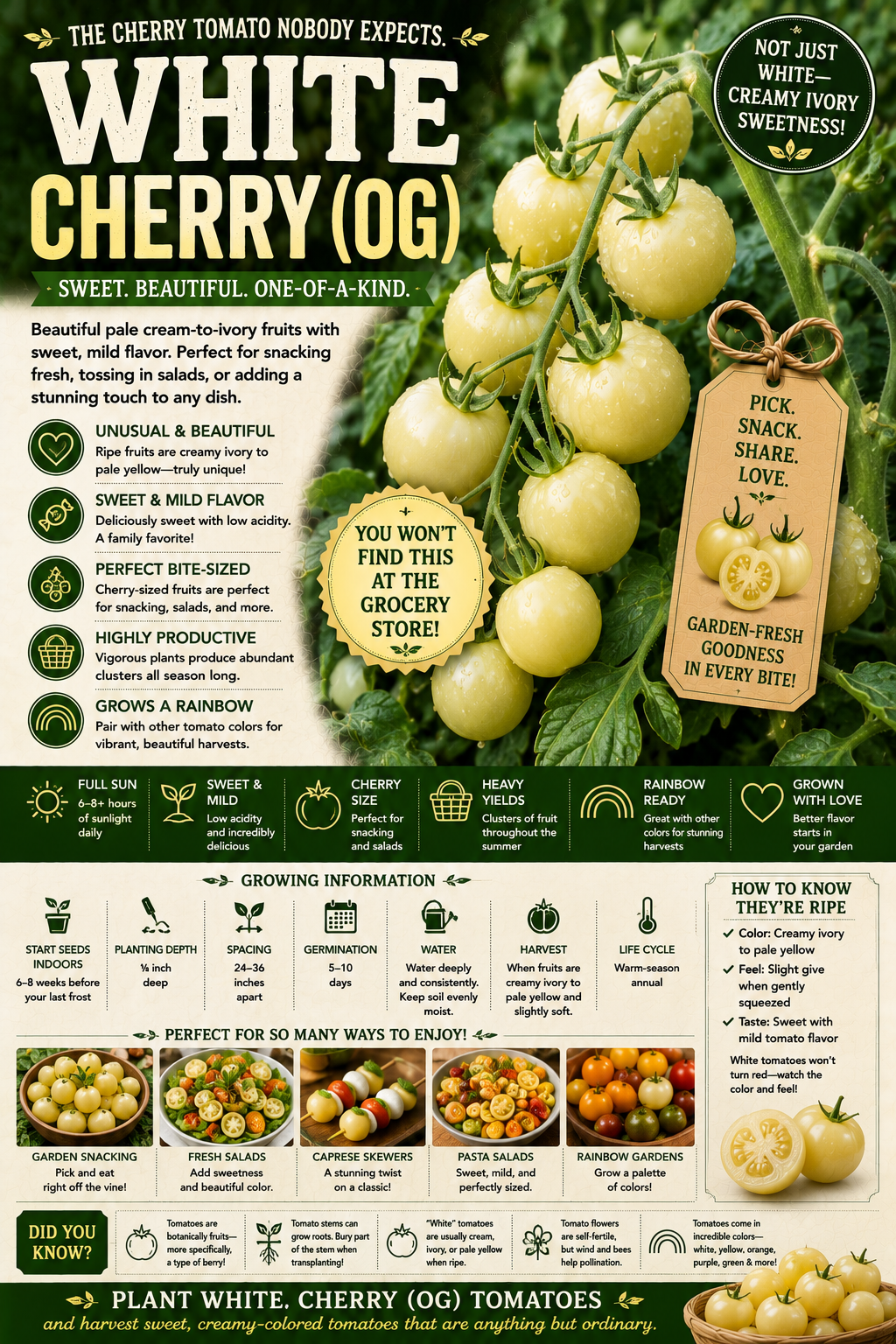
White Cherry produces beautiful pale cream-to-ivory fruits with a sweet, mild flavor that makes them as delicious as they are unusual.
The vigorous plants produce clusters of bite-sized cherry tomatoes throughout the summer—perfect for snacking straight from the vine, tossing into salads, or mixing with red, orange, and purple tomatoes for an incredible garden-grown display.
If you want to grow something you probably won’t find at the grocery store, this is it.
Why Grow White Cherry?
🤍 Beautiful ivory-colored fruit.
Ripe tomatoes develop an unusual creamy white to pale yellow coloration that immediately stands out from traditional red varieties.
🍬 Sweet, mild flavor.
White tomatoes are prized for their approachable sweetness and relatively mild flavor, making these little fruits dangerously easy to snack on.
🍅 Perfect bite-sized tomatoes.
Pick them straight from the vine for salads, lunch boxes, appetizers, grazing boards, and garden snacking.
🧺 Productive plants.
Cherry tomatoes can produce an impressive amount of fruit from a relatively small garden footprint.
🌈 Build a rainbow tomato garden.
Grow White Cherry alongside red, orange, yellow, green, and purple varieties for spectacular mixed harvests.
Why Are They White?
White tomatoes aren’t actually pure white.
Their ripe fruits typically develop beautiful shades of ivory, cream, or very pale yellow.
Tomato color is created by the combination of pigments accumulating in the fruit and the underlying color of its tissues. White-fruited varieties develop far less of the intense red pigmentation associated with conventional red tomatoes.
The result is one of the most unusual colors in the tomato garden.
Growing Information
Sun: Full sun — 6–8+ hours daily
Soil: Rich, fertile, well-drained soil
Planting Depth: Sow seeds approximately ¼ inch deep
Spacing: Approximately 24–36 inches apart
Germination: Approximately 5–10 days in warm conditions
Water: Water deeply and consistently; avoid repeated cycles of extreme drying and soaking
Harvest: Pick when fruits have developed their mature creamy ivory-to-pale-yellow color and are slightly soft to the touch
Life Cycle: Warm-season annual
Growing Tip
Start tomato seeds indoors approximately 6–8 weeks before your last spring frost.
Transplant outside only after frost danger has passed and temperatures have warmed.
When transplanting, bury part of the tomato’s stem beneath the soil. Tomatoes can form adventitious roots along buried portions of their stems, helping establish a larger root system.
Provide a sturdy cage, trellis, or other support as the plant grows.
How to Know They’re Ripe
With red tomatoes, color makes ripeness obvious.
White tomatoes require a little more attention.
👀 Watch the Color
Fruit changes from immature green toward cream, ivory, or pale yellow.
🤏 Check the Feel
A ripe fruit should develop a slight softness rather than remaining rock-hard.
🍅 Taste One
Once you learn the color and texture of a perfectly ripe fruit, harvesting becomes easy.
Because growing conditions affect coloration, don’t wait for White Cherry tomatoes to turn red—they won’t.
Perfect For
- Garden snacking
- Fresh salads
- Caprese skewers
- Tomato platters
- Pasta salads
- Lunch boxes
- Raised beds
- Containers with adequate support
- Rainbow tomato gardens
Did You Know?
🍅 Tomatoes are botanically fruits. More specifically, botanists classify tomato fruit as a type of berry.
🌱 Tomato stems can grow roots. That’s why seedlings can often be transplanted more deeply than they were growing in their original containers.
🤍 “White” tomatoes aren’t usually snow-white. Expect beautiful cream, ivory, and pale-yellow tones when ripe.
🐝 Tomato flowers are self-fertile. Each flower contains the structures needed for pollination, although vibration from wind and pollinators can help release pollen.
🌈 Tomatoes come in an incredible range of colors. Red is only the beginning—you can grow tomatoes in yellow, orange, pink, purple, green, striped, nearly black, and creamy white varieties.
Grow the Tomato You Can’t Buy at the Grocery Store.
White Cherry isn’t just another cherry tomato.
It’s the fruit people notice in the salad.
The tomato kids pick because it looks different.
The variety guests ask about when they see it growing.
And the kind of garden crop that reminds you why growing your own food is so much fun.
Plant White Cherry—and harvest handfuls of sweet, creamy-colored tomatoes that are anything but ordinary.