


Description
Wasabina Mustard Greens Seeds
The Green With a Wasabi Kick.
Looks like a beautiful leafy green.
Then you taste it.
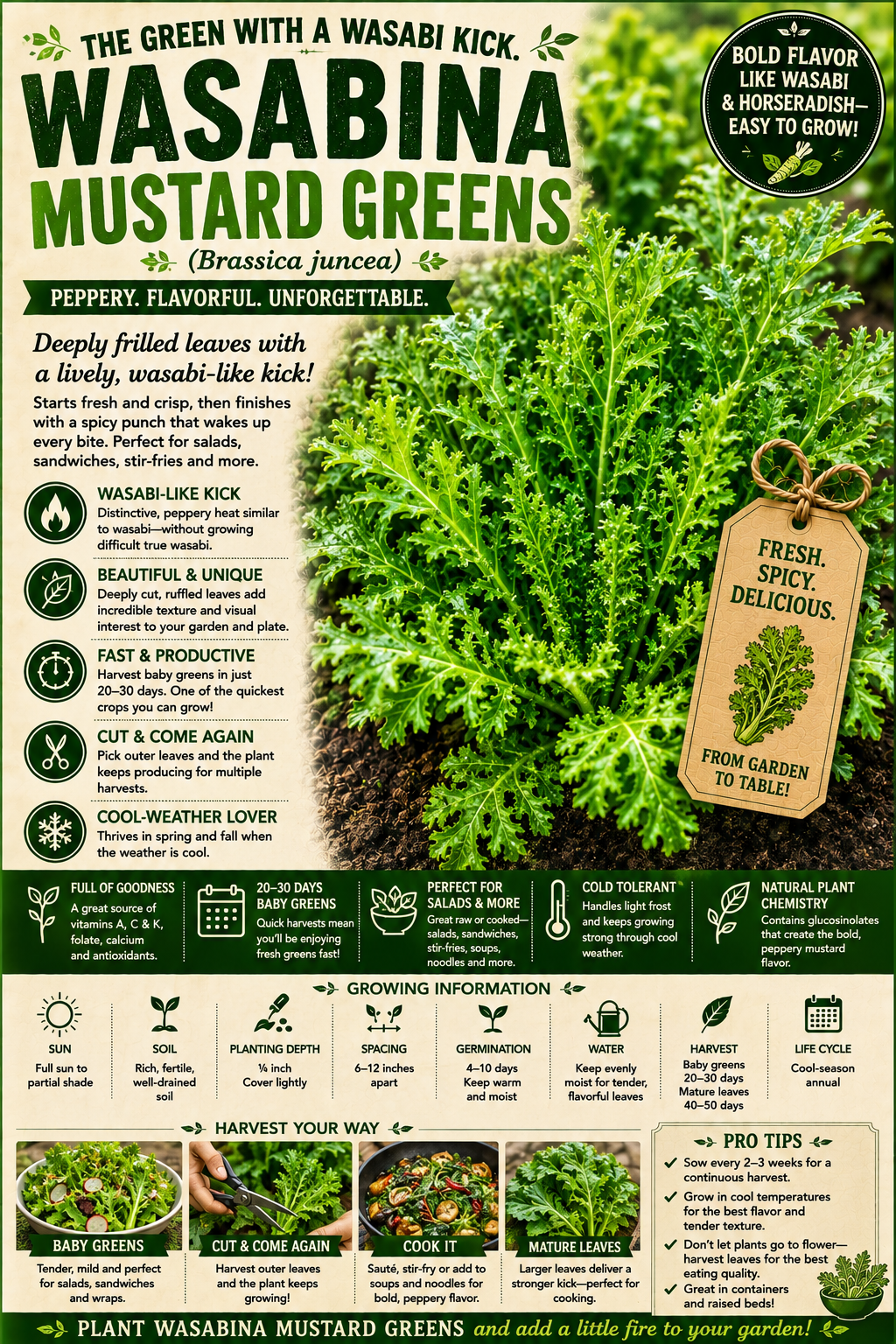
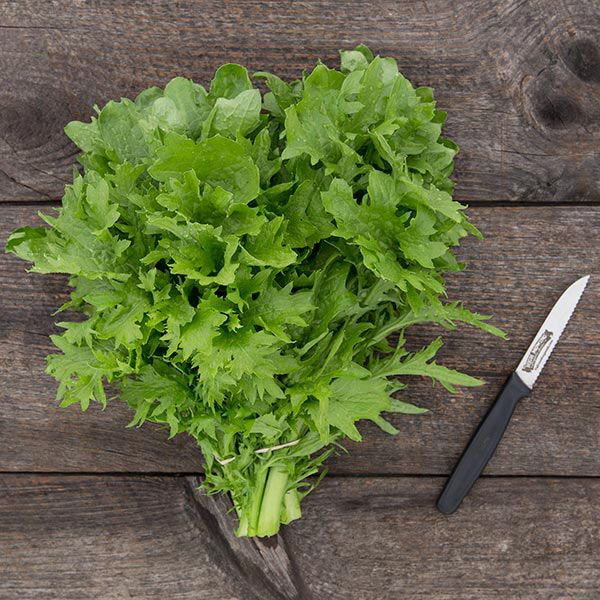
Wasabina Mustard Greens deliver a lively, wasabi-like heat wrapped inside deeply frilled, bright green leaves.
The flavor starts fresh and vegetal before developing the distinctive peppery bite that makes mustard greens so exciting. Harvest the leaves young for salads and sandwiches, let them mature for cooking, or use them anywhere you want fresh greens with some attitude.
Fast-growing, cold-tolerant, and incredibly flavorful, Wasabina is anything but ordinary.
Why Grow Wasabina?
🔥 A wasabi-like kick.
The leaves deliver a sharp, peppery mustard flavor reminiscent of wasabi and horseradish—without needing to grow notoriously difficult true wasabi.
🥬 Beautiful frilly leaves.
Deeply cut, ruffled foliage adds incredible texture to salads, garden beds, and harvested bunches.
⚡ Fast-growing.
Harvest tender baby leaves in just a few weeks, making Wasabina an incredibly rewarding crop to grow from seed.
✂️ Cut & come again.
Harvest individual outer leaves while leaving the center intact and plants can continue producing fresh growth.
❄️ Loves cool weather.
Wasabina thrives during spring and fall when many warm-season vegetables aren’t at their best.
What Makes Mustard Greens Spicy?
That distinctive mustard-family heat isn’t just flavor.
Plants in the Brassica family contain naturally occurring compounds called glucosinolates.
When the leaves are cut or chewed, plant enzymes break these compounds down and produce substances including isothiocyanates—the compounds responsible for much of the sharp sensation associated with mustard, horseradish, and wasabi.
In other words:
the spicy flavor is plant chemistry happening right on your tongue.
Growing Information
Sun: Full sun to partial shade
Soil: Rich, fertile, well-drained soil
Planting Depth: Approximately ¼ inch
Spacing: 6–12 inches apart
Germination: Approximately 4–10 days
Water: Keep evenly moist for tender, high-quality leaves
Harvest: Baby greens in approximately 20–30 days; mature leaves around 40–50 days
Life Cycle: Cool-season annual
Growing Tip
For the best flavor and texture, grow Wasabina during cool spring and fall weather.
You can sow seeds more densely for baby greens or space plants farther apart to produce large, dramatic mature leaves.
For an ongoing supply, sow another small planting every 2–3 weeks.
Eat It Your Way
🌱 Baby Greens
Harvest young for tender leaves and a milder peppery kick.
🥗 Fresh
Add chopped leaves to salads, sandwiches, wraps, burgers, and grain bowls.
🍳 Quickly Cooked
Sauté or stir-fry the leaves to soften their texture and mellow some of their sharpness.
🍜 Soups & Noodles
Add Wasabina near the end of cooking for fresh green flavor and gentle heat.
🥬 Mature Greens
Allow plants to develop large frilled leaves for substantial harvests and bolder mustard flavor.
Perfect For
- Spicy salads
- Asian-inspired dishes
- Stir-fries
- Noodle bowls
- Sandwiches & wraps
- Microgreens
- Baby greens
- Raised beds
- Containers
- Fall gardens
Did You Know?
🌿 Wasabina isn’t true wasabi. True wasabi (Eutrema japonicum) is a different plant that’s famously challenging to cultivate. Wasabina gives you a similar spicy sensation in an easy-to-grow leafy green.
🧪 Its heat comes from natural plant chemistry. Glucosinolates and their breakdown products help give mustard-family vegetables their characteristic sharp flavor.
🔥 Young and mature leaves taste different. Baby leaves tend to be more tender and approachable, while mature foliage develops a stronger mustard character.
🍳 Cooking changes the experience. Heat can mellow the sharpness, turning Wasabina into a flavorful cooked green.
🌱 It’s remarkably fast. Harvest baby greens only weeks after sowing for one of the quickest crops in the garden.
Grow Something With a Little Attitude.
Not every salad needs to be mild.
Wasabina brings crunch.
Texture.
Fresh green flavor.
And then—
that unmistakable spicy kick.
Grow it young for salads. Let it mature for cooking. Harvest it again and again.
Plant Wasabina Mustard Greens—and put a little wasabi-style fire in your garden.