

Description
Solanum Quitoense Seeds
Grow a Fruit Most People Have Never Tasted.
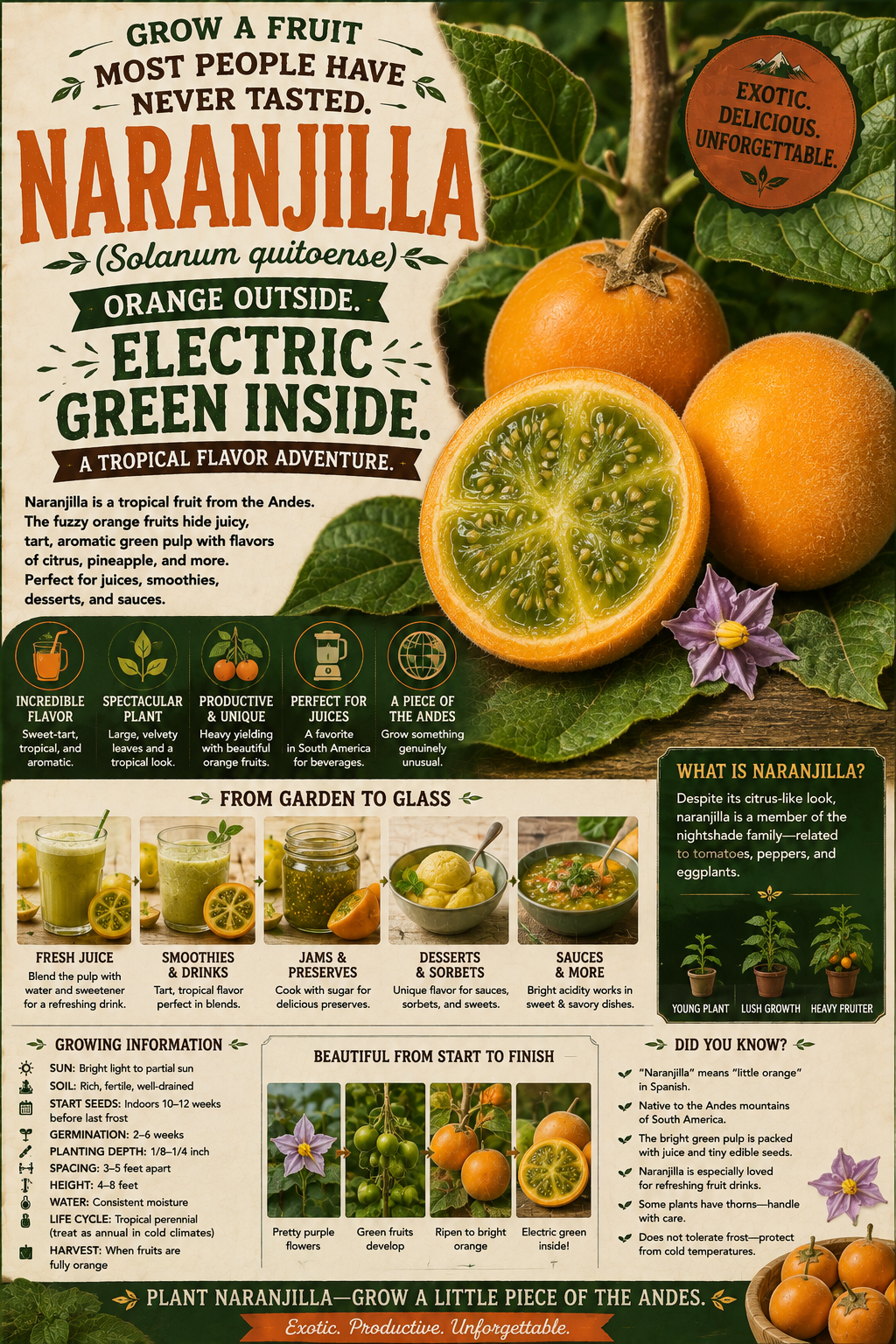
It looks like an orange.
It’s related to a tomato.
And the inside is bright green.
Meet Naranjilla—Solanum quitoense—a remarkable fruiting plant native to northwestern South America.
Its fuzzy orange fruits hide juicy green pulp with an intensely aromatic, sweet-tart tropical flavor. In its native range, naranjilla is prized for refreshing drinks, juices, desserts, sauces, and preserves.
For adventurous gardeners, this isn’t just another fruit.
It’s an entirely new flavor to grow.
Why Grow Naranjilla?
🍊 Incredible orange fruit.
Round fruits ripen to a beautiful orange exterior while hiding an unexpectedly vivid green interior.
🥝 Wild tropical flavor.
The juicy pulp is intensely aromatic, tart, and fruity, with flavors commonly compared to combinations of citrus, pineapple, lime, and other tropical fruits.
🌿 A spectacular plant.
Large velvety leaves give naranjilla a dramatic tropical appearance even before the first fruit develops.
🥤 Made for juice.
Naranjilla is especially prized in South America for refreshing fruit drinks and is commonly blended with water and sweetener.
🌎 Grow something genuinely unusual.
Most American gardeners have never grown—or even tasted—naranjilla.
What Exactly Is Naranjilla?
Despite its citrus-like appearance, naranjilla isn’t related to oranges.
It’s a member of the nightshade family, Solanaceae, alongside tomatoes, peppers, eggplants, and ground cherries.
The name naranjilla means “little orange” in Spanish, referring to the appearance of the ripe fruit.
Cut one open, however, and you’ll immediately see the difference.
Inside is a juicy, seed-filled green pulp that looks almost like something from another planet.
Growing Information
Sun: Bright light to partial sun; protection from intense afternoon heat can be beneficial
Soil: Rich, fertile, well-drained soil with plenty of organic matter
Planting Depth: Sow shallowly, approximately ⅛–¼ inch
Spacing: Approximately 3–5 feet apart
Germination: Often approximately 2–6 weeks; germination can be slow and irregular
Water: Keep consistently moist but not waterlogged
Height: Approximately 4–8 feet under favorable conditions
Harvest: Pick when fruits have developed their mature orange color
Life Cycle: Tropical perennial; grown as an annual or overwintered indoors in cold climates
Growing Tip
Naranjilla likes warmth—but extreme heat can be a problem.
Unlike many tropical crops that thrive in blazing conditions, naranjilla originates from humid, moderate-elevation environments and generally performs best with warm days, consistent moisture, and some protection from extreme afternoon heat.
In colder climates, start seeds very early indoors.
Because the plant needs a long growing season to fruit, growing in a large container that can be moved into protected conditions can be an excellent strategy.
From Orange Outside to Green Inside
Naranjilla has one of the best reveals in the fruit world.
🟢 Young Fruit
Immature fruits begin green.
🍊 Ripening
The exterior gradually develops a rich orange color.
🔪 Cut It Open
Inside, the fruit remains beautifully green and packed with juicy pulp and seeds.
🥤 Blend It
Strain the pulp and turn it into one of South America’s classic refreshing fruit drinks.
The contrast is incredible:
orange outside, electric green inside.
From Garden to Kitchen
🥤 Fresh Juice
Blend the pulp with water and sweetener, then strain for a refreshing tropical drink.
🍹 Smoothies & Drinks
Its tart, aromatic flavor works beautifully in blended beverages.
🫙 Jams & Preserves
Cook the pulp with sugar to preserve its unique tropical flavor.
🍨 Desserts
Use naranjilla in sorbets, sauces, frozen desserts, and sweets.
🥣 Sauces
Its bright acidity makes it interesting in both sweet and savory preparations.
Perfect For
- Rare fruit collectors
- Tropical gardens
- Large containers
- Greenhouses
- Conservatories
- Edible landscapes
- Unusual fruit gardens
- Adventurous gardeners
- Gardeners who love growing things nobody else has
Did You Know?
🍅 Naranjilla is related to tomatoes and eggplants. They’re all members of the nightshade family.
🍊 Its name means “little orange.” But despite the appearance, naranjilla isn’t a citrus fruit.
🌎 It’s native to northwestern South America. Naranjilla has long been appreciated in countries including Ecuador and Colombia.
🥤 Drinks are one of its signature uses. The fruit’s juicy, tart pulp makes it exceptionally well suited to refreshing beverages.
🌿 Some plants can be prickly. Depending on genetics, naranjilla plants may develop spines on their stems and leaves, so handle mature plants thoughtfully.
❄️ It doesn’t tolerate frost. In cold climates, treat it as a long-season annual or grow it in a container that can be protected when temperatures fall.
Grow Something You’ve Never Seen at the Grocery Store.
Naranjilla is exactly why growing plants from seed is so much fun.
You can grow another familiar fruit.
Or you can plant something with enormous velvety leaves…
wait for fuzzy orange fruits…
cut one open…
and discover bright green tropical pulp with a flavor most people around you have never experienced.
Plant Solanum quitoense—and grow a little piece of the Andes in your own backyard.