

Description
Wild Currant Tomato Seeds
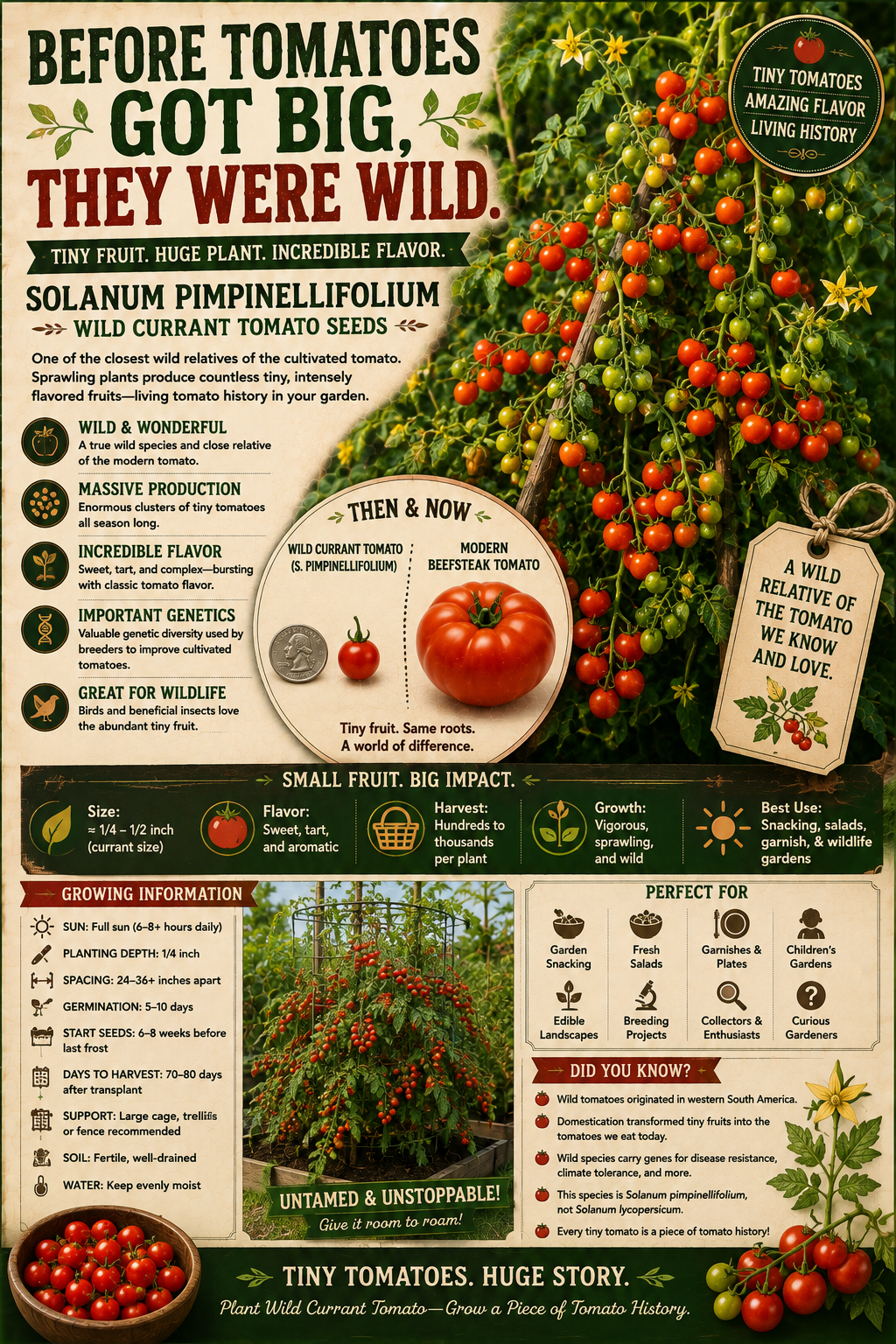
Before Tomatoes Got Big, They Were Wild.
Tiny fruit.
Huge plants.
Incredible flavor.
Solanum pimpinellifolium is one of the closest wild relatives of the cultivated tomato—a sprawling, vigorous species that produces enormous numbers of tiny, intensely flavored red fruits.
Each tomato may be only around the size of a currant, but what it lacks in size it makes up for in flavor, productivity, and sheer personality.
Grow it for snacking.
Grow it for wildlife.
Grow it because this is tomato history growing in your backyard.
Why Grow Wild Currant Tomato?
🍅 Tiny tomatoes with huge flavor.
The miniature red fruits pack an impressive sweet-tart tomato flavor into an incredibly small package.
🧺 Remarkably productive.
Vigorous plants can produce tremendous numbers of tiny fruits throughout the season.
🌿 Wild genetics.
Solanum pimpinellifolium is a wild tomato species closely related to the domesticated tomato, Solanum lycopersicum.
🧬 Important to tomato breeding.
Wild tomato relatives contain valuable genetic diversity and have been used by plant breeders as sources of traits for improving cultivated tomatoes.
🌱 A wonderfully untamed plant.
Don’t expect a tidy little patio tomato. Given good conditions, currant tomatoes can become vigorous, sprawling plants covered in clusters of fruit.
Meet One of the Tomato’s Wild Relatives
The enormous beefsteak tomato in your garden didn’t begin that way.
Tomatoes originated in western South America, where wild tomato relatives still grow today.
Solanum pimpinellifolium is one of the closest living wild relatives of our cultivated tomato.
Its fruits are dramatically smaller than modern garden tomatoes, but the plants carry something incredibly valuable:
genetic diversity.
Wild tomato species have played an important role in tomato breeding, providing genes associated with characteristics such as disease resistance, fruit quality, and environmental adaptation.
Growing one is like planting a living piece of tomato history.
Growing Information
Sun: Full sun — 6–8+ hours daily
Soil: Fertile, well-drained soil
Planting Depth: Approximately ¼ inch
Spacing: Give plants plenty of room—approximately 24–36+ inches apart
Germination: Approximately 5–10 days in warm conditions
Water: Water deeply and consistently, allowing the soil surface to dry slightly between waterings
Harvest: Pick fruits when they have developed their mature red color and release easily from the plant
Life Cycle: Warm-season annual in frost-prone climates
Growing Tip
Give this tomato somewhere to go.
Wild currant tomatoes can grow vigorously and branch extensively.
A large cage, fence, trellis, or other substantial support can help contain the plant and make harvesting easier.
Start seeds indoors approximately 6–8 weeks before your last frost and transplant outside once frost danger has passed and the weather has warmed.
Tiny Fruit. Serious Harvest.
Don’t judge this tomato by the size of an individual fruit.
One currant tomato isn’t much.
But the plant doesn’t make one.
It produces clusters upon clusters of tiny tomatoes, creating an entirely different harvesting experience from growing slicing tomatoes.
Pick handfuls for snacking.
Scatter them whole over salads.
Let kids hunt for ripe fruit.
Or simply stand beside the plant and eat them faster than they ever reach the kitchen.
Perfect For
- Garden snacking
- Fresh salads
- Garnishes
- Tomato platters
- Children’s gardens
- Edible landscapes
- Unusual vegetable gardens
- Plant breeding projects
- Tomato collectors
- Curious gardeners
Did You Know?
🧬 Wild tomatoes help improve modern tomatoes. Plant breeders have repeatedly turned to wild relatives for useful genetic traits that may be limited or absent in cultivated varieties.
🍅 Tomato size changed dramatically through domestication. Humans selected tomatoes over generations for characteristics including larger fruit, eventually producing varieties far removed from their tiny-fruited ancestors.
🌎 Tomatoes have South American roots. Wild tomato species originated along the western regions of South America before domesticated tomatoes eventually spread around the world.
🐝 Tomato flowers are self-fertile. Wind, vibration, and visiting insects can help release pollen within the flowers.
🌱 Wild doesn’t mean weak. Wild tomato relatives can possess tremendous vigor and genetic diversity precisely because they weren’t selected solely for the characteristics humans wanted on the dinner table.
🔬 It’s a different species from the typical garden tomato. Most tomatoes we grow are Solanum lycopersicum. Wild Currant Tomato is Solanum pimpinellifolium.
Grow Tomato History.
This isn’t the tomato you grow for the biggest slice.
It’s the tomato you grow because there’s a story inside every tiny fruit.
A wild species.
A relative of the tomatoes humans eventually transformed into cherries, Romas, slicers, and giant beefsteaks.
A sprawling plant carrying genetics that continue to matter to tomato breeders today.
And hundreds of tiny red tomatoes you can eat straight from the vine.
Plant Solanum pimpinellifolium—and grow a little piece of tomato history.