


Description
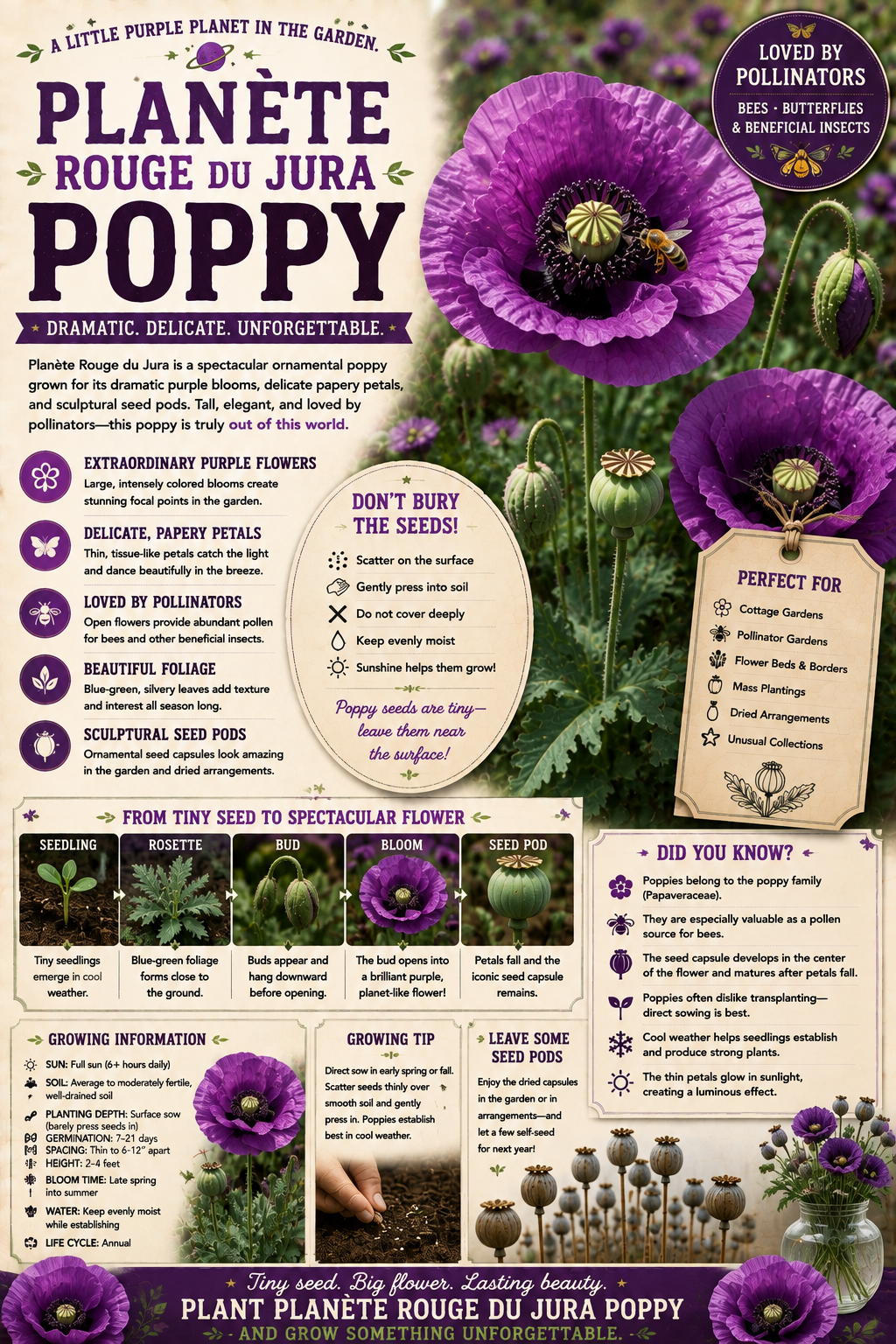
Planète Rouge du Jura Poppy Seeds
A Little Red Planet in the Garden.
Silvery-green foliage.
Tall, elegant stems.
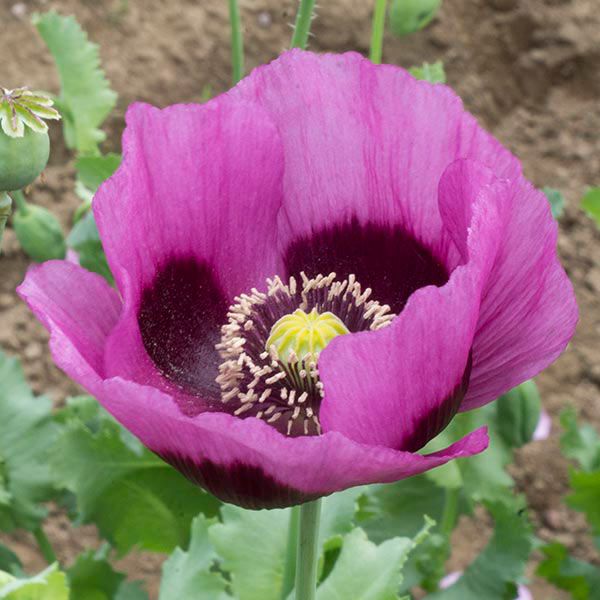
And enormous red flowers that seem almost too vivid to be real.
Planète Rouge du Jura is a spectacular ornamental poppy grown for its dramatic red blooms, delicate papery petals, and sculptural seed pods.
The buds begin quietly, hanging from slender stems.
Then they open.
And suddenly the garden is filled with brilliant crimson-red flowers that look like little planets floating above the foliage.
Short-lived individually but spectacular in succession, these are flowers worth waiting for.
Why Grow Planète Rouge du Jura?
❤️ Extraordinary red flowers.
Intensely colored blooms create dramatic focal points throughout the garden.
🌸 Delicate, papery petals.
Poppy petals have an unmistakable tissue-paper texture that catches sunlight and moves beautifully in the breeze.
🐝 Loved by pollinators.
Open flowers provide abundant pollen that can attract bees and other beneficial insects.
🌿 Beautiful foliage.
Blue-green to silvery-green leaves provide ornamental interest before flowering even begins.
🏺 Sculptural seed pods.
After the petals fall, distinctive rounded seed capsules remain and look fantastic in the garden and dried arrangements.
From Tiny Seed to Spectacular Flower
Poppy seeds are almost unbelievably small.
Yet from each tiny seed can emerge a plant producing enormous, dramatic flowers.
🌱 Seedling
Small seedlings establish during cool weather.
🌿 Rosette
Blue-green foliage develops close to the ground before stems begin stretching upward.
🌷 Bud
Flower buds appear on slender stems, often nodding downward before opening.
❤️ Bloom
The bud suddenly opens into a large, brilliant red flower.
🏺 Seed Pod
After the petals fall, the center develops into the poppy’s unmistakable ornamental capsule.
The entire life cycle is beautiful.
Growing Information
Sun: Full sun
Soil: Average to moderately fertile, well-drained soil
Planting Depth: Surface sow — barely press seeds into the soil
Spacing: Thin seedlings to approximately 6–12 inches apart
Germination: Approximately 7–21 days under favorable conditions
Water: Keep evenly moist while establishing; water moderately once plants are established
Height: Approximately 2–4 feet depending on growing conditions
Bloom: Late spring into summer, depending on planting time and climate
Life Cycle: Annual
Growing Tip
Poppies generally prefer to be direct sown.
Their developing root systems don’t particularly appreciate disturbance, so planting seeds directly where you want the flowers to grow is often easier than transplanting mature seedlings.
Scatter the tiny seeds over prepared soil and gently press them into the surface.
Don’t bury them deeply.
Cool weather helps seedlings establish, making early spring or appropriately timed fall sowing excellent options in many climates.
Don’t Bury the Seeds!
Poppy seed is tiny.
Very tiny.
And one of the most common mistakes gardeners make is planting it too deeply.
Instead:
🌱 Prepare a smooth soil surface.
🤏 Scatter seeds thinly.
🖐️ Gently press them against the soil.
💧 Water carefully so they aren’t washed away.
☀️ Leave them at or very near the surface.
Then let nature do the rest.
A Flower That Changes Every Day
Part of the magic of poppies is their fleeting beauty.
One morning you’ll see a closed bud.
Later, the petals begin unfolding.
Then suddenly there’s an enormous flower glowing in the sunlight.
Eventually the petals fall and reveal a completely different structure beneath:
the seed pod.
Instead of becoming unattractive after flowering, the plant simply transitions into another beautiful form.
Perfect For
- Cottage gardens
- Pollinator gardens
- Ornamental flower beds
- Mass plantings
- Garden borders
- Naturalistic gardens
- Photography gardens
- Dried arrangements
- Seed pod arrangements
- Unusual flower collections
Leave Some Seed Pods
When flowering ends, don’t immediately remove every plant.
The dried capsules are one of the most recognizable structures in the flower garden.
🏺 Garden Structure
Seed pods remain attractive long after the petals disappear.
💐 Dried Arrangements
Fully mature, dried pods can provide wonderful texture in ornamental arrangements.
🌱 Natural Reseeding
Where conditions are suitable, allowing mature capsules to release seed can produce volunteer seedlings in future seasons.
The flowers may be temporary.
The show doesn’t have to be.
Did You Know?
🌸 Poppy petals are remarkably delicate. Their thin structure creates the translucent, almost paper-like appearance that makes the flowers so distinctive.
🐝 Poppies are primarily pollen plants for bees. Unlike many garden flowers, they are especially valuable as a pollen source rather than for nectar.
🏺 The seed capsule begins at the center of the flower. Once the petals fall, that structure remains and expands as seeds mature.
🌱 Poppies often dislike transplanting. Direct sowing helps avoid disturbing their developing roots.
☀️ Cool weather is your friend. Poppies establish best under cooler conditions and can struggle if first planted during intense summer heat.
🎨 Red flowers become almost luminous in sunlight. The thin petals allow light to pass through them, creating an incredible glowing effect.
Grow a Little Red Planet.
Some flowers fill space.
Others stop you in your tracks.
Planète Rouge du Jura begins as a seed barely larger than a grain of sand.
Then comes the silvery foliage.
The nodding bud.
The anticipation.
And finally—
an enormous red flower floating above the garden like its own little planet.
Let the bees find it.
Let the petals dance in the breeze.
Let the seed pods remain when flowering is finished.
Plant Planète Rouge du Jura Poppy—and grow something unforgettable.