


Description
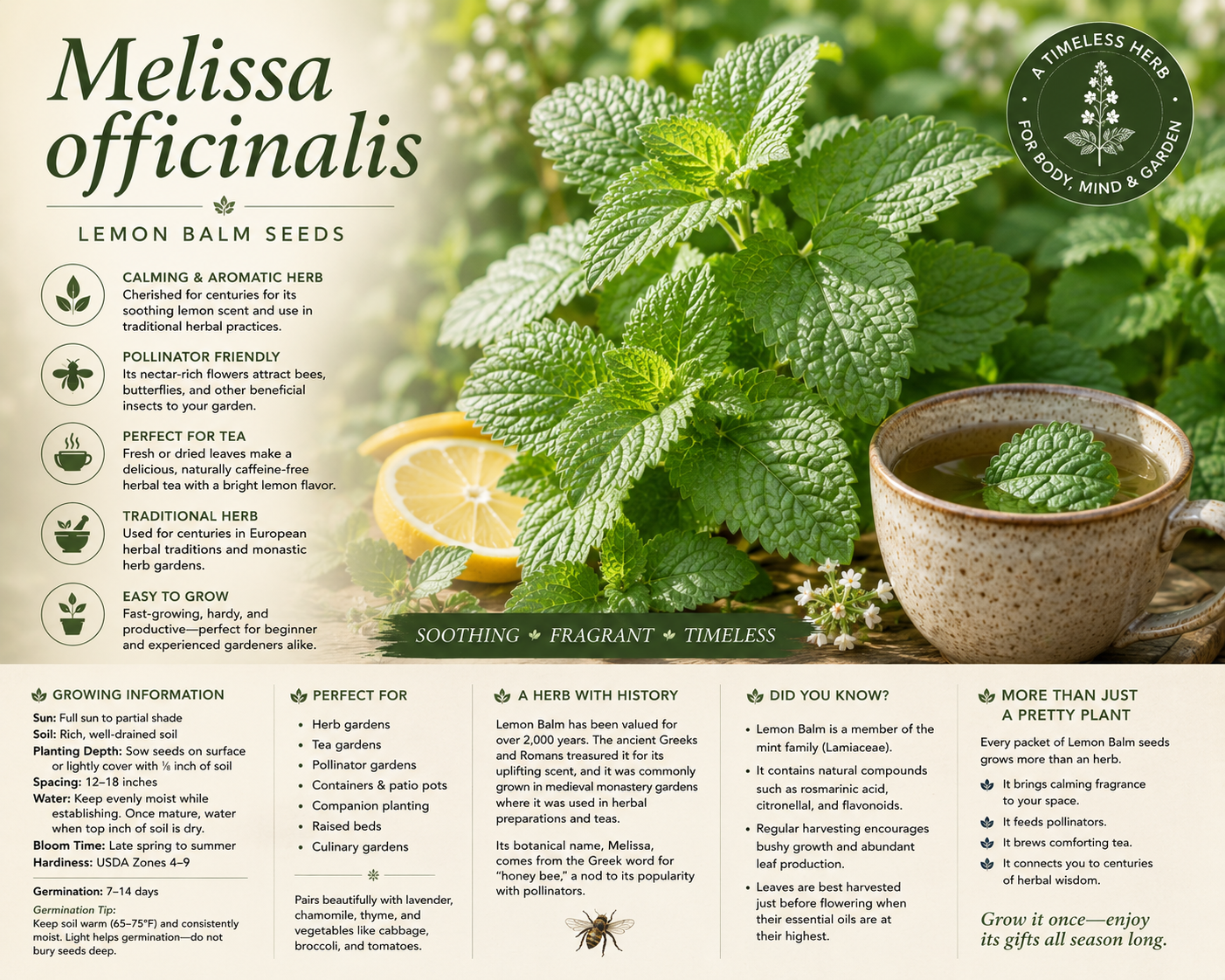
Lemon Balm (Melissa officinalis) Seeds
Grow Calm. Harvest Joy.
Some herbs simply flavor your food.
Lemon Balm fills your garden with fragrance, pollinators, and a sense of calm.
For over 2,000 years, Lemon Balm has been treasured for its bright lemon scent, refreshing herbal tea, and remarkable ease of growth. A member of the mint family, this beautiful perennial attracts bees by the thousands while providing an endless supply of aromatic leaves for teas, desserts, herbal remedies, and fresh summer drinks.
Whether you’re creating a pollinator garden, an herbal tea garden, or simply looking for an herb that’s as beautiful as it is useful, Lemon Balm deserves a place in your garden.
Why Grow Lemon Balm?
🍋 Fresh lemon fragrance all season.
Simply brush against the leaves and they’re release a refreshing citrus aroma that makes every trip through the garden a little more enjoyable.
🍵 One of the world’s favorite tea herbs.
Fresh or dried leaves brew into a naturally caffeine-free tea with a light lemon flavor that’s been enjoyed for centuries.
🐝 A bee magnet.
Its nectar-rich flowers attract honey bees, native bees, butterflies, and many other beneficial insects. In fact, its botanical name, Melissa, comes from the Greek word for “honey bee.”
🌿 A legendary medicinal herb.
Used since ancient Greece and cultivated in medieval monastery gardens throughout Europe, Lemon Balm has long been valued in traditional herbal medicine. Modern research has identified naturally occurring compounds—including rosmarinic acid, citronellal, citral, and flavonoids—that are being studied for their calming, antioxidant, and cognitive-supporting properties. While early research is promising, more high-quality human studies are needed before definitive medical conclusions can be made.
💚 Easy to grow.
Lemon Balm is vigorous, forgiving, and productive, making it an excellent choice for both first-time gardeners and experienced herb enthusiasts.
Growing Information
Sun: Full sun to partial shade.
Soil: Rich, well-drained soil, though it adapts well to average garden soils.
Planting Depth: Sow seeds on the soil surface or lightly cover with no more than ⅛ inch of soil.
Spacing: 12–18 inches apart.
Water: Keep evenly moist while establishing. Mature plants appreciate regular watering but tolerate short dry periods.
Bloom Time: Late spring through summer.
Hardiness: USDA Zones 4–9.
Germination Tip
Lemon Balm germinates best in warm soil (65–75°F / 18–24°C). Keep seeds consistently moist during germination, and avoid planting too deeply, as light can improve germination. Most seedlings emerge within 7–14 days.
Perfect For
- Herb gardens
- Tea gardens
- Pollinator gardens
- Cottage gardens
- Raised beds
- Containers
- Companion planting
- Kitchen gardens
Lemon Balm pairs beautifully with chamomile, lavender, thyme, sage, tomatoes, peppers, and many other herbs and vegetables.
Did You Know?
- Lemon Balm belongs to the mint family (Lamiaceae) but has a refreshing citrus fragrance rather than a minty flavor.
- Its scientific name, Melissa, means “honey bee” in Greek, a nod to its exceptional value as a nectar plant.
- Regular harvesting encourages bushier growth and a continuous supply of tender new leaves.
- Its essential oils are most concentrated just before flowering, making this an excellent time to harvest for drying or tea.
More Than Just an Herb
Every packet of Lemon Balm seeds grows more than fragrant leaves.
It grows tea shared with friends.
Flowers buzzing with bees.
Fresh summer aromas drifting through your garden.
And a connection to one of history’s most beloved medicinal herbs.
Grow it once—and you’ll be harvesting its fragrance, flavor, and beauty for years to come.