


Description
Velvet Queen Sunflower Seeds
Not Every Sunflower Is Yellow.
Deep burgundy.
Burnished copper.
Mahogany red.
Dark chocolate centers.
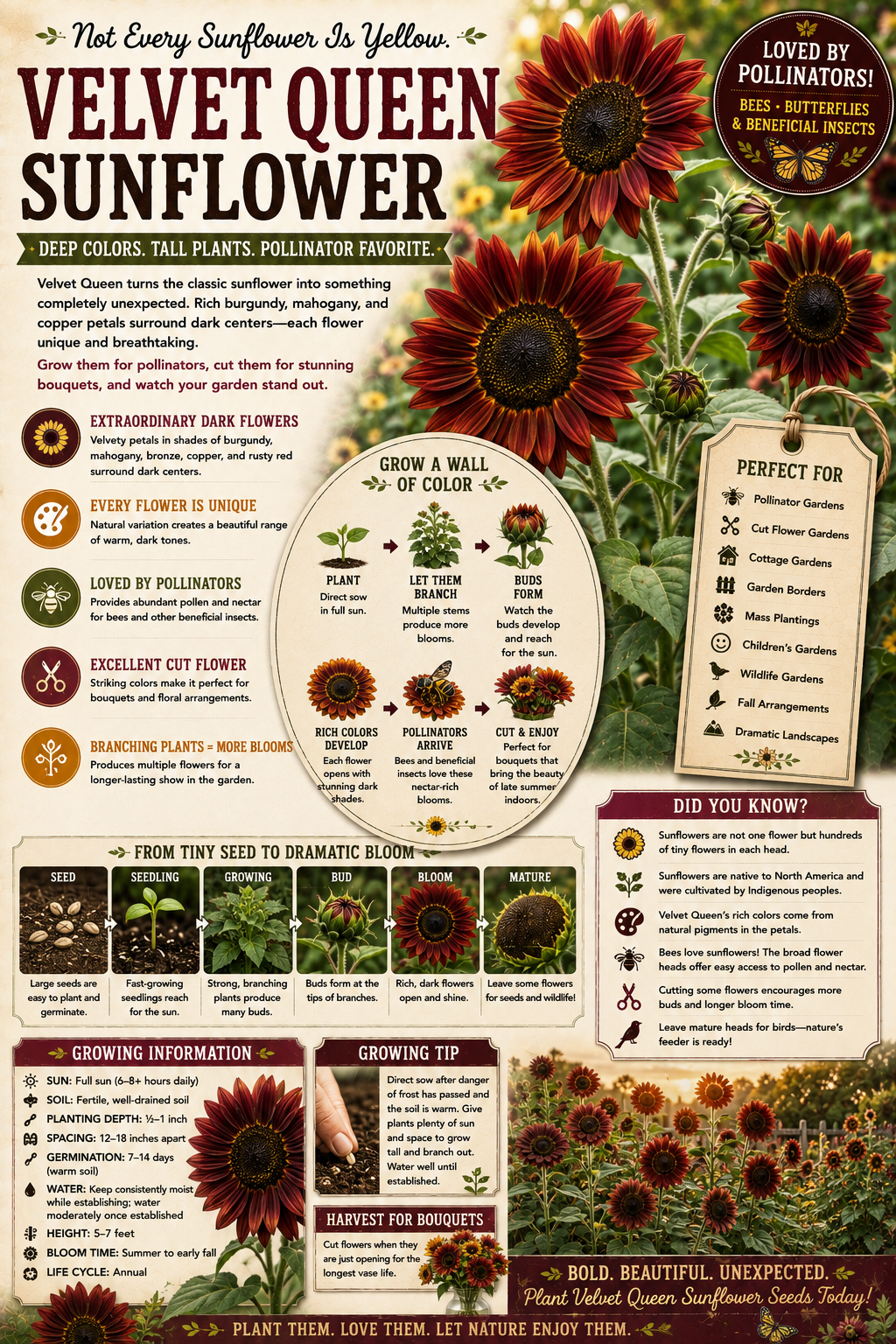
Velvet Queen turns the classic sunflower into something completely unexpected.
Tall, branching plants produce richly colored blooms in shades of wine-red, rusty orange, bronze, and deep mahogany—each flower slightly different from the next.
Grow them for pollinators.
Cut them for dramatic bouquets.
Plant a whole row and watch it glow in the evening sun.
This is the dark side of the sunflower garden.
Why Grow Velvet Queen?
❤️ Extraordinary dark flowers.
Velvety petals develop shades of burgundy, mahogany, bronze, copper, and rusty red surrounding dark central disks.
🎨 Every flower is a little different.
Natural variation creates a beautiful range of warm, dark tones rather than a row of identical flowers.
🐝 Loved by pollinators.
Sunflower blooms provide abundant pollen and nectar resources for bees and other visiting insects.
✂️ Excellent cut flowers.
The rich coloration makes Velvet Queen especially striking in late-summer and autumn bouquets.
🌻 Branching plants = more blooms.
Unlike giant single-stem sunflowers grown primarily for one enormous head, Velvet Queen can branch and produce multiple flowers.
The Dark Side of Sunflowers
When most people picture a sunflower, they imagine:
💛 Yellow petals.
🤎 Brown center.
🌻 One enormous flower.
Velvet Queen rewrites the picture.
Its petals contain pigments that create deep red, burgundy, and mahogany coloration, sometimes transitioning toward bronze or burnt orange near the tips.
Put those colors against green foliage and a dark flower center and you get a sunflower that feels almost completely different from the classic yellow varieties.
Same summer energy.
Entirely different attitude.
Growing Information
Sun: Full sun — 6–8+ hours daily
Soil: Fertile, well-drained soil
Planting Depth: Approximately ½–1 inch
Spacing: Approximately 12–18 inches apart
Germination: Approximately 7–14 days in warm soil
Water: Water consistently while establishing; mature plants tolerate moderate periods of dryness
Height: Approximately 5–7 feet depending on conditions
Bloom: Summer into early fall
Life Cycle: Annual
Growing Tip
Sunflowers are wonderfully easy to direct sow after danger of frost has passed.
Plant seeds where you want them to grow and keep the soil consistently moist during germination.
Because Velvet Queen can become tall and branching, choose a location with plenty of sunshine and enough room for the plants to spread.
In windy locations, some plants may benefit from support.
Grow a Wall of Color
One Velvet Queen is beautiful.
A group is spectacular.
🌱 Plant Several
Grow a row, cluster, or patch rather than a single isolated plant.
🌿 Let Them Branch
Plants develop multiple flowering stems.
❤️ Watch the Colors Develop
Each flower brings its own combination of burgundy, copper, mahogany, and bronze.
🐝 Let the Pollinators Arrive
Open flowers become busy feeding stations.
🌅 Enjoy Golden Hour
Backlit by late-afternoon sunlight, the dark red petals can appear almost luminous.
From Garden to Vase
Velvet Queen is an incredible sunflower for bouquets.
✂️ Harvest Early
Cut stems when flowers are beginning to open rather than waiting until they’re fully mature.
🌅 Cut During Cool Hours
Morning or evening harvests help reduce stress on freshly cut stems.
🍃 Remove Lower Leaves
Strip foliage that would otherwise sit beneath the waterline.
💧 Use Clean Water
Place stems into fresh water promptly after cutting.
💐 Mix the Colors
Pair Velvet Queen with golden sunflowers, zinnias, cosmos, amaranth, ornamental grasses, or other late-season flowers.
The result looks like autumn in a vase.
Build a Pollinator Patch
Combine Velvet Queen with other flowers to keep your garden buzzing.
🌻 Velvet Queen Sunflower
Tall flowers and dramatic summer color.
🌸 Cosmos
Airy blooms that continue flowering through summer.
🌼 Calendula
Cool-season flowers extending the blooming window.
💜 Purple Coneflower
A native perennial with excellent wildlife value.
🌼 Black-Eyed Susan
Golden blooms followed by seed heads.
🌿 Milkweed
Essential host plants for monarch caterpillars.
More flower shapes and bloom times means more opportunities for wildlife to find food.
Perfect For
- Pollinator gardens
- Cut flower gardens
- Cottage gardens
- Garden borders
- Mass plantings
- Children’s gardens
- Late-summer bouquets
- Fall arrangements
- Wildlife gardens
- Dramatic landscapes
Did You Know?
🌻 A sunflower isn’t actually one giant flower. The center is composed of hundreds of tiny individual disk flowers surrounded by colorful ray florets.
🐝 Bees love sunflowers. Their broad flower heads provide an easy landing platform and access to abundant pollen and nectar.
❤️ Red sunflower colors come from plant pigments. Genetics influence how those pigments are expressed, creating Velvet Queen’s burgundy and mahogany tones.
🌱 Sunflowers are native to North America. Indigenous peoples cultivated sunflowers long before European arrival.
✂️ Branching sunflowers can produce multiple blooms. Cutting flowers can leave additional buds and branches to continue developing.
🐦 Leave some mature heads for wildlife. When seeds develop, birds may visit the dried flower heads to feed.
Let Some Flowers Go to Seed
You don’t have to cut every bloom.
Leave several flowers standing after their petals fade.
The center that once fed bees can mature into seeds.
And suddenly the sunflower patch changes jobs.
Summer: 🐝 Feed the pollinators.
Fall: 🌻 Develop seeds.
Later: 🐦 Feed visiting birds.
The flower may be finished blooming.
The plant isn’t necessarily finished giving.
Grow the Unexpected Sunflower.
Sunflowers are supposed to be yellow.
Until they aren’t.
Plant Velvet Queen and watch green seedlings climb toward the sun.
Wait for the buds.
Then watch them open into deep burgundy, copper, mahogany, and bronze flowers towering over the garden.
Let the bees find them.
Cut a few for the kitchen table.
Leave others for the birds.
And enjoy a sunflower that looks nothing like you expected.
Plant Velvet Queen Sunflower—and discover the dark side of summer.