


Description
Resina Calendula Seeds
The Calendula Grown for More Than Beauty.
Bright golden flowers are only the beginning.
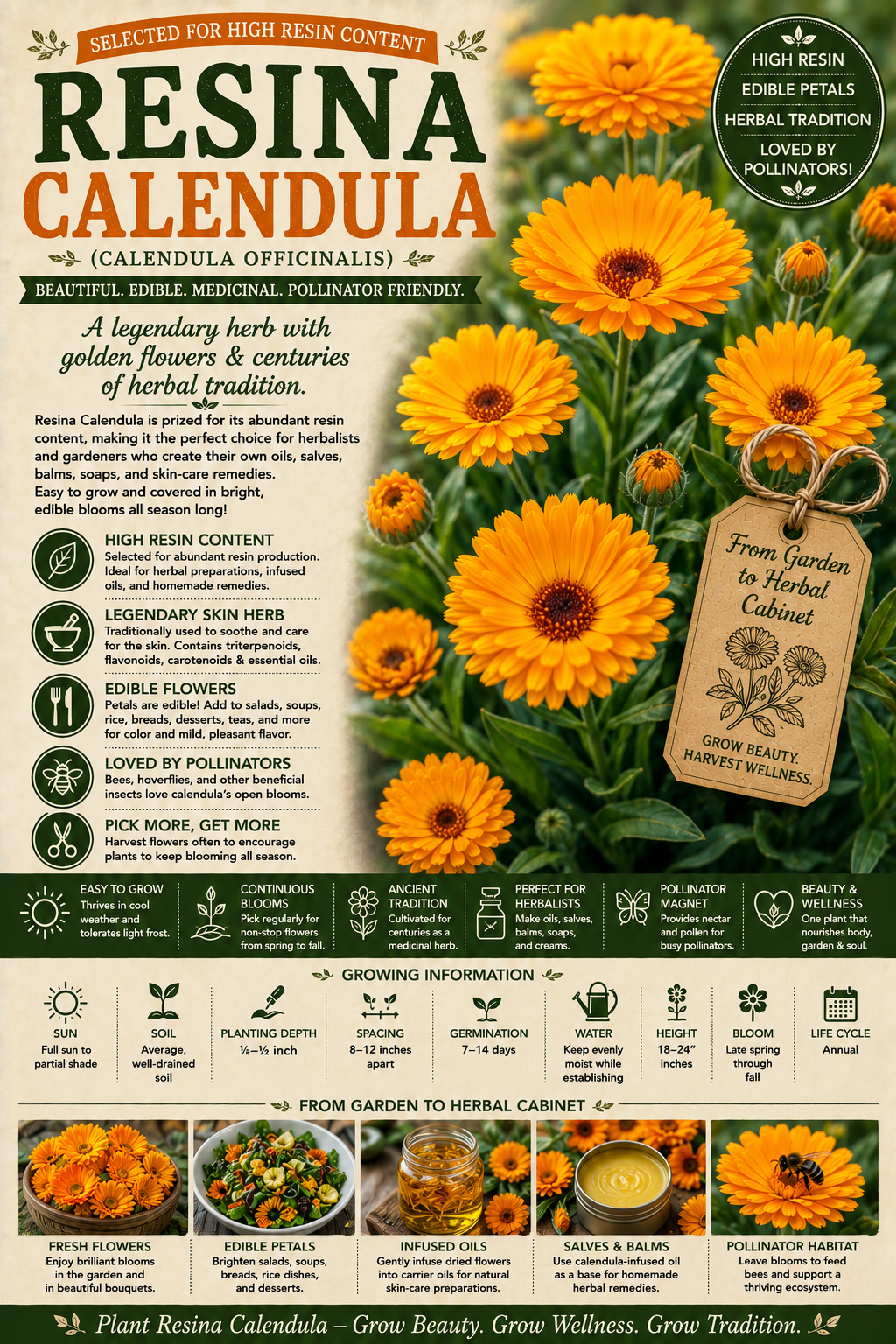
Resina Calendula combines a beautiful garden flower, edible petals, pollinator habitat, and centuries of herbal tradition in one remarkably easy-to-grow plant.
Selected specifically for its high resin content, Resina is a favorite among herbalists and gardeners who grow calendula for homemade oils, salves, balms, and other traditional preparations.
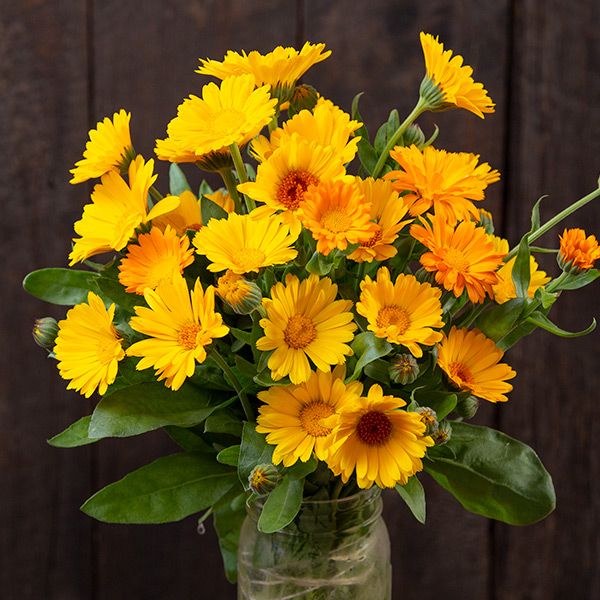
And with armfuls of brilliant yellow-orange flowers throughout the season, it’s just as valuable in the garden as it is in the herb cabinet.
Why Grow Resina Calendula?
🌼 Selected for high resin content.
Resina was developed specifically for abundant resin production, making it an excellent calendula for gardeners interested in traditional herbal preparations.
🌿 A legendary skin herb.
Calendula officinalis has a long history of topical use for soothing and caring for the skin. Its flowers contain numerous biologically active compounds, including triterpenoids, flavonoids, carotenoids, and essential oils, which continue to be studied for their properties.
🍽️ Edible flowers.
The colorful petals are edible and can brighten salads, soups, rice, breads, desserts, teas, and other dishes.
🐝 Loved by pollinators.
Calendula’s open flowers provide accessible pollen and nectar for bees, hoverflies, and other beneficial insects.
✂️ The more you pick, the more it blooms.
Regularly harvesting flowers and removing spent blooms encourages plants to continue producing throughout the season.
An Herb With Centuries of Tradition
Calendula has been cultivated as a medicinal and culinary herb for hundreds of years.
Traditionally, its flowers have been infused into oils and incorporated into salves, balms, creams, soaps, and other topical preparations.
Modern research has investigated calendula extracts for potential anti-inflammatory, antioxidant, and wound-healing properties, although traditional herbal use shouldn’t be confused with proven treatment for a medical condition.
For gardeners interested in making their own herbal preparations, Resina is one of the most purposeful calendulas you can grow.
Growing Information
Sun: Full sun to partial shade
Soil: Average, well-drained soil
Planting Depth: ¼–½ inch
Spacing: 8–12 inches apart
Germination: Approximately 7–14 days
Water: Keep evenly moist while establishing; avoid constantly saturated soil
Height: Approximately 18–24 inches
Bloom: Late spring through fall
Life Cycle: Annual
Growing Tip
Calendula loves cool weather and can tolerate light frost.
Direct sow in early spring as soon as the soil can be worked. Seeds can also be started indoors several weeks before the last frost.
Harvest flowers frequently to encourage continuous blooming. For herbal preparations, flowers are commonly harvested when fully open and then used fresh or carefully dried.
Perfect For
- Herbal gardens
- Apothecary gardens
- Pollinator gardens
- Edible flower gardens
- Cottage gardens
- Raised beds
- Containers
- Cut flower gardens
From Garden to Herbal Cabinet
🌼 Fresh Flowers
Enjoy their brilliant color in bouquets and throughout the garden.
🍽️ Edible Petals
Separate the colorful petals and sprinkle them over salads, soups, breads, rice dishes, and desserts.
🌿 Infused Oils
Dried calendula flowers are traditionally infused into carrier oils for use in homemade skin-care preparations.
🫙 Salves & Balms
Calendula-infused oil is a classic ingredient in homemade herbal salves, balms, soaps, and creams.
🐝 Pollinator Habitat
Leave plenty of blooms on the plants so bees and other beneficial insects can enjoy them too.
Did You Know?
🖐️ Calendula flowers can feel sticky. That slightly tacky feeling comes from the plant’s resinous compounds—and Resina was specifically selected for abundant resin.
🌼 Calendula isn’t the same as a marigold. Although sometimes called “pot marigold,” Calendula officinalis belongs to a different genus than common Tagetes marigolds.
🎨 Its golden color comes from carotenoids. These naturally occurring pigments include compounds related to those responsible for the colors of carrots and other brightly colored plants.
✂️ Picking flowers encourages more flowers. Frequent harvesting helps keep plants blooming rather than putting their energy into seed production.
❄️ Calendula likes it cool. It’s an excellent flower for spring and fall when many heat-loving annuals aren’t at their best.
Grow Your Own Herbal Tradition.
Resina Calendula isn’t simply a beautiful flower.
It’s food for pollinators.
An edible splash of golden color.
A traditional herb you can harvest with your own hands.
And a plant that can turn a sunny patch of soil into your own little herbal apothecary.
Plant Resina Calendula—and grow something beautiful, useful, and rooted in centuries of herbal tradition.