


Description
Chamomile Seeds
Grow a Cup of Calm.
Some flowers brighten your garden.
Chamomile brightens both your garden and your day.
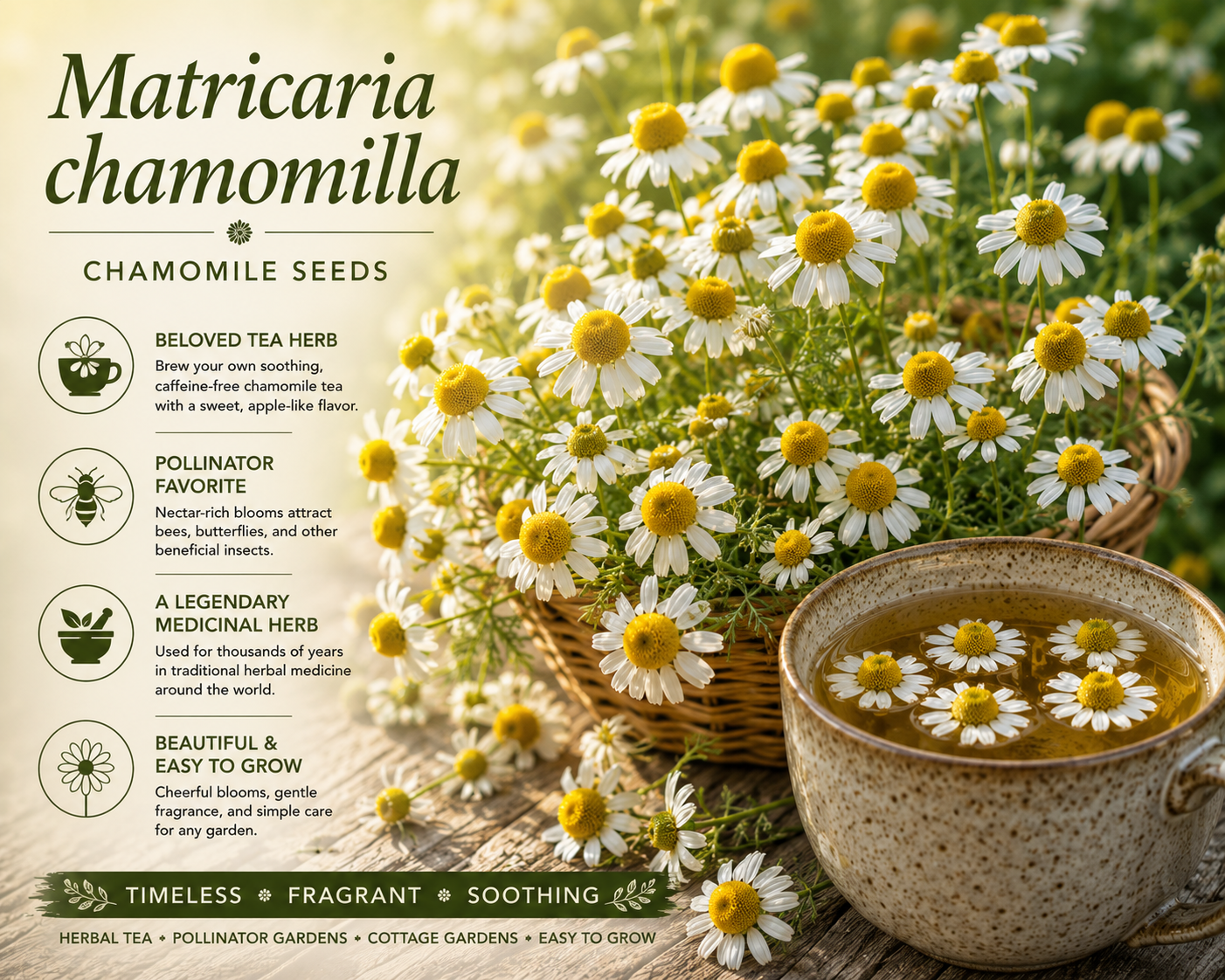
For thousands of years, Chamomile has been cherished for its delicate daisy-like flowers, sweet apple-like fragrance, and soothing herbal tea. Easy to grow and loved by pollinators, this timeless herb produces hundreds of cheerful blooms that can be enjoyed fresh, dried for tea, or simply admired throughout the growing season.
Whether you’re planting an herb garden, creating a pollinator haven, or growing your own tea, Chamomile is one of the most rewarding herbs you can sow.
Why Grow Chamomile?
🌼 Harvest your own tea.
The fragrant flowers brew into one of the world’s most beloved caffeine-free herbal teas, enjoyed for centuries for its gentle floral flavor and comforting aroma.
🐝 A favorite of pollinators.
Chamomile’s nectar-rich blooms attract honey bees, native bees, hoverflies, butterflies, and other beneficial insects, bringing your garden to life all summer long.
🌿 A legendary medicinal herb.
Used since ancient Egypt, Greece, and Rome, Chamomile has remained one of the world’s most trusted traditional herbs. Modern researchers have identified naturally occurring compounds such as apigenin, chamazulene, bisabolol, and flavonoids, which are being studied for their calming, antioxidant, and anti-inflammatory properties. While research is promising, more high-quality human studies are needed before definitive medical conclusions can be made.
🌸 Beautiful enough for any flower garden.
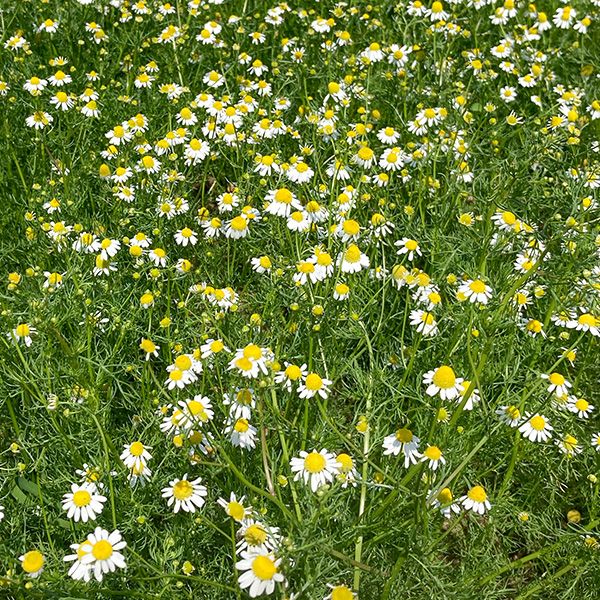
Its masses of cheerful white flowers with sunny yellow centers look just as stunning in ornamental beds as they do in herb gardens.
💚 Simple to grow.
Fast-growing and forgiving, Chamomile rewards even beginner gardeners with abundant blooms just weeks after planting.
Growing Information
Sun: Full sun, though light afternoon shade is beneficial in very hot climates.
Soil: Well-drained soil with average fertility.
Planting Depth: Sow seeds on the soil surface or lightly press them into the soil. Chamomile seeds need light to germinate, so avoid burying them deeply.
Spacing: 6–12 inches apart.
Water: Keep soil evenly moist during germination. Once established, Chamomile is fairly drought tolerant.
Bloom Time: Late spring through summer.
Hardiness: Common German Chamomile (Matricaria chamomilla) is typically grown as an annual but readily self-seeds under favorable conditions.
Germination Tip
Chamomile seeds germinate best in warm soil (65–70°F / 18–21°C). Keep the soil consistently moist and provide plenty of light during germination. Most seedlings emerge within 7–14 days.
Perfect For
- Tea gardens
- Herb gardens
- Pollinator gardens
- Cottage gardens
- Raised beds
- Containers
- Cut flower gardens
- Companion planting
Chamomile pairs beautifully with lavender, lemon balm, calendula, echinacea, thyme, and many vegetables and herbs.
Did You Know?
- The name “Chamomile” comes from Greek words meaning “ground apple,” referring to the sweet apple fragrance released when the foliage is brushed.
- Chamomile has been cultivated for more than 2,000 years and was prized by ancient Egyptian, Greek, and Roman civilizations.
- Its flowers are harvested just after opening when their aromatic compounds are typically at their highest.
- Chamomile readily self-seeds, often returning year after year if flowers are allowed to mature.
More Than Just a Flower
Every packet of Chamomile seeds grows more than delicate white blooms.
It grows peaceful evenings with a warm cup of tea.
A haven for bees and butterflies.
A connection to thousands of years of herbal tradition.
And one of the easiest, most rewarding herbs you’ll ever grow.
Plant it once—and enjoy its beauty, fragrance, and harvest all season long.