
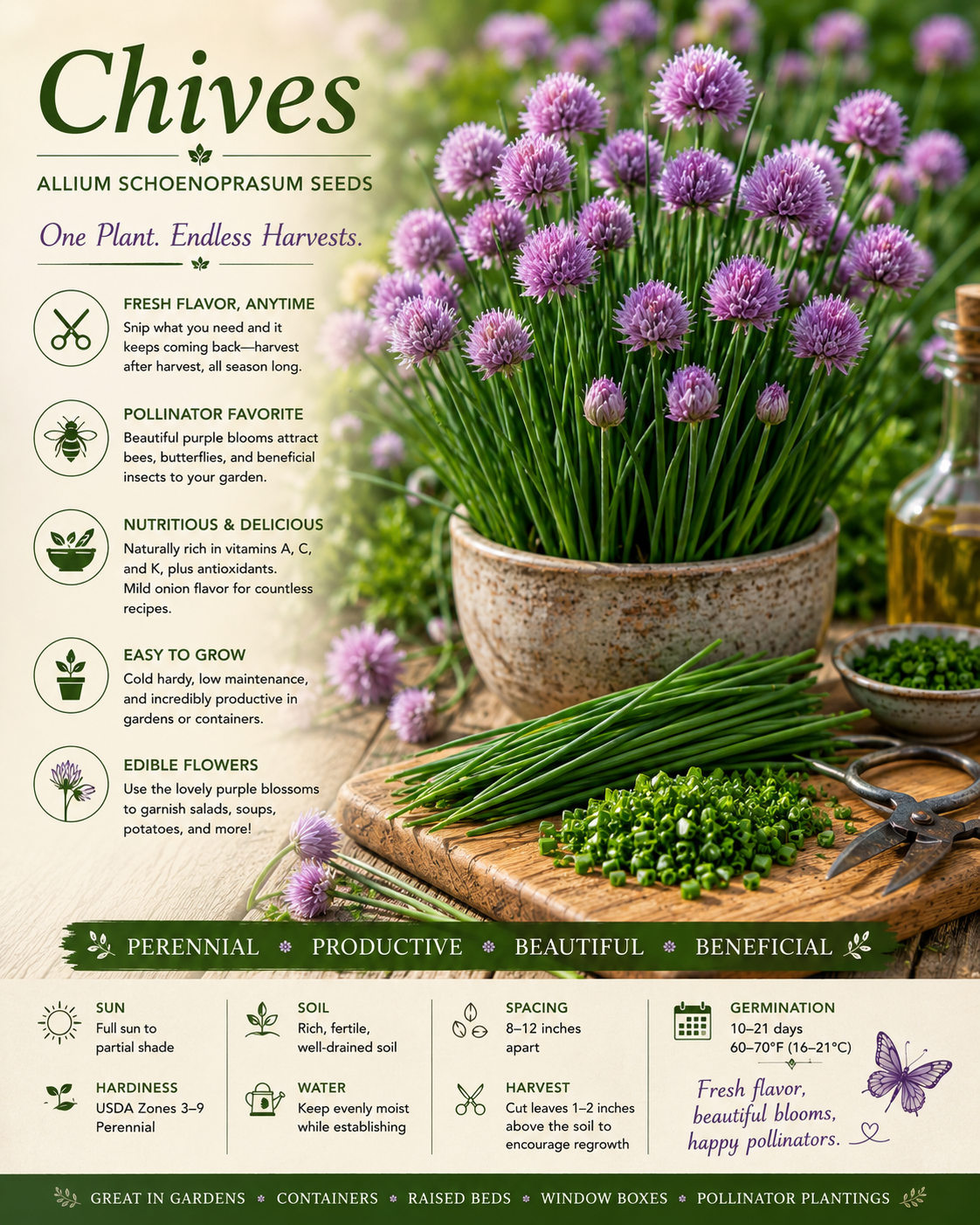


Description
Chives Seeds
One Plant. Endless Harvests.
Some herbs are occasional ingredients.
Chives become part of almost every meal.
With their mild onion flavor, beautiful lavender-purple flowers, and incredible productivity, chives are one of the easiest and most rewarding herbs you can grow. A hardy perennial, they return year after year, providing months of fresh harvests while attracting bees, butterflies, and other beneficial pollinators.
Whether you’re snipping fresh leaves over baked potatoes, eggs, soups, salads, or growing edible flowers for garnishes, chives quickly become one of the hardest-working plants in your garden.
Why Grow Chives?
🌿 Fresh flavor whenever you need it.
Simply snip what you need, and the plant quickly regrows, providing fresh harvests throughout the season.
🌸 Edible flowers that pollinators love.
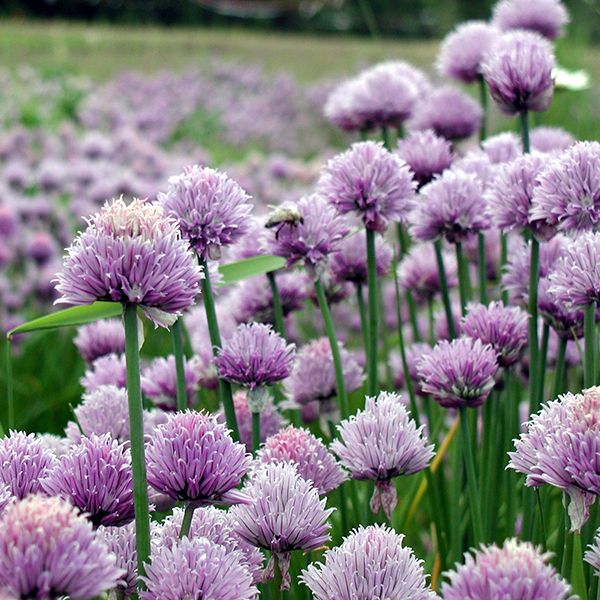
The beautiful lavender-purple blossoms are edible, adding color and a mild onion flavor to salads and garnishes while attracting honey bees, native bees, butterflies, and other beneficial insects.
🥗 Nutritious and flavorful.
Chives are naturally rich in vitamins A, C, and K, along with beneficial antioxidants, making them a healthy addition to everyday meals.
🌱 One of the easiest herbs to grow.
Cold hardy, low maintenance, and highly productive, chives thrive in gardens, raised beds, and containers with very little effort.
🦋 A garden companion.
Their flowers support pollinators, and many gardeners grow chives near vegetables and fruit trees to encourage beneficial insects throughout the garden.
A Garden Favorite for Centuries
Chives have been cultivated for thousands of years across Europe and Asia and remain one of the world’s most popular culinary herbs. As a member of the onion family (Allium), chives contain naturally occurring sulfur compounds, flavonoids, and antioxidants that contribute to both their distinctive flavor and nutritional value.
Today they’re prized not only for cooking but also for their ornamental beauty and ecological value.
Growing Information
Sun: Full sun to partial shade.
Soil: Rich, fertile, well-drained soil.
Planting Depth: Sow seeds ¼ inch deep.
Spacing: 8–12 inches apart.
Water: Keep soil evenly moist while establishing. Mature plants tolerate short dry periods but perform best with regular watering.
Harvest: Begin harvesting once leaves reach 6–8 inches tall. Cut leaves about 1–2 inches above the soil to encourage vigorous regrowth.
Hardiness: USDA Zones 3–9. A hardy perennial that returns year after year.
Germination Tip
Chives germinate best in warm soil (60–70°F / 16–21°C). Keep the soil consistently moist during germination, and expect seedlings to emerge in 10–21 days.
Perfect For
- Kitchen gardens
- Herb gardens
- Raised beds
- Containers
- Pollinator gardens
- Cottage gardens
- Edible landscapes
Chives pair beautifully with tomatoes, carrots, lettuce, strawberries, roses, apples, and many other vegetables, herbs, and flowering plants.
Did You Know?
- Chive flowers are completely edible and make beautiful additions to salads, compound butter, vinegars, and garnishes.
- As a perennial, chives return every spring, often among the first herbs to emerge.
- Regular harvesting encourages even more leaf production, giving you a continuous supply throughout the growing season.
- The globe-shaped flowers are favorites of bees, making chives one of the best dual-purpose herbs for both people and pollinators.
More Than Just an Herb
Every packet of chive seeds grows more than fresh herbs.
It grows fresh flavor just steps from your kitchen.
Flowers buzzing with bees.
Color in the garden.
And a dependable perennial you’ll harvest for years to come.
Plant it once—and enjoy fresh harvests, beautiful blooms, and happy pollinators season after season.