


Description
Lacinato (Dinosaur) Kale Seeds
An Italian Classic That Only Gets Better.
Some vegetables have a history.
Lacinato Kale has a legacy.
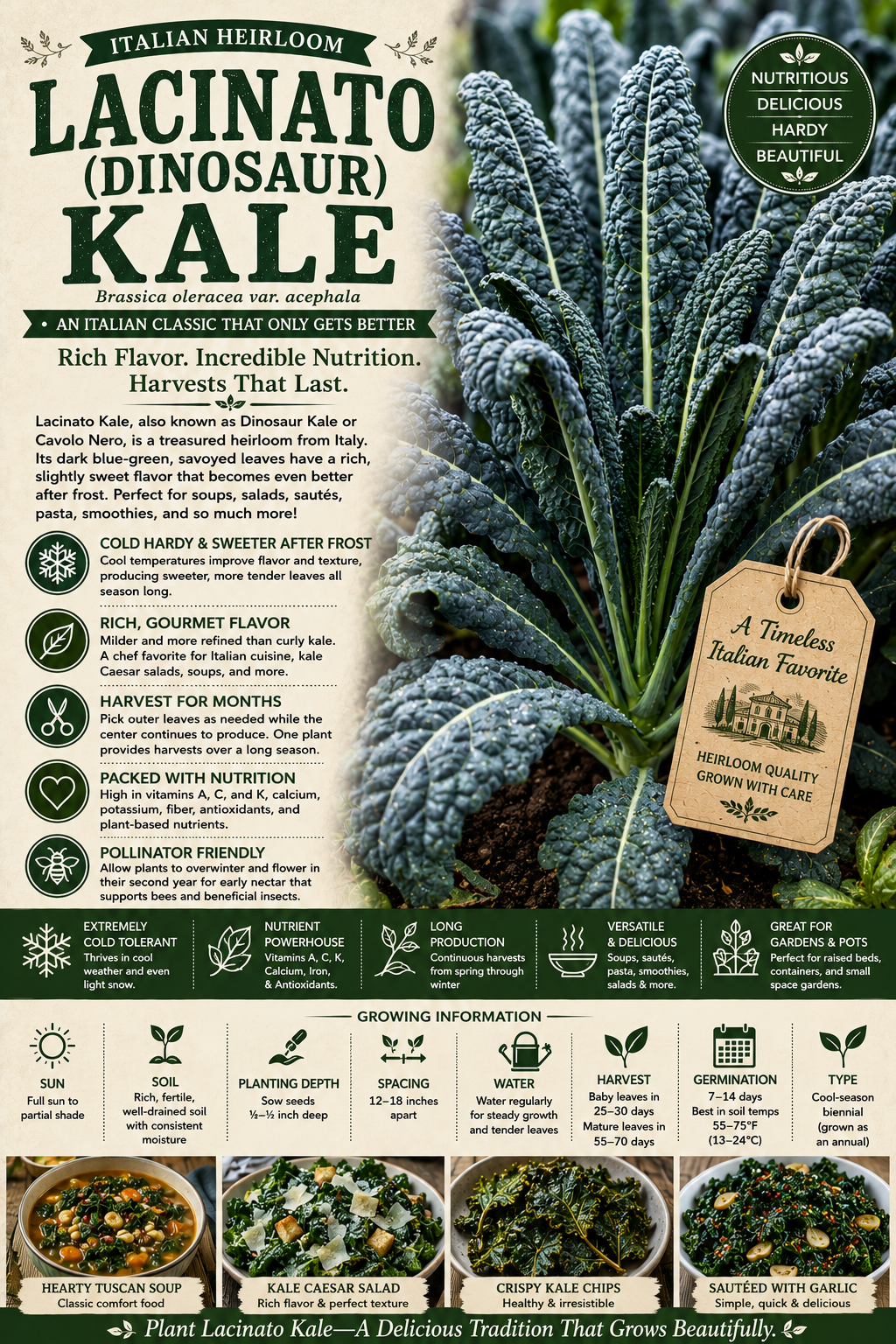
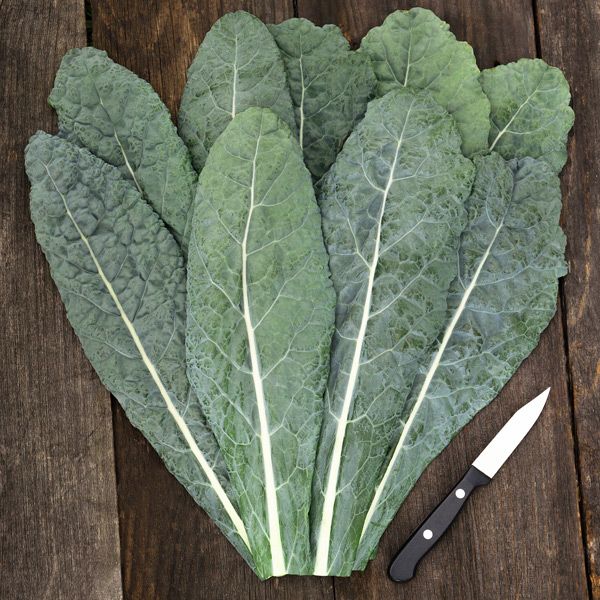
Cultivated in Italy for centuries, Lacinato Kale is treasured for its distinctive blue-green leaves, deeply textured appearance, and rich, slightly sweet flavor that becomes even more delicious after cool autumn nights. Often called Dinosaur Kale because of its long, pebbled leaves, this heirloom variety is as beautiful in the garden as it is in the kitchen.
From hearty soups and rustic pasta dishes to kale chips, fresh salads, and smoothies, Lacinato Kale delivers months of abundant, nutritious harvests.
Why Grow Lacinato Kale?
🦕 Distinctive dinosaur-textured leaves.
Its long, narrow, heavily savoyed leaves give Lacinato Kale its famous “dinosaur skin” appearance and unmistakable character.
🍽️ Rich, gourmet flavor.
Milder and more refined than many curly kales, it’s the preferred choice for Caesar salads, Italian soups, sautés, and countless chef-inspired recipes.
❄️ Sweeter after frost.
Cool temperatures naturally improve both flavor and texture, producing sweeter, more tender leaves throughout fall and into winter.
✂️ Harvest for months.
Pick lower leaves as needed while the center continues producing fresh growth, providing harvests over an exceptionally long season.
🥬 A nutritional powerhouse.
Naturally rich in vitamins A, C, and K, along with calcium, potassium, fiber, antioxidants, and beneficial phytonutrients.
Centuries of Garden Tradition
Known in Italy as Cavolo Nero, Lacinato Kale has been grown since at least the 18th century and remains one of Tuscany’s signature vegetables. Its exceptional flavor, dependable production, and remarkable cold tolerance have earned it a place in gardens around the world.
Today, it’s one of the most popular heirloom kales among home gardeners, market growers, and chefs alike.
Growing Information
Sun: Full sun to partial shade.
Soil: Rich, fertile, well-drained soil with consistent moisture.
Planting Depth: Sow seeds ¼–½ inch deep.
Spacing: 12–18 inches apart.
Water: Water regularly to encourage steady growth and tender leaves.
Harvest: Baby leaves in 25–30 days; mature leaves in 55–70 days.
Hardiness: Cool-season biennial, typically grown as an annual.
Germination Tip
Lacinato Kale germinates best when soil temperatures are between 55–75°F (13–24°C). Sow directly outdoors in early spring or late summer for outstanding fall harvests. Successive sowings every few weeks provide continuous production throughout the growing season.
Regular harvesting of the lower leaves encourages vigorous new growth from the center of the plant.
Perfect For
- Kitchen gardens
- Raised beds
- Containers
- Edible landscapes
- Fall gardens
- Winter gardens
- Cold frames
- Cut-and-come-again harvesting
Lacinato Kale grows beautifully alongside Swiss chard, spinach, lettuce, onions, carrots, herbs, and other cool-season vegetables.
Did You Know?
- Lacinato Kale is often called Tuscan Kale, Cavolo Nero, or Dinosaur Kale, all referring to the same beloved heirloom variety.
- Its flavor becomes sweeter after light frosts, as the plant naturally converts starches into sugars.
- The heavily textured leaves hold sauces beautifully, making them ideal for soups, braises, and pasta dishes.
- When allowed to overwinter, the bright yellow flowers provide an important early nectar source for bees and other pollinators.
More Than Just Kale
Every packet of Lacinato Kale seeds grows more than beautiful leaves.
It grows centuries of culinary tradition.
Harvests that improve with cool weather.
Healthy meals filled with rich, garden-fresh flavor.
And one of the world’s most celebrated heirloom vegetables.
Plant Lacinato (Dinosaur) Kale—and enjoy elegant, nutrient-rich harvests from a timeless Italian favorite that shines in both the garden and the kitchen.