

Description
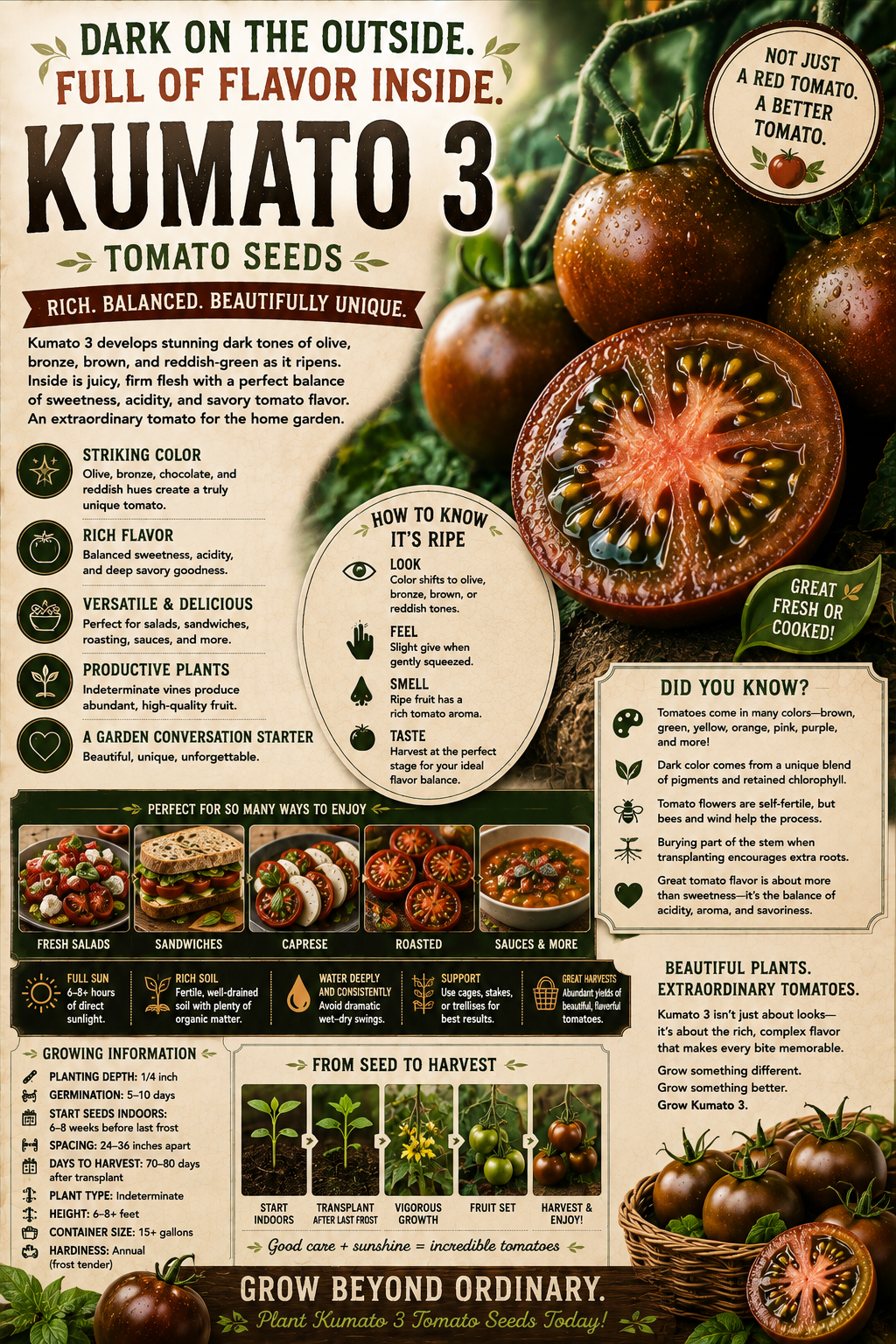
Kumato 3 Tomato Seeds
Dark on the Outside. Full of Flavor Inside.
Not every ripe tomato turns red.
Kumato 3 develops striking dark-toned fruit with shades of olive, bronze, brown, and deep reddish-green—creating a tomato that looks every bit as interesting as it tastes.
Slice one open and you’ll find juicy flesh with the rich balance of sweetness, acidity, and savory tomato flavor that makes dark tomatoes so addictive.
Beautiful on the vine.
Incredible on the plate.
And definitely not another ordinary red tomato.
Why Grow Kumato 3?
🤎 Remarkable dark coloration.
Fruits develop an unusual combination of olive, bronze, brown, and reddish tones as they mature.
🍅 Rich, complex flavor.
Dark tomatoes are prized for balancing sweetness with acidity and deep savory tomato character.
🥗 Made for fresh eating.
Slice them into salads, sandwiches, bruschetta, caprese, and tomato platters where their unusual coloration can really stand out.
🔥 Excellent cooked, too.
Roasting concentrates the fruit’s sugars and savory flavors for an incredibly rich tomato experience.
🌈 Build a rainbow tomato garden.
Pair Kumato 3 with white, yellow, orange, pink, red, green, and purple tomatoes for a harvest no supermarket can match.
What Makes a Tomato Brown?
Tomato color is created by layers of plant pigments.
As most red tomatoes ripen, their green chlorophyll breaks down while pigments including red lycopene accumulate.
Dark and brown tomatoes can retain or express pigment combinations differently.
When green chlorophyll in the fruit tissues visually combines with red and orange ripening pigments underneath, the result can appear olive, bronze, mahogany, or chocolate-brown.
It’s not underripe.
It’s genetics.
Growing Information
Sun: Full sun — 6–8+ hours daily
Soil: Rich, fertile, well-drained soil
Planting Depth: Approximately ¼ inch
Spacing: Approximately 24–36 inches apart
Germination: Approximately 5–10 days in warm conditions
Water: Water deeply and consistently; avoid dramatic wet-to-dry swings
Support: Provide a cage, stake, trellis, or other sturdy support
Harvest: Pick when fruits reach their mature dark coloration and develop a slight give when gently squeezed
Life Cycle: Warm-season annual in frost-prone climates
Growing Tip
Start seeds indoors approximately 6–8 weeks before your last spring frost.
When transplanting, tomatoes can be planted more deeply than many other vegetables. Burying part of the stem encourages additional adventitious roots to develop underground.
Give plants plenty of sun, consistent moisture, and good airflow.
How Do You Know It’s Ripe?
Dark tomatoes can confuse first-time growers because you’re waiting for a color that never becomes bright red.
Instead, use multiple clues.
👀 Look
Watch the fruit transition from immature green toward its mature olive, bronze, brown, or reddish coloration.
🤏 Feel
Ripe fruit should have a slight amount of give when gently pressed.
👃 Smell
Mature tomatoes develop a stronger tomato aroma.
🍅 Taste
Harvest fruits at slightly different stages until you discover the balance of sweetness and acidity you prefer.
Soon you’ll recognize a perfectly ripe fruit immediately.
From Garden to Kitchen
🥗 Fresh Salads
Their dark coloration creates beautiful contrast with greens, herbs, and lighter-colored tomatoes.
🧀 Caprese
Combine with fresh mozzarella, basil, olive oil, and salt.
🥪 Sandwiches & Burgers
Add thick slices for rich tomato flavor.
🍞 Bruschetta
Chop with garlic, basil, olive oil, and a pinch of salt.
🔥 Roast Them
Roasting intensifies sweetness and creates deep, concentrated flavor.
🍝 Sauces & Pasta
Use anywhere you’d normally reach for a flavorful slicing tomato.
Perfect For
- Fresh eating
- Tomato sandwiches
- Caprese
- Bruschetta
- Salads
- Roasting
- Tomato platters
- Raised beds
- Large containers
- Unusual tomato collections
Did You Know?
🍅 Ripe doesn’t mean red. Tomatoes can mature to yellow, orange, pink, green, purple, brown, nearly black, white, striped, and multicolored fruit.
🧪 Pigments create tomato color. Chlorophyll, carotenoids, lycopene, and other compounds interact with the fruit’s genetics and tissues to produce different appearances.
🌱 Tomato stems can grow roots. Planting seedlings deeply can help establish a larger root system.
🐝 Tomato flowers are self-fertile. Wind, vibration, and visiting pollinators help shake pollen loose within the flowers.
👅 Flavor is more than sugar. Acidity, sugars, volatile aroma compounds, texture, and savory characteristics all influence how a tomato tastes.
Grow Beyond Ordinary.
There’s nothing wrong with a red tomato.
But your garden doesn’t have to look like the produce aisle.
Grow olive.
Grow bronze.
Grow brown.
Grow something that makes people stop and ask:
“What kind of tomato is THAT?”
Plant Kumato 3—and grow a tomato that’s as interesting to look at as it is to eat.