

Description
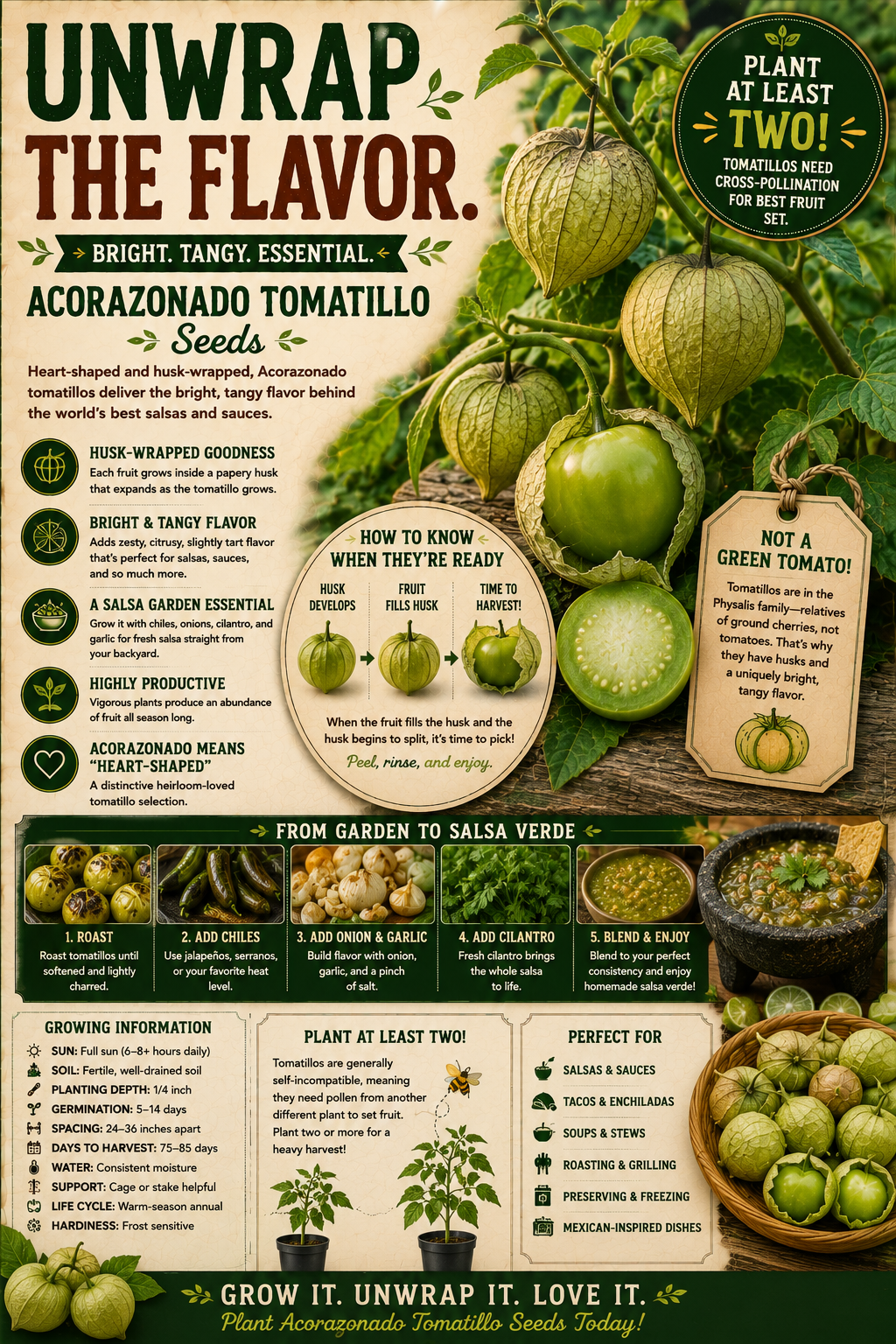
Acorazonado Tomatillo Seeds
Unwrap the Flavor.
At first, it looks like a tiny paper lantern.
Then you peel back the husk.
Inside is a firm, juicy tomatillo packed with the bright, tangy flavor behind some of the world’s greatest salsas.
Acorazonado Tomatillo produces distinctive husk-covered fruits for roasting, grilling, simmering, or blending fresh. Vigorous plants can become remarkably productive, providing basketfuls of fruit for salsa verde, sauces, soups, tacos, and preserving.
And watching each fruit slowly fill its papery husk is half the fun.
Why Grow Acorazonado Tomatillo?
💚 Bright, tangy flavor.
Tomatillos bring a tart, citrusy, slightly fruity character that’s completely different from an ordinary tomato.
🏮 Fruit wrapped in a lantern.
Every tomatillo develops inside a papery husk that expands before the fruit grows large enough to fill it.
🌮 A salsa garden essential.
Roast tomatillos with chiles, onion, garlic, and cilantro and you’re halfway to an incredible homemade salsa verde.
🧺 Highly productive plants.
Healthy tomatillo plants can produce large numbers of husked fruits throughout the season.
❤️ A distinctive selection.
Acorazonado translates roughly to “heart-shaped,” a fitting name for this unusual tomatillo.
Tomatillo Isn’t a Green Tomato
They may look similar once the husk comes off, but tomatillos and tomatoes are different plants.
Tomatoes belong to the genus Solanum.
Tomatillos belong to Physalis—the same genus that includes ground cherries.
That’s why tomatillos produce their remarkable papery husks.
Their flavor is different too: typically brighter, tarter, firmer, and more citrus-forward than a conventional tomato.
Growing Information
Sun: Full sun — 6–8+ hours daily
Soil: Fertile, well-drained soil
Planting Depth: Approximately ¼ inch
Spacing: Approximately 24–36 inches apart
Germination: Approximately 5–14 days in warm conditions
Water: Water deeply and consistently while avoiding constantly saturated soil
Support: A cage or stake can help support sprawling, fruit-loaded plants
Life Cycle: Warm-season annual in frost-prone climates
Growing Tip — Plant More Than One!
This one matters.
Grow at least two genetically distinct tomatillo plants for reliable fruit production.
Tomatillos are generally strongly self-incompatible, meaning a flower often needs pollen from another compatible plant rather than simply pollinating itself.
Plant several together and let bees do the matchmaking.
One lonely tomatillo can produce loads of flowers and disappointingly little fruit.
How Do You Know They’re Ready?
🏮 Watch the Husk
The papery lantern develops before the fruit inside reaches full size.
💚 Watch It Fill
As the tomatillo grows, it gradually expands until it fills the husk.
✂️ Harvest
A fruit that has filled its husk—and may even begin splitting it—is generally approaching harvest maturity.
🧼 Peel & Rinse
Remove the papery husk before cooking or eating. The fruit underneath naturally has a sticky coating that can simply be rinsed away.
Make Salsa Verde From Your Own Garden
🔥 Roast
Roast or broil tomatillos until softened and lightly charred.
🌶️ Add Chiles
Use jalapeño, serrano, or another favorite chile.
🧅 Add Onion & Garlic
Build the savory foundation.
🌿 Add Cilantro
Bring in fresh herbal flavor.
🍋 Finish & Blend
Season to taste and blend everything together.
Growing tomatillos and hot peppers side by side means your backyard can produce almost an entire batch of salsa.
From Garden to Kitchen
🌮 Salsa Verde
The classic—and for good reason.
🔥 Roasted Sauces
Roasting brings out sweetness while preserving tomatillo’s distinctive acidity.
🥣 Soups & Stews
Add brightness and body to savory dishes.
🍳 Breakfast
Spoon homemade salsa verde over eggs, breakfast tacos, or potatoes.
🫙 Preserve the Harvest
Turn heavy summer harvests into sauces and preserves for later use.
Perfect For
- Salsa gardens
- Mexican-inspired cooking
- Raised beds
- Kitchen gardens
- Roasting
- Sauces
- Tacos
- Preserving
- Adventurous gardeners
Did You Know?
🏮 The husk develops before the fruit. The tomatillo grows inside until it eventually fills its little paper lantern.
🐝 Two plants are better than one. Cross-pollination between genetically different plants is important for reliable fruit set.
🍅 Tomatillos aren’t tomatoes. They’re members of Physalis, making them relatives of ground cherries.
🧼 That sticky surface is normal. Peel away the husk and rinse the fruit before using it.
🌎 Tomatillos have deep roots in Mesoamerican agriculture. They were cultivated in Mexico long before European contact and remain fundamental to Mexican cuisine today.
🌸 Bees are important partners. Pollinating insects moving between plants help turn abundant yellow flowers into abundant fruit.
Grow the Salsa.
Plant the seed.
Watch the flowers open.
See tiny paper lanterns appear.
Wait as each fruit fills its husk.
Then unwrap it, roast it, and turn it into something incredible.
Plant Acorazonado Tomatillo—and grow salsa from the ground up.