

Description
Kumato Tomato Seeds
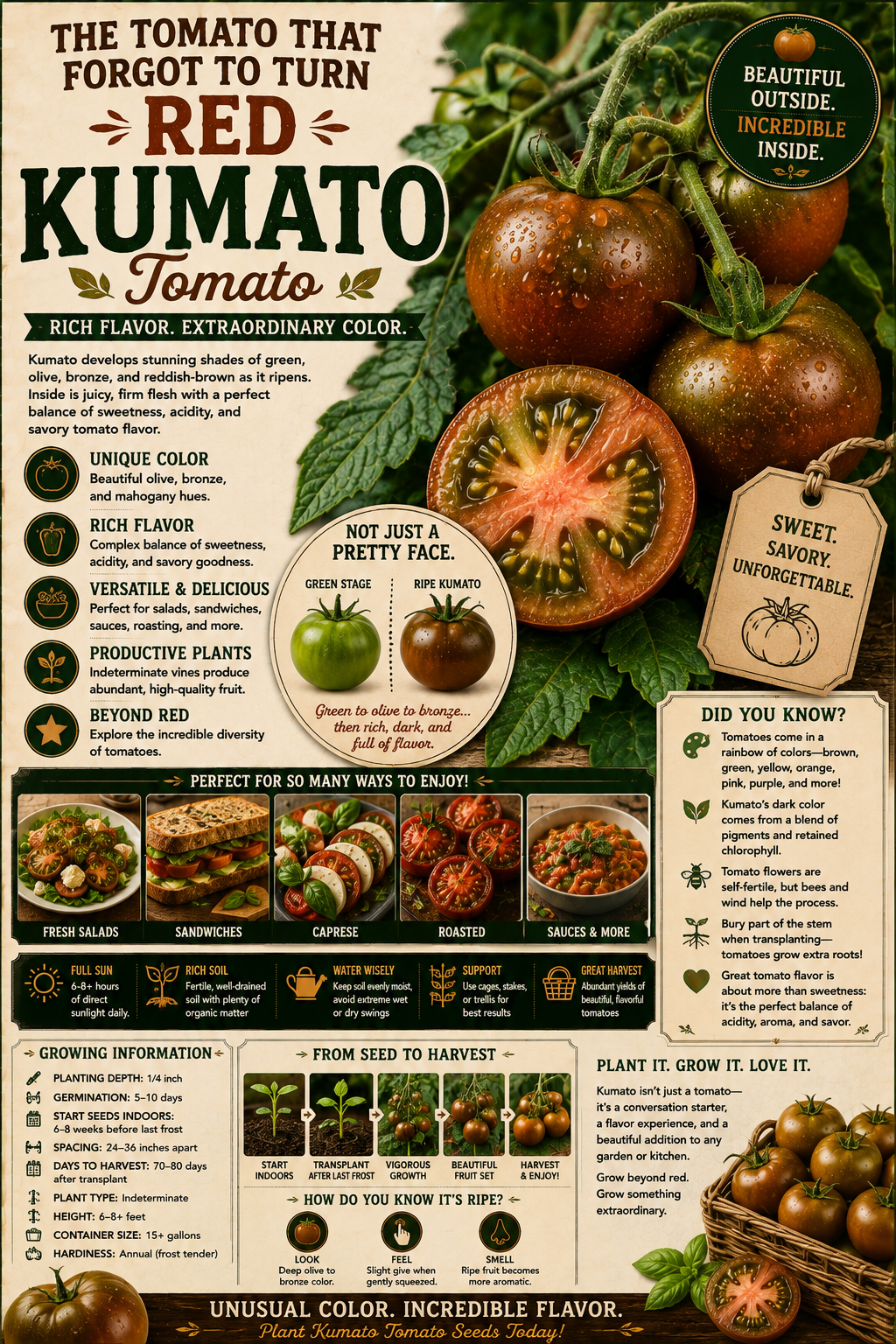
The Tomato That Forgot to Turn Red.
Green.
Then olive.
Then reddish-brown.
Kumato develops one of the most unusual colors in the tomato world—and an equally distinctive flavor.
Beneath its dark skin is juicy, firm flesh with a rich balance of sweetness, acidity, and savory tomato flavor.
Slice it onto sandwiches. Build an incredible caprese. Roast it. Toss it into salads.
Or simply put a bowl on the table and let the color start the conversation.
Why Grow Kumato?
🤎 Extraordinary color.
Fruits develop unusual shades of green, olive, bronze, and reddish-brown as they mature.
🍅 Rich tomato flavor.
Known for a complex balance of sweetness, acidity, and savory character rather than one-dimensional sweetness.
🥗 Beautiful sliced.
The dark exterior and contrasting interior make these tomatoes especially striking in salads, sandwiches, and tomato platters.
🍽️ Incredibly versatile.
Eat them fresh, roast them, grill them, make sauces, or pair them with basil, mozzarella, olive oil, and flaky salt.
🌈 Grow beyond red.
Tomatoes exist in an astonishing range of colors, and dark varieties show just how diverse this familiar crop can be.
Why Is It Brown?
Tomato color isn’t produced by a single pigment.
As tomatoes ripen, different pigments accumulate or disappear within the fruit’s skin and flesh.
Red tomatoes develop abundant lycopene while their green chlorophyll largely disappears.
In brown and dark-colored tomatoes, combinations of pigments and retained chlorophyll can create shades ranging from olive and mahogany to brick-red and chocolate-brown.
The result looks unusual because we’re accustomed to tomatoes being bright red.
To the plant, it’s simply another expression of tomato genetics.
Growing Information
Sun: Full sun — 6–8+ hours daily
Soil: Rich, fertile, well-drained soil
Planting Depth: Approximately ¼ inch
Spacing: Approximately 24–36 inches apart
Germination: Approximately 5–10 days in warm conditions
Water: Water deeply and consistently, avoiding dramatic swings between extremely dry and saturated soil
Support: Provide a sturdy cage, stake, or trellis
Life Cycle: Warm-season annual in frost-prone climates
Growing Tip
Start tomato seeds indoors approximately 6–8 weeks before your last spring frost.
When transplanting, you can bury part of the stem beneath the soil. Tomatoes can develop additional roots along buried stem tissue, helping establish a strong root system.
Wait until frost danger has passed before planting outside.
How Do You Know a Brown Tomato Is Ripe?
Don’t wait for it to turn bright red.
It won’t.
👀 Watch the Color
Fruit transitions through green and olive tones toward its characteristic darker mature coloration.
🤏 Feel the Fruit
A ripe tomato should have a slight amount of give when gently squeezed rather than feeling rock-hard.
👃 Use Your Senses
Ripe tomatoes become more aromatic as their flavor develops.
🍅 Taste at Different Stages
Dark tomatoes can offer slightly different balances of sweetness and acidity depending on when they’re harvested.
Learning the perfect harvest point is part of the fun.
From Garden to Kitchen
🥗 Fresh Salads
Slice or quarter the fruit to showcase its unusual coloration.
🧀 Caprese
Pair with fresh mozzarella, basil, olive oil, and salt.
🥪 Sandwiches
Firm, flavorful slices are excellent on sandwiches, burgers, and toast.
🔥 Roast Them
Heat concentrates the tomato’s sweetness and savory character.
🍝 Cook With Them
Use in pasta, sauces, bruschetta, grain bowls, and countless other dishes.
Perfect For
- Tomato collectors
- Fresh salads
- Caprese
- Sandwiches
- Bruschetta
- Roasting
- Tomato platters
- Raised beds
- Large containers
- Rainbow tomato gardens
Did You Know?
🍅 Tomatoes don’t have to be red. Cultivated tomatoes come in green, white, yellow, orange, pink, purple, brown, striped, and nearly black varieties.
🧪 Color comes from plant pigments. Lycopene, carotenoids, chlorophyll, and other pigments interact to create the enormous range of tomato colors we see.
🌱 Tomato stems can produce roots. That’s why seedlings can often be transplanted deeper than they were growing in their original pots.
🐝 Tomato flowers are self-fertile. Wind, vibration, and visiting pollinators help shake pollen loose within the flower.
👅 Sweetness isn’t the whole story. Acidity, sugars, aroma compounds, texture, and savory compounds all contribute to what we perceive as great tomato flavor.
Grow Beyond Red.
A tomato doesn’t need to be red to be ripe.
And it doesn’t need to look ordinary to taste incredible.
Grow something olive.
Bronze.
Brown.
Sweet.
Savory.
And completely unexpected.
Plant Kumato—and discover just how interesting a tomato can be.