


Description
County Fair Blend Zinnia Seeds
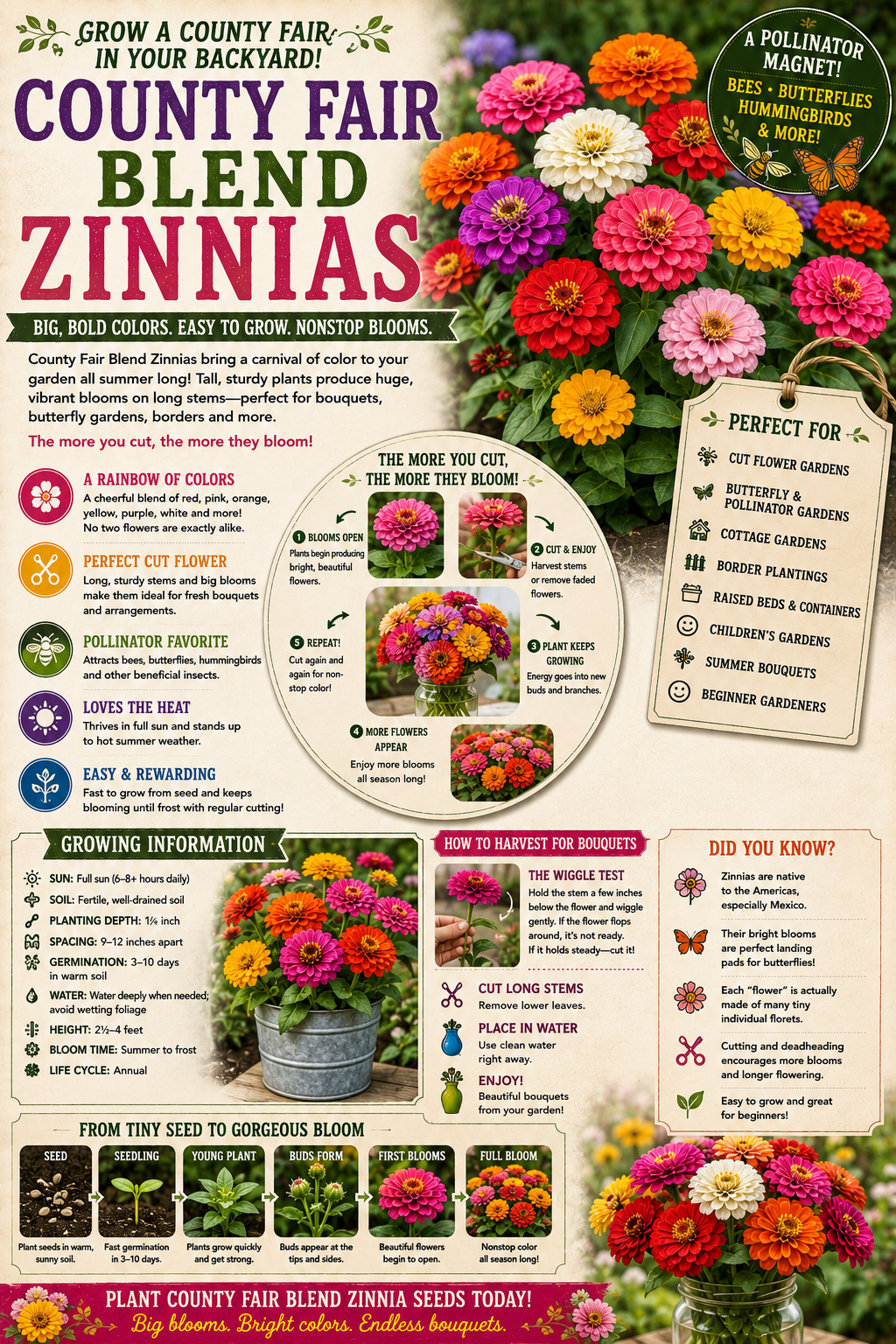
Grow a County Fair in Your Backyard.
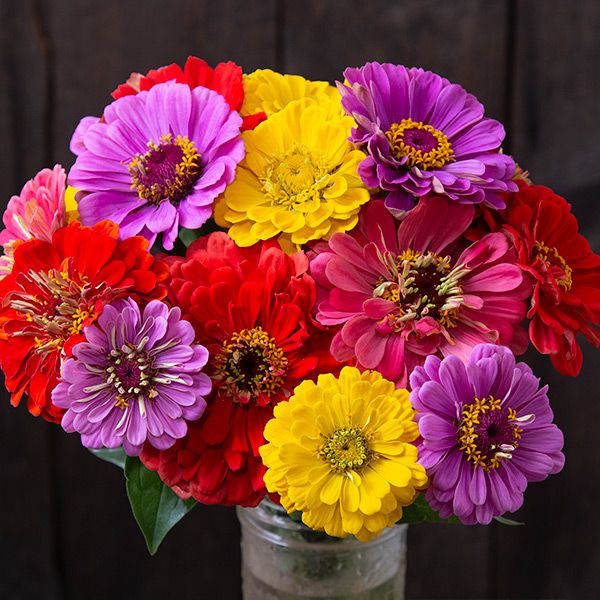
Red.
Pink.
Orange.
Yellow.
Purple.
White.
And just about every cheerful shade in between.
County Fair Blend Zinnias turn a sunny patch of soil into a riot of old-fashioned summer color.
Tall, vigorous plants produce large, colorful blooms on sturdy stems that are fantastic for bouquets, pollinator gardens, borders, and big drifts of flowers.
They’re easy to grow.
They love summer heat.
And best of all:
The more flowers you cut, the more flowers you get.
Why Grow County Fair Blend?
🌈 A whole garden of color from one packet.
Expect a lively mixture of vibrant flower colors that makes every plant—and every bouquet—a surprise.
🌸 Big, showy blooms.
County Fair zinnias produce substantial flowers with the classic bold appearance that makes zinnias summer-garden favorites.
✂️ Fantastic cut flowers.
Long, sturdy stems and colorful blooms make these perfect for fresh bouquets.
🦋 A pollinator magnet.
Zinnias attract butterflies, bees, and other beneficial insects throughout summer.
☀️ They love the heat.
When cool-season flowers begin struggling with summer temperatures, zinnias are hitting their stride.
The More You Cut, the More They Bloom
Want more zinnias?
Bring some inside.
Zinnias are classic cut-and-come-again flowers.
🌸 Flowers Open
Plants begin producing colorful blooms.
✂️ Cut a Bouquet
Harvest stems or remove fading flowers.
🌿 Plants Keep Branching
Energy is redirected toward new growth and buds.
🌼 More Flowers Appear
Return for another harvest.
Regular cutting and deadheading can keep established plants flowering right up until frost.
Your kitchen table gets flowers.
And your garden makes more.
Growing Information
Sun: Full sun — 6–8+ hours daily
Soil: Fertile, well-drained soil
Planting Depth: Approximately ¼ inch
Spacing: Approximately 9–12 inches apart
Germination: Approximately 3–10 days in warm conditions
Water: Water deeply when needed; avoid keeping foliage constantly wet
Height: Approximately 2½–4 feet depending on conditions
Bloom: Summer through frost
Life Cycle: Annual
Growing Tip
Zinnias love warm soil and warm weather.
Direct sow after your last frost once the soil has warmed, or start seeds indoors a few weeks earlier for a head start.
Give plants plenty of sunlight and good airflow.
When watering, aim for the base of the plant whenever practical rather than repeatedly wetting the foliage.
From Seed to Armfuls of Flowers
🌱 Plant
Sow after frost when warm weather has arrived.
🌿 Grow
Seedlings develop rapidly in sunshine and warmth.
✂️ Pinch
When young plants are established, pinching the growing tip can encourage branching and additional flowering stems.
🌸 Bloom
Plants begin producing large, colorful flowers.
💐 Cut
Harvest regularly for bouquets.
🌼 Repeat
More branches mean more opportunities for flowers.
A handful of seeds can become weeks and weeks of bouquets.
How to Harvest Zinnias for Bouquets
Here’s a great trick:
The Wiggle Test
Before cutting a zinnia, hold the stem several inches below the flower and gently wiggle it.
If the flower head flops around dramatically, the stem may still be too immature.
If the stem feels relatively stiff and holds the flower upright, it’s generally at a better stage for cutting.
Then:
✂️ Cut a nice long stem.
🍃 Remove foliage that would sit underwater.
💧 Place the stem into clean water.
💐 Enjoy your homegrown bouquet.
Build a Butterfly Garden
Zinnias are among the most enjoyable flowers for watching butterflies visit the garden.
Plant County Fair Blend alongside:
🌸 Cosmos
Airy flowers and a long summer bloom season.
🌻 Sunflowers
Tall blooms that provide pollen, nectar, and eventually seeds.
🌼 Calendula
Cheerful flowers that perform beautifully during cooler parts of the season.
💜 Purple Coneflower
A native perennial favorite for pollinators.
🌿 Milkweed
Essential host plants for monarch caterpillars.
Together, different flowers can provide a changing supply of resources throughout the growing season.
Perfect For
- Cut flower gardens
- Butterfly gardens
- Pollinator gardens
- Cottage gardens
- Garden borders
- Raised beds
- Mass plantings
- Children’s gardens
- Summer bouquets
- Beginner gardeners
Did You Know?
🌎 Zinnias are native to the Americas. Wild species occur primarily in Mexico and surrounding regions.
🦋 Butterflies frequently visit zinnias. Their prominent, colorful flowers provide convenient landing platforms and accessible floral resources.
☀️ Zinnias thrive in summer heat. They’re excellent flowers for keeping the garden colorful during the hottest part of the growing season.
✂️ Cutting can mean more flowers. Regular harvesting and deadheading encourages branching and continued bloom production.
🌸 One “flower” contains many flowers. Like sunflowers and daisies, zinnias belong to the Asteraceae family and their flower heads are composed of multiple individual florets.
🌱 They’re excellent beginner flowers. The seeds are relatively large, germinate quickly in warm soil, and develop into vigorous plants.
Make Your Own Flower Stand.
Imagine walking outside in July.
You’ve got red.
Orange.
Pink.
Yellow.
Purple.
White.
And every shade between them.
You grab your scissors.
Cut an armful.
Fill a vase.
Put it on the kitchen table.
Then head back outside a few days later—
and do it all over again.
That’s the magic of zinnias.
Easy to grow.
Hard to stop looking at.
And generous enough to keep your house full of flowers all summer.
Plant County Fair Blend Zinnias—and grow your own summer flower stand.