


Description
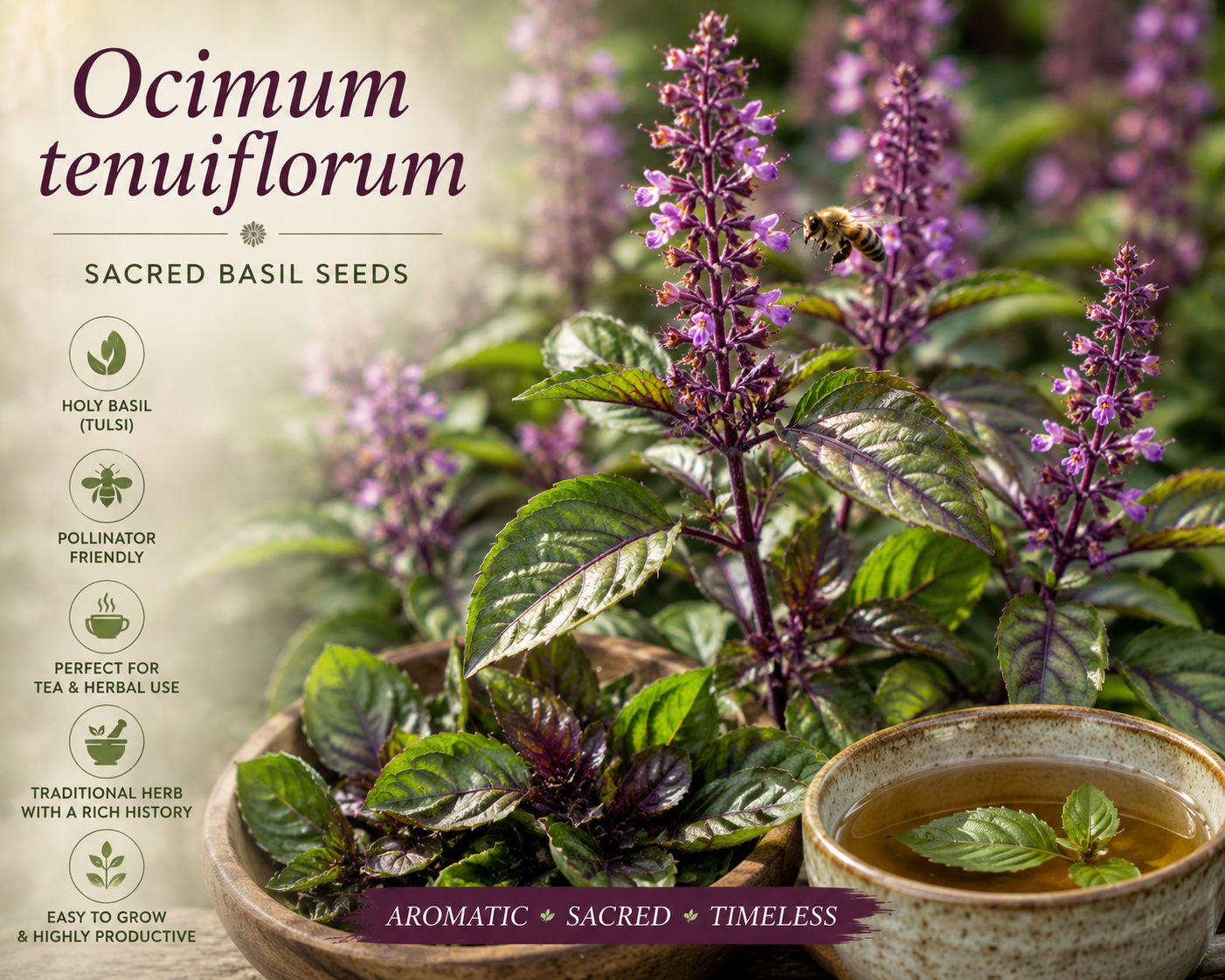
Sacred Basil (Ocimum tenuiflorum) Seeds
A Plant Revered for Thousands of Years.
Some plants fill a garden.
Sacred Basil fills a tradition.
Known around the world as Tulsi, Sacred Basil has been cultivated for thousands of years as one of the most treasured herbs in Ayurvedic tradition. Its wonderfully aromatic leaves, delicate purple flowers, and remarkable resilience make it as beautiful in the garden as it is useful in the kitchen and home.
Whether you’re growing it for pollinators, herbal tea, its rich cultural history, or simply its incredible fragrance, Sacred Basil is a plant you’ll appreciate every day.
Why Grow Sacred Basil?
🌿 One of history’s most celebrated herbs.
For more than 3,000 years, Tulsi has been regarded as one of the most important plants in Ayurveda, India’s traditional system of medicine. It continues to be widely cultivated throughout the world for herbal teas, culinary uses, and traditional wellness practices.
🐝 A pollinator magnet.
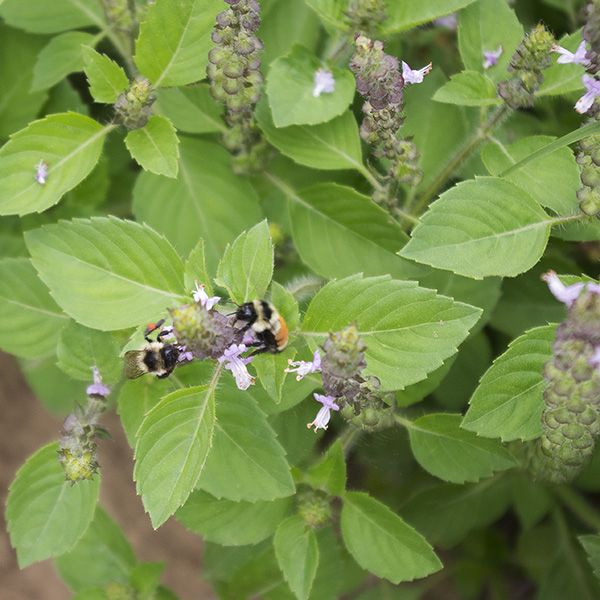
Its nectar-rich flowers attract honey bees, native bees, butterflies, and many other beneficial insects throughout the growing season, helping support a thriving garden ecosystem.
🍵 Fresh tea from your own garden.
The fragrant leaves make a delicious herbal tea with notes of clove, cinnamon, mint, and pepper. Many gardeners harvest leaves throughout the summer to enjoy fresh or dried year-round.
🌱 Easy and productive.
Sacred Basil grows quickly, branches readily, and produces abundant foliage with regular harvesting.
A Plant Studied Around the World
Modern researchers have identified dozens of naturally occurring compounds in Sacred Basil, including eugenol, rosmarinic acid, ursolic acid, apigenin, and ocimumosides. These compounds are being studied for their antioxidant, anti-inflammatory, and stress-response properties.
Sacred Basil is often described as an adaptogen—a plant traditionally believed to help the body adapt to everyday stress. While laboratory and early clinical studies are promising, more high-quality human research is needed before definitive medical conclusions can be made.
Growing Information
Sun: Full sun (6–8+ hours daily), though afternoon shade is appreciated in very hot climates.
Soil: Rich, well-drained soil.
Planting Depth: Sow seeds on the soil surface or lightly cover with no more than ⅛ inch of soil, as light can improve germination.
Spacing: 12–18 inches apart.
Water: Keep evenly moist while establishing. Once mature, water when the top inch of soil becomes dry.
Bloom Time: Summer through frost.
Hardiness: Grown as an annual in most climates (USDA Zones 10–11 as a perennial).
Germination Tip
Sacred Basil generally germinates quickly and does not require cold stratification. Keep the soil warm (70–85°F / 21–29°C) and consistently moist for best results. Seedlings typically emerge within 5–14 days.
Perfect For
- Herb gardens
- Tea gardens
- Pollinator gardens
- Raised beds
- Containers
- Patio planters
- Companion planting
- Kitchen gardens
Sacred Basil grows beautifully alongside tomatoes, peppers, eggplant, and other warm-season vegetables while adding fragrance and attracting beneficial insects.
Did You Know?
- Sacred Basil (Ocimum tenuiflorum) is different from culinary sweet basil (Ocimum basilicum), offering a spicier, clove-like aroma and a long history of traditional use.
- Its flowers provide valuable nectar for bees and butterflies throughout the growing season.
- More than 100 natural compounds have been identified in Sacred Basil, making it one of the world’s most extensively studied medicinal herbs.
- Regular harvesting encourages bushier growth, resulting in even greater leaf production throughout the season.
A Plant with Purpose
Every packet of Sacred Basil grows more than an herb.
It grows fragrant tea.
Food for pollinators.
A conversation piece rich with history.
And one of the world’s most respected medicinal plants—right outside your door.
Grow it once, harvest it all season, and discover why Sacred Basil has been cherished for thousands of years.