


Description
Plant Once. Enjoy for Years.
Some flowers bloom for a season.
Purple Coneflower comes back for decades.
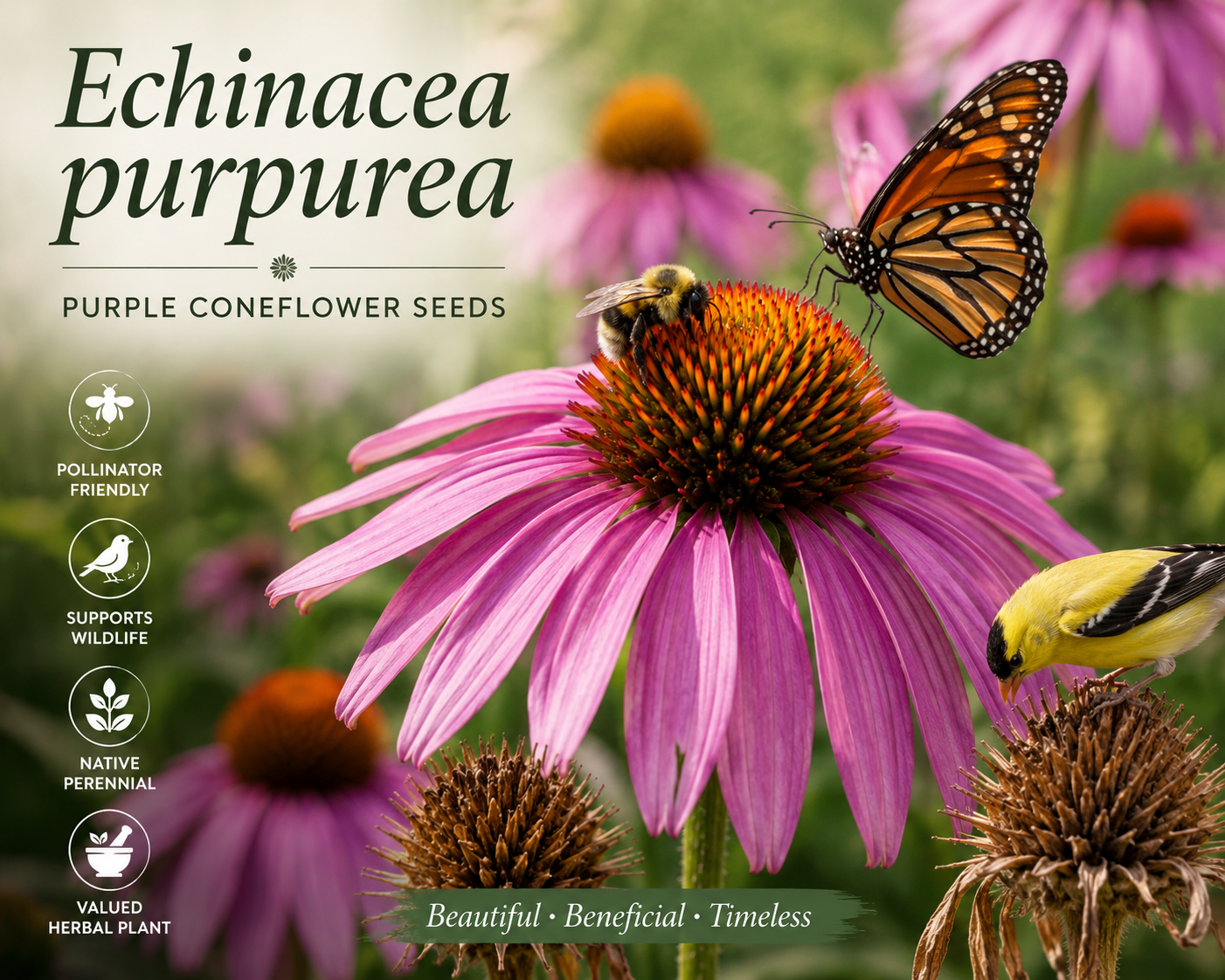
This iconic North American wildflower fills your garden with vibrant purple blooms while providing nectar for bees, butterflies, and other beneficial pollinators. As summer fades, its seed heads become a favorite food source for goldfinches and other songbirds, making it one of the few flowers that continues to benefit wildlife long after it finishes blooming.
Beautiful, resilient, and rich with history, Purple Coneflower is one of the most rewarding native perennials you can grow.
Why Grow Purple Coneflower?
🌼 A perennial that lasts.
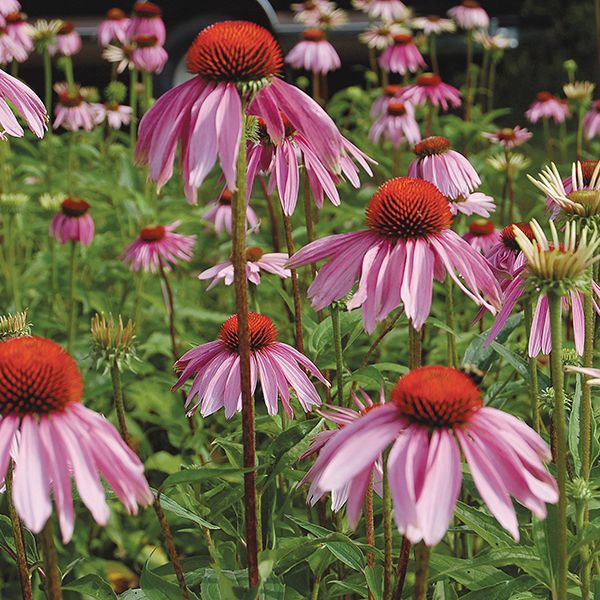
Plant it once and enjoy larger, more spectacular displays each year.
🐝 Supports pollinators.
Its nectar-rich flowers attract honey bees, native bees, butterflies, and many other beneficial insects, helping support a healthy, diverse garden ecosystem.
🌿 A legendary medicinal herb.
For centuries, Indigenous peoples of North America traditionally used Echinacea species in herbal preparations. Today, Echinacea purpurea remains one of the world’s most widely used medicinal herbs and is commonly found in teas, tinctures, and herbal supplements. Scientists have identified naturally occurring compounds—including alkamides, cichoric acid, and polysaccharides—that are being studied for their effects on immune function. While research has shown promising results in some studies, evidence remains mixed, and more research is needed to fully understand its medicinal potential.
🐦 Feeds birds through winter.
Leave the seed heads standing after flowering, and goldfinches and other songbirds will happily feed on them while they add beautiful winter interest to the garden.
💧 Easy to grow.
Once established, Purple Coneflower is remarkably drought tolerant, heat tolerant, and requires very little maintenance.
Growing Information
Sun: Full sun (6–8+ hours daily)
Soil: Well-drained soil; sandy, loamy, or average garden soil all work well.
Planting Depth: Sow seeds ⅛–¼ inch deep.
Spacing: 18–24 inches apart.
Water: Keep the soil evenly moist while seedlings become established. Mature plants require little supplemental watering except during extended drought.
Bloom Time: Mid-summer through early fall.
USDA Hardiness: Zones 3–9.
Germination Tip
Purple Coneflower is easy to grow, but patience helps. Many gardeners successfully sow seeds directly outdoors in fall, allowing winter to naturally break dormancy. For spring planting, a 30–60 day period of cold, moist stratification may improve germination and produce more uniform seedlings, although many gardeners have excellent success sowing fresh seed without refrigeration.
Perfect For
- Pollinator gardens
- Native landscapes
- Cottage gardens
- Prairie plantings
- Cut flower gardens
- Wildlife habitats
- Low-maintenance perennial borders
Pairs beautifully with Black-eyed Susan, Bee Balm, Joe-Pye Weed, Blazing Star, native asters, and ornamental grasses.
Did You Know?
- Purple Coneflower is native to North America and naturally occurs across much of the central and eastern United States.
- Pollinators improve seed production, making bees an important part of its life cycle.
- Its seed heads provide valuable winter food for goldfinches and other songbirds.
- It has been cultivated for centuries as both a stunning ornamental flower and one of North America’s best-known medicinal herbs.
A Plant That Gives Back
Every packet of Purple Coneflower seeds grows more than beautiful flowers.
It creates habitat for pollinators, provides food for birds, celebrates one of North America’s most iconic native wildflowers, and connects your garden to a plant with centuries of traditional medicinal use.
Plant it once—and enjoy the beauty, wildlife, and history it brings for years to come.