


Description
Resina Calendula Seeds
Sunshine You Can Grow.
Golden petals.
Sticky, aromatic flowers.
Weeks of cheerful blooms.
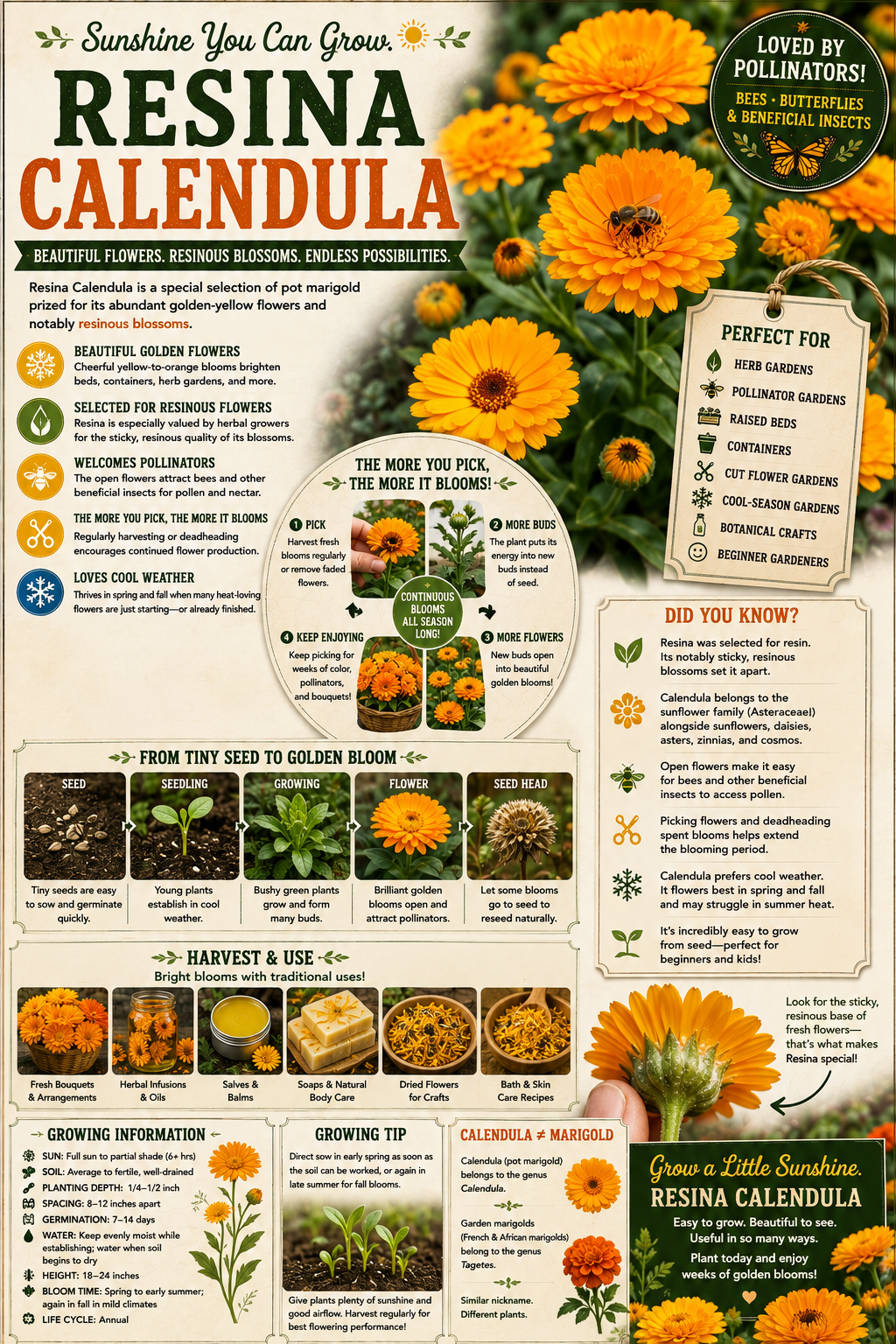
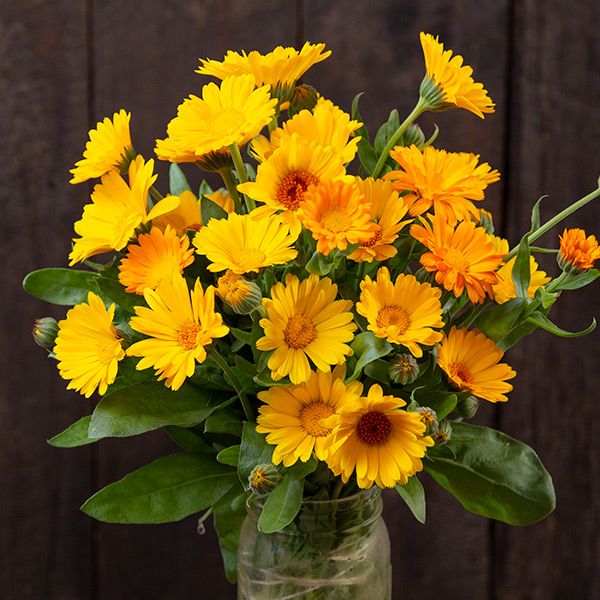
Resina Calendula is a special selection of pot marigold prized for its abundant golden-yellow flowers and notably resinous blossoms.
Beautiful enough for the flower garden, useful enough for the herb garden, and easy enough for beginners, Resina is one of those rare plants that seems to belong almost everywhere.
Grow it for pollinators.
Grow it for bouquets.
Grow it as a traditional herbal plant.
Or simply grow it because a garden can always use more sunshine.
Why Grow Resina Calendula?
🌼 Beautiful golden flowers.
Cheerful yellow-to-orange blooms brighten beds, containers, herb gardens, and vegetable gardens.
🌿 Selected for resinous flowers.
Resina is especially valued by herbal growers for the sticky, resinous quality of its blossoms.
🐝 Welcomes pollinators.
The open flowers attract bees and other beneficial insects searching for pollen and nectar.
✂️ The more you pick, the more it blooms.
Regularly harvesting or deadheading flowers encourages continued flower production.
❄️ Loves cool weather.
Calendula performs beautifully during spring and fall when many heat-loving annual flowers are only beginning—or already finishing—their season.
What Makes Resina Different?
Not all calendula selections were bred for exactly the same purpose.
Some emphasize unusual flower colors.
Others focus primarily on ornamental characteristics.
Resina was selected for especially resinous flowers, making it a favorite among gardeners interested in traditional herbal preparations.
Touch the base of a freshly harvested flower and you may notice the distinctive sticky, resinous feel that gives this variety its name.
It’s a beautiful example of humans selecting plants not just for appearance—
but for what the plant produces.
Growing Information
Sun: Full sun to partial shade
Soil: Average to fertile, well-drained soil
Planting Depth: Approximately ¼–½ inch
Spacing: Approximately 8–12 inches apart
Germination: Approximately 7–14 days under favorable conditions
Water: Keep evenly moist while establishing; water when soil begins to dry once plants are established
Height: Approximately 18–24 inches
Bloom: Spring through early summer and again during cool fall weather where conditions allow
Life Cycle: Annual
Growing Tip
Calendula prefers cool weather.
Direct sow in early spring as soon as the soil can be worked, or plant again toward the end of summer for a fall crop.
In mild climates, fall-sown plants may even overwinter.
Regularly harvest flowers or remove fading blooms to encourage plants to continue producing new buds.
Harvest the Flowers
Resina rewards regular picking.
🌼 Wait for Fresh Blooms
Harvest healthy flowers after they have opened.
☀️ Choose a Dry Day
For drying, harvest after morning moisture has evaporated.
✂️ Pick Regularly
Frequent harvesting helps prevent the plant from immediately shifting all its energy toward mature seed.
🌸 More Buds Develop
Plants continue producing additional flowers.
🌿 Use Fresh or Dry
Enjoy the blooms fresh for ornamental purposes or carefully dry them for later craft and traditional herbal uses.
More Than an Ornamental Flower
Calendula has a long history as a garden and herb plant.
Its colorful flower petals have traditionally been used in a variety of preparations, including:
🌿 Herbal oils
🧼 Handmade soaps
🕯️ Salves and balms
🛁 Bath and body products
🎨 Natural botanical crafts
💐 Fresh and dried arrangements
Resina’s especially resinous flowers have made it a favorite selection among herbal gardeners.
Any medicinal or topical preparation should be researched and used appropriately; growing a traditional herb doesn’t make every homemade preparation suitable for every person.
Calendula Isn’t a Marigold
Calendula is commonly called pot marigold, but it isn’t the same plant as the familiar garden marigolds in the genus Tagetes.
Calendula belongs to the genus Calendula.
Common garden marigolds belong to Tagetes.
They’re both members of the enormous sunflower family, Asteraceae, but they’re different branches of that family tree.
So:
🌼 Pot Marigold = Calendula
🏵️ French/African Marigolds = Tagetes
Similar nickname.
Different plants.
Perfect For
- Herb gardens
- Pollinator gardens
- Cottage gardens
- Raised beds
- Containers
- Cut flower gardens
- Traditional herbal gardens
- Botanical crafts
- Cool-season flower gardens
- Beginner gardeners
Did You Know?
🌿 Resina was selected for resin. Its particularly sticky, resinous blossoms distinguish it from many purely ornamental calendula selections.
🌼 Calendula belongs to the sunflower family. It’s a member of Asteraceae alongside sunflowers, daisies, asters, zinnias, and cosmos.
🐝 The flowers support visiting insects. Their open structure makes the center of the flower readily accessible to many pollinators.
✂️ Picking flowers encourages more. Regular harvesting and deadheading can extend the blooming period.
❄️ Calendula prefers cooler weather. It often performs beautifully in spring and fall and may struggle during the hottest part of summer.
🌱 It’s easy to grow from seed. Fast germination and straightforward care make calendula an excellent flower for beginning gardeners.
Grow Your Own Sunshine.
Resina doesn’t demand much.
A little soil.
Some sunshine.
Cool weather.
And an occasional drink.
In return, it produces handful after handful of brilliant golden flowers for your garden, pollinators, bouquets, crafts, and herbal projects.
And every time you pick another flower, the plant gets ready to make more.
Plant Resina Calendula—and grow a little sunshine you can hold in your hands.