

Description
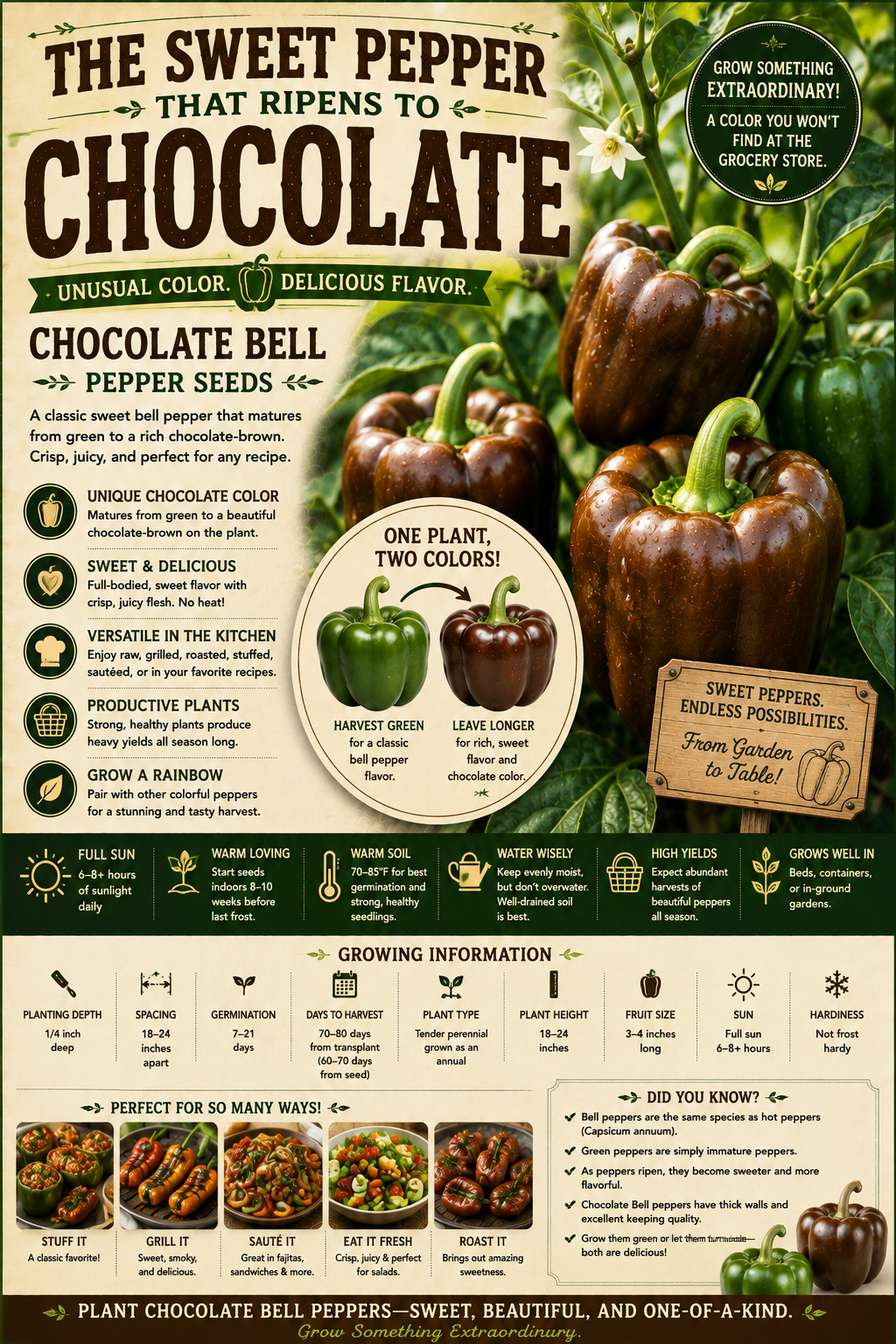
Chocolate Bell Pepper Seeds
The Sweet Pepper That Ripens to Chocolate.
Green peppers are just the beginning.
Leave Chocolate Bell Pepper on the plant and something remarkable happens: the fruit matures into a rich chocolate-brown pepper with sweet, crisp flesh underneath.
Despite the name, it doesn’t taste like chocolate. Instead, you get the familiar sweet bell-pepper flavor in one of the most unusual colors in the vegetable garden.
Grow it for salads. Stuff it. Roast it. Grill it.
Or grow it simply because brown peppers are incredibly cool.
Why Grow Chocolate Bell Pepper?
🤎 Incredible chocolate-brown color.
Fruits mature from green to deep chocolate-brown, creating a pepper that looks unlike almost anything you’ll find at a supermarket.
🫑 Sweet, not hot.
Chocolate Bell is a sweet pepper with essentially no capsaicin heat—perfect for anyone who loves pepper flavor without the burn.
😋 Crisp & flavorful.
Mature fruits develop sweet, juicy flesh that’s excellent raw or cooked.
🍳 Use it everywhere.
Stuff it, grill it, roast it, sauté it, chop it into salsa, or slice it fresh for salads and snacking.
🌈 Grow a rainbow of peppers.
Pair Chocolate Bell with red, yellow, orange, purple, and green peppers for an incredible garden harvest.
Why Does It Turn Brown?
Pepper color changes dramatically as fruits mature.
Young Chocolate Bell peppers begin green because their tissues contain abundant chlorophyll.
As the fruit ripens, chlorophyll breaks down while other pigments become visible and accumulate.
In Chocolate Bell, the combination of remaining chlorophyll and ripening pigments creates the distinctive deep brown or chocolate coloration.
It’s plant chemistry creating a color you rarely see in vegetables.
Growing Information
Sun: Full sun — 6–8+ hours daily
Soil: Rich, fertile, well-drained soil
Planting Depth: Approximately ¼ inch
Spacing: Approximately 18–24 inches apart
Germination: Approximately 7–21 days in warm soil
Water: Water consistently while allowing the soil surface to dry slightly between waterings
Harvest: Pick green for an earlier harvest or allow fruits to fully develop their chocolate-brown color for mature flavor
Life Cycle: Tender perennial generally grown as an annual
Growing Tip
Peppers love warmth.
Start seeds indoors approximately 8–10 weeks before your last frost. Pepper seeds germinate most reliably in warm growing media, so a seedling heat mat can be especially helpful.
After transplanting, avoid pushing young plants outside while nights are still cold.
Warm roots + warm nights = happier peppers.
Green vs. Chocolate
One plant gives you two different harvest experiences.
🟢 Harvest Green
Pick immature peppers when they’re firm and full-sized for a fresh, classic green-pepper flavor.
🤎 Harvest Chocolate
Leave fruits on the plant longer and they’ll develop their distinctive chocolate coloration and sweeter mature flavor.
Try both and decide which stage you like best.
From Garden to Kitchen
🥗 Eat It Raw
Slice into salads or serve with dips for sweet, crisp crunch.
🔥 Grill It
High heat brings out even more sweetness and adds smoky flavor.
🍳 Sauté It
Perfect with onions for sandwiches, fajitas, eggs, pasta, and countless other dishes.
🧀 Stuff It
The classic bell-pepper shape makes it perfect for filling with rice, vegetables, meat, cheese, or grains.
🍕 Put It on Everything
Pizza, tacos, omelets, soups, sauces, kabobs—the possibilities are almost endless.
Perfect For
- Stuffed peppers
- Fresh salads
- Grilling
- Roasting
- Fajitas
- Pizza
- Stir-fries
- Salsa
- Raised beds
- Containers
- Rainbow vegetable gardens
Did You Know?
🔥 Sweet peppers and many hot peppers are the same species. Both can belong to Capsicum annuum despite tasting dramatically different.
🌶️ Bell peppers don’t produce meaningful heat. They lack the high concentrations of capsaicinoids responsible for the burning sensation of hot peppers.
🤎 Chocolate doesn’t describe the flavor. It refers to the unusual rich brown coloration of the ripe fruit.
🟢 Green peppers are immature peppers. Allowing many varieties to remain on the plant changes their color, sweetness, aroma, and nutritional profile.
🌱 Pepper plants are technically perennial. In warm, frost-free climates they can survive beyond a single season.
Grow a Pepper People Have to Ask About.
Put a Chocolate Bell Pepper on the kitchen counter and someone is going to notice.
“Why is that pepper brown?”
That’s part of the fun of growing your own food.
You aren’t limited to what supermarkets decide vegetables should look like.
You can grow purple carrots.
White tomatoes.
Golden peppers.
And chocolate-brown bell peppers.
Plant Chocolate Bell—and grow a sweet pepper that’s anything but ordinary.