
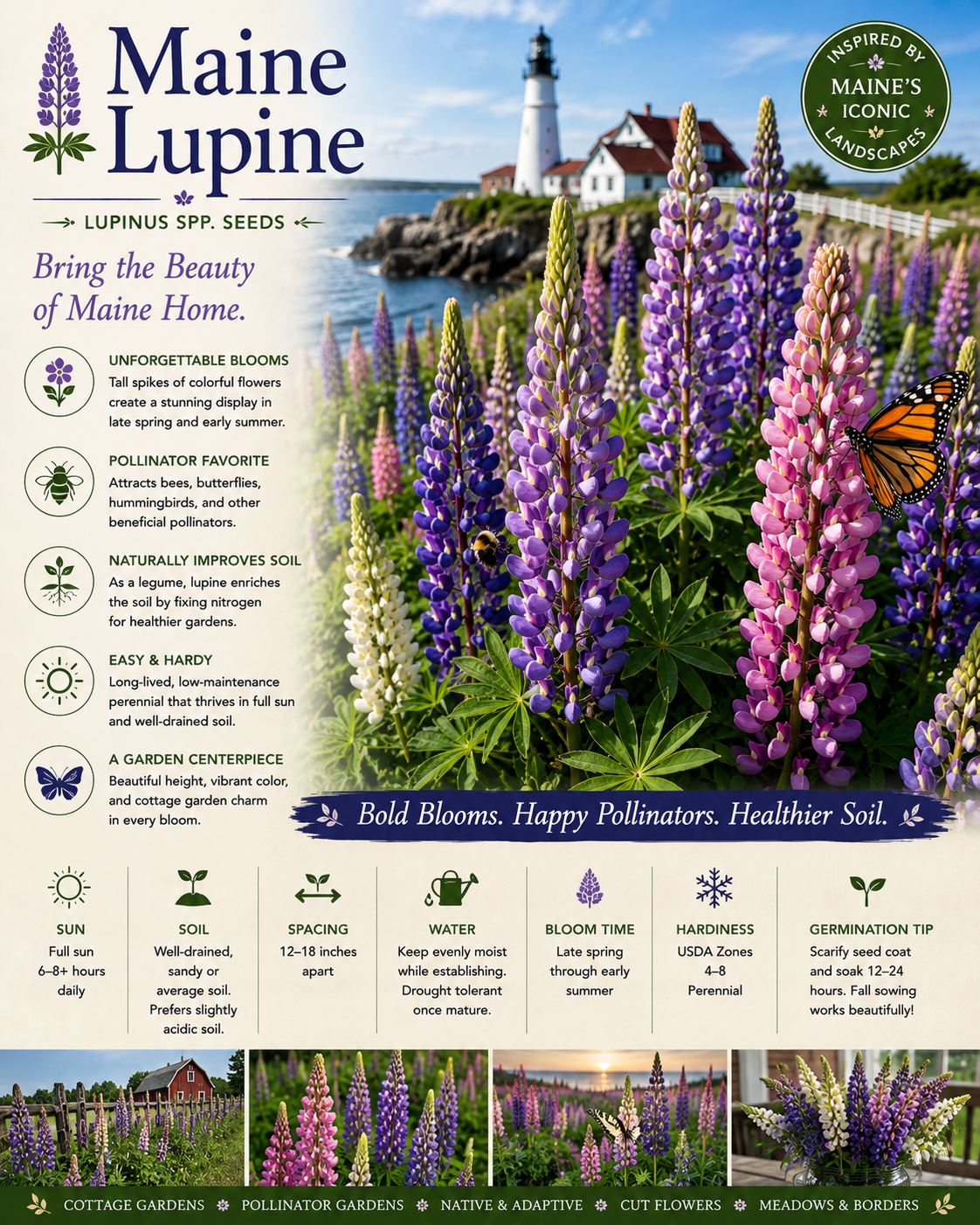

Description
Maine Lupine Seeds
Bring the Beauty of Maine Home.
Some flowers fill a garden.
Maine Lupine creates a landscape you’ll never forget.
Towering spikes of vibrant blue, purple, pink, and white flowers have become one of the most recognizable sights of the Maine countryside. Blooming in late spring and early summer, lupines create breathtaking displays while attracting bees, butterflies, hummingbirds, and countless other beneficial pollinators.
Whether you’re planting a cottage garden, creating a colorful border, or simply dreaming of a field of summer blooms, Maine Lupine delivers unforgettable beauty year after year.
Why Grow Maine Lupine?
🌸 An unforgettable display.
Tall flower spikes covered in colorful blooms create one of the most dramatic floral displays in the garden.
🐝 A pollinator favorite.
The nectar-rich blossoms attract bumble bees, honey bees, butterflies, hummingbirds, and many other beneficial pollinators throughout the blooming season.
🌱 Naturally improves the soil.
As a member of the legume family, lupines form partnerships with beneficial soil bacteria that help capture nitrogen from the air, enriching the soil for surrounding plants.
☀️ Easy to grow.
Once established, lupines are hardy, long-lived, and thrive in sunny locations with well-drained soil.
🌿 A true garden centerpiece.
Their bold vertical flower spikes add height, color, and structure to cottage gardens, pollinator plantings, and perennial borders.
More Than Just Beautiful
Lupines have been admired for centuries for both their beauty and their ecological value. Their deep root systems help stabilize soil, while their flowers provide an important nectar source for many pollinating insects. As legumes, lupines naturally contribute nitrogen to the soil through a beneficial relationship with root bacteria, making them valuable companions in healthy garden ecosystems.
Today, they’re among the most beloved early-summer flowers in North America, especially throughout the northeastern United States.
Growing Information
Sun: Full sun (6–8+ hours daily).
Soil: Well-drained, sandy or average garden soil. Lupines perform best in slightly acidic soils and dislike heavy, waterlogged conditions.
Planting Depth: Sow seeds ¼ inch deep.
Spacing: 12–18 inches apart.
Water: Keep evenly moist while seedlings establish. Mature plants tolerate short dry periods but perform best with moderate moisture.
Bloom Time: Late spring through early summer.
Hardiness: USDA Zones 4–8. A hardy perennial in suitable climates.
Germination Tip
Lupine seeds have a naturally hard seed coat. For the best germination, lightly nick or gently sand the seed coat before planting, then soak the seeds in room-temperature water for 12–24 hours. Fall sowing also works well, allowing winter to naturally prepare the seeds for spring germination.
Perfect For
- Cottage gardens
- Pollinator gardens
- Perennial borders
- Meadow plantings
- Coastal landscapes
- Raised beds
- Cut flower gardens
Lupines pair beautifully with Shasta Daisy, Purple Coneflower, Foxglove, Peonies, Catmint, Salvia, and ornamental grasses.
Did You Know?
- Lupines belong to the pea family (Fabaceae) and naturally enrich the soil through nitrogen fixation.
- Their colorful flower spikes can reach 2–4 feet tall, creating dramatic vertical interest in the garden.
- Bumble bees are among their most important pollinators, perfectly adapted to the flowers’ unique shape.
- The iconic roadside lupine displays in Maine have inspired photographers, painters, and gardeners for generations.
More Than Just a Flower
Every packet of Maine Lupine seeds grows more than spectacular blooms.
It grows vibrant color.
Food for pollinators.
Healthier soil.
And a touch of one of New England’s most iconic summer landscapes.
Plant Maine Lupine—and enjoy breathtaking blooms that capture the beauty of summer year after year.