


Description
Common Sage Seeds
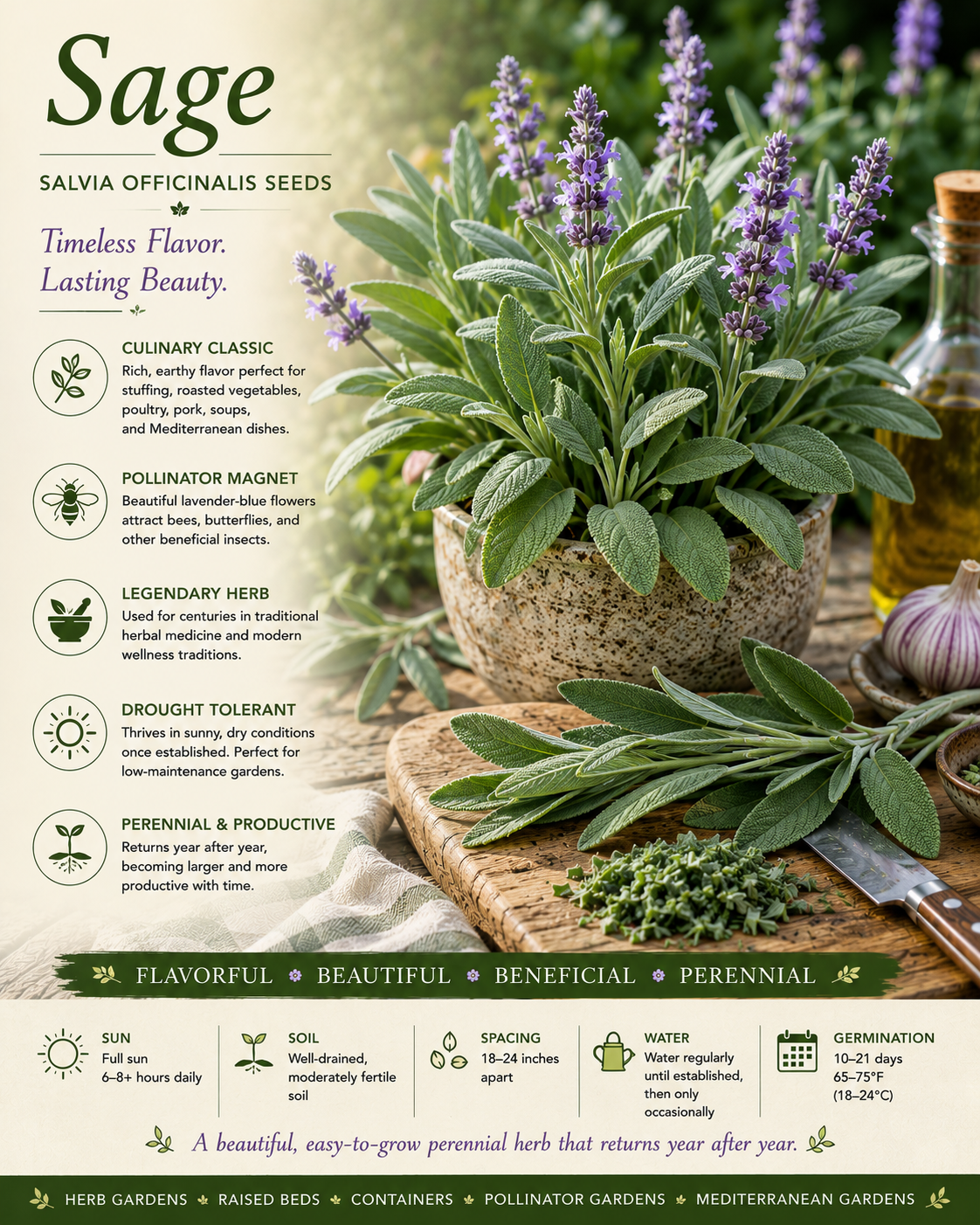
Timeless Flavor. Lasting Beauty.
Some herbs season a meal.
Sage seasons a lifetime of gardening.
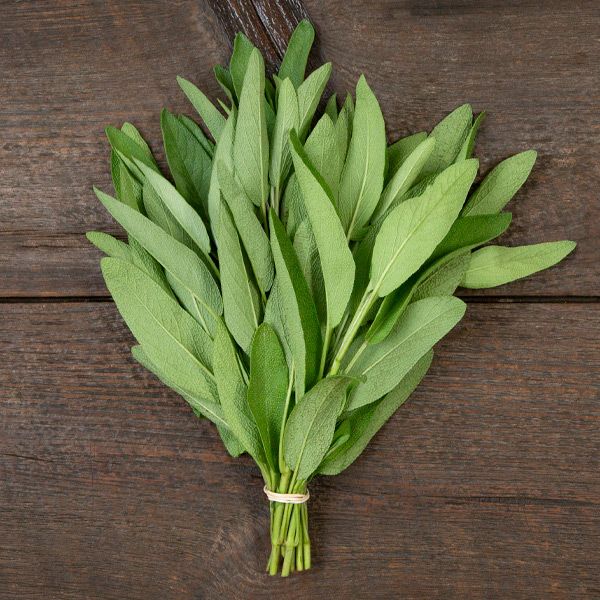
With its soft silvery-green leaves, earthy aroma, and beautiful lavender-blue flowers, Common Sage has been treasured for thousands of years as both a culinary herb and an ornamental perennial. Hardy, drought tolerant, and remarkably easy to grow, sage provides fresh harvests for years while attracting bees, butterflies, and other beneficial pollinators.
Whether you’re harvesting fragrant leaves for your favorite recipes, creating a pollinator-friendly landscape, or adding texture and color to your herb garden, Common Sage is one of the most rewarding herbs you can grow.
Why Grow Common Sage?
🌿 A culinary classic.
Its rich, savory flavor makes sage an essential ingredient for stuffing, roasted vegetables, poultry, pork, homemade sausage, compound butter, breads, soups, and countless Mediterranean recipes.
🌸 Beautiful and pollinator friendly.
In late spring and early summer, spikes of lavender-blue flowers attract honey bees, native bees, butterflies, and many other beneficial insects while adding striking beauty to the garden.
🌱 A legendary medicinal herb.
For centuries, Common Sage has been valued in traditional herbal medicine throughout Europe and the Mediterranean. Modern researchers have identified naturally occurring compounds—including rosmarinic acid, carnosic acid, carnosol, and essential oils such as thujone and cineole—that are being studied for their antioxidant, antimicrobial, and cognitive-supporting properties. While early research is promising, more high-quality human studies are needed before definitive medical conclusions can be made.
☀️ Thrives in dry conditions.
Once established, sage is highly drought tolerant and flourishes in sunny locations with well-drained soil, making it an excellent choice for low-maintenance gardens.
🌿 A perennial you’ll enjoy for years.
Unlike annual herbs, Common Sage returns year after year, becoming larger and more productive with each growing season.
Growing Information
Sun: Full sun (6–8+ hours daily).
Soil: Well-drained, moderately fertile soil. Sage dislikes wet feet.
Planting Depth: Sow seeds ¼ inch deep.
Spacing: 18–24 inches apart.
Water: Keep evenly moist while seedlings establish. Mature plants require only occasional watering during prolonged dry periods.
Harvest: Begin harvesting lightly once plants are well established. Regular harvesting encourages bushier growth.
Hardiness: USDA Zones 4–8. A hardy perennial in most climates.
Germination Tip
Sage germinates best in warm soil (65–75°F / 18–24°C). Keep the soil consistently moist—but not soggy—during germination. Most seedlings emerge within 10–21 days.
Perfect For
- Herb gardens
- Pollinator gardens
- Cottage gardens
- Raised beds
- Containers
- Mediterranean gardens
- Xeriscapes
- Edible landscapes
Sage pairs beautifully with rosemary, thyme, oregano, lavender, chives, tomatoes, and peppers.
Did You Know?
- The name “Salvia” comes from the Latin word salvare, meaning “to heal,” reflecting its long history in traditional herbal medicine.
- Sage flowers are a favorite of bees, making it as valuable to pollinators as it is to cooks.
- Harvesting before flowering often provides the strongest culinary flavor, while allowing some flowers to bloom benefits pollinators.
- Sage can live for many years, becoming an attractive, woody perennial shrub with proper care.
More Than Just an Herb
Every packet of Common Sage seeds grows more than flavorful leaves.
It grows unforgettable meals.
Flowers alive with pollinators.
A beautiful perennial that returns each spring.
And a connection to one of the world’s oldest and most respected culinary herbs.
Plant it once—and enjoy years of harvests, beauty, and timeless flavor.