


Description
Tango Celery Seeds
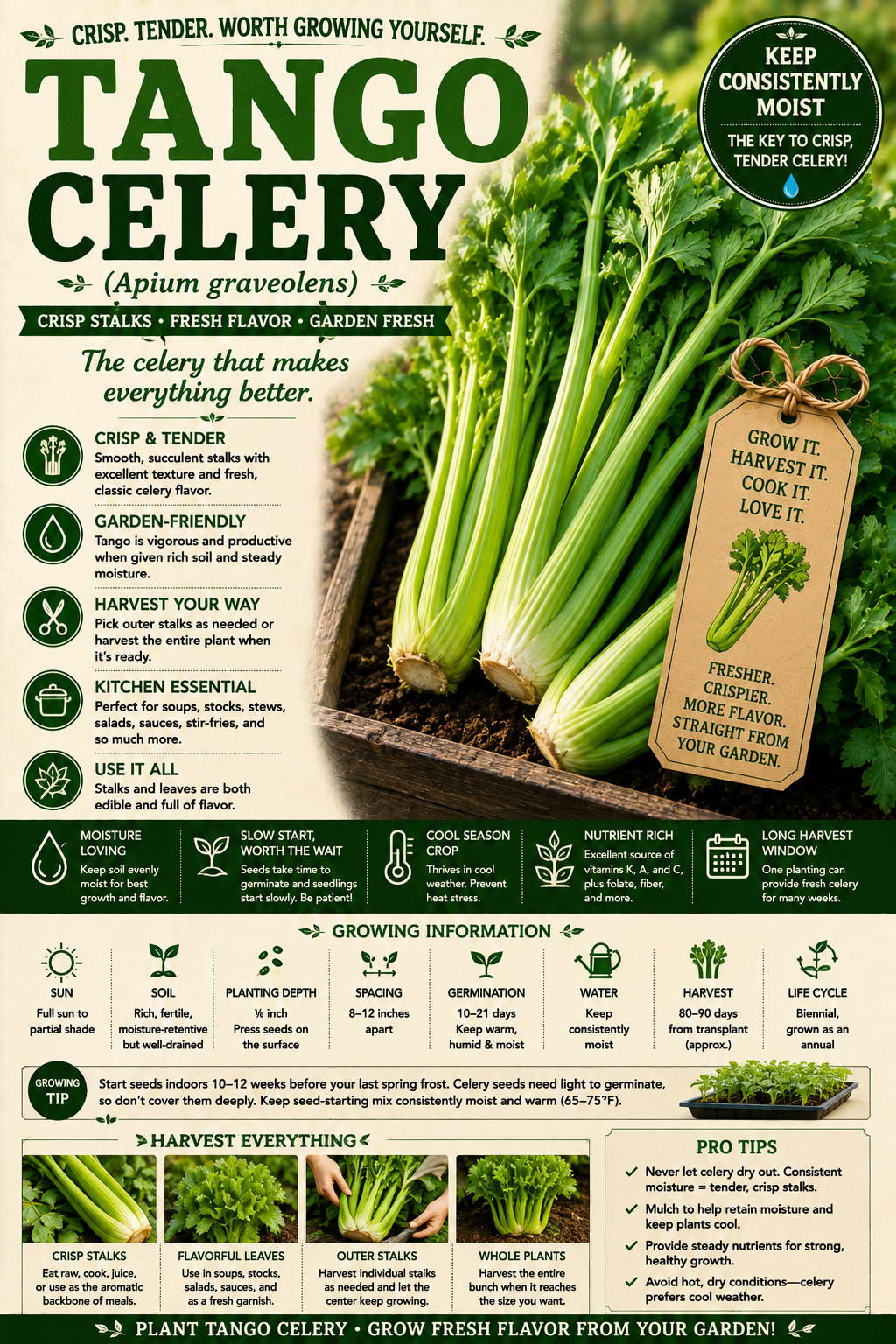
Crisp. Tender. Worth Growing Yourself.
Celery might seem ordinary—until you’ve tasted it straight from the garden.
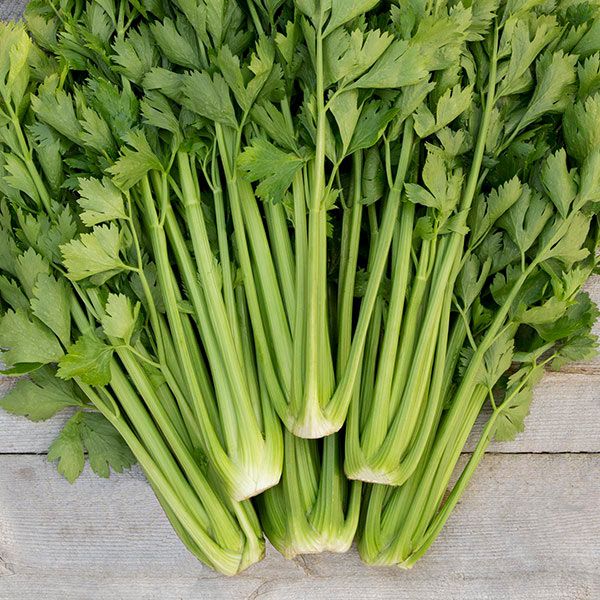
Tango Celery produces crisp, tender stalks with fresh celery flavor and satisfying crunch, making it an excellent choice for home gardens and market growers alike.
Eat it straight from the garden, chop it into salads, simmer it into soups and stocks, or spread the stalks with peanut butter for a classic garden snack.
Once you’ve experienced freshly harvested celery, the bunch sitting in the refrigerator aisle has some serious competition.
Why Grow Tango Celery?
🥬 Crisp & tender.
Tango is known for producing smooth, succulent stalks with excellent texture and classic celery flavor.
🌱 Garden-friendly performance.
Celery has a reputation for being demanding, but Tango is prized for vigorous, relatively dependable growth when given consistent moisture and fertile soil.
✂️ Harvest it your way.
Pick individual outer stalks as needed while allowing the center to continue developing—or harvest the entire plant at maturity.
🍲 Incredibly useful in the kitchen.
Celery forms part of the flavor foundation for countless soups, stocks, stews, sauces, stuffings, and braised dishes.
💚 Grow the part supermarkets leave behind.
The flavorful leaves are edible too and make an excellent herb-like addition to soups, stocks, salads, and garnishes.
The Secret to Great Celery
Celery loves water and nutrients.
Unlike Mediterranean herbs that prefer drying between waterings, celery grows naturally in moist environments and performs best when its soil remains consistently damp.
Allowing plants to repeatedly dry out can produce smaller, tougher, or more strongly flavored stalks.
Give Tango rich soil, steady moisture, and plenty of time, and you’ll be rewarded with crisp homegrown stalks.
Growing Information
Sun: Full sun to partial shade
Soil: Rich, fertile, moisture-retentive but well-drained soil
Planting Depth: Sow very shallowly—approximately ⅛ inch or simply press seeds onto the surface
Spacing: 8–12 inches apart
Germination: Approximately 10–21 days
Water: Keep consistently moist throughout growth
Harvest: Approximately 80–90 days from transplanting, depending on growing conditions
Life Cycle: Biennial, generally grown as an annual vegetable
Growing Tip
Celery seeds need light to germinate well, so don’t bury them deeply.
Start seeds indoors roughly 10–12 weeks before your last spring frost. Gently press the tiny seeds onto moist seed-starting mix and keep them warm, humid, and consistently moist.
Celery seedlings start slowly.
Be patient—the payoff comes later.
Perfect For
- Fresh snacking
- Soups & stews
- Homemade stock
- Stuffing
- Salads
- Stir-fries
- Mirepoix
- Juicing
- Raised beds
- Kitchen gardens
Harvest Everything
🥬 Crisp Stalks
Eat fresh, cook them, juice them, or use them as the aromatic backbone of a meal.
🌿 Flavorful Leaves
Use celery leaves almost like an herb in soups, stocks, salads, sauces, and garnishes.
✂️ Outer Stalks
Harvest individual stalks when you need them and allow the center to continue growing.
🌱 Whole Plants
Harvest the entire bunch once plants have reached the size you want.
Did You Know?
🍲 Celery is part of classic mirepoix. Along with onion and carrot, it’s one of the foundational ingredients behind countless soups, sauces, stocks, and stews.
🌿 The leaves are edible. In fact, they can have an even more concentrated celery flavor than the stalks.
💧 Celery is naturally a moisture-loving plant. Consistent watering is one of the biggest secrets to producing tender, juicy stalks.
🌱 Those tiny seeds grow surprisingly large plants. Celery seed is remarkably small compared with the mature plant it eventually produces.
✂️ You don’t necessarily have to harvest it all at once. Taking outer stalks allows you to enjoy fresh celery over an extended period.
Rediscover Celery.
Celery doesn’t have to be the vegetable forgotten in the back of the refrigerator.
Fresh from the garden, it’s crisp.
Juicy.
Fragrant.
And useful in almost everything.
Plant Tango Celery—and discover how good one of the kitchen’s most familiar vegetables can taste when you grow it yourself.