


Description
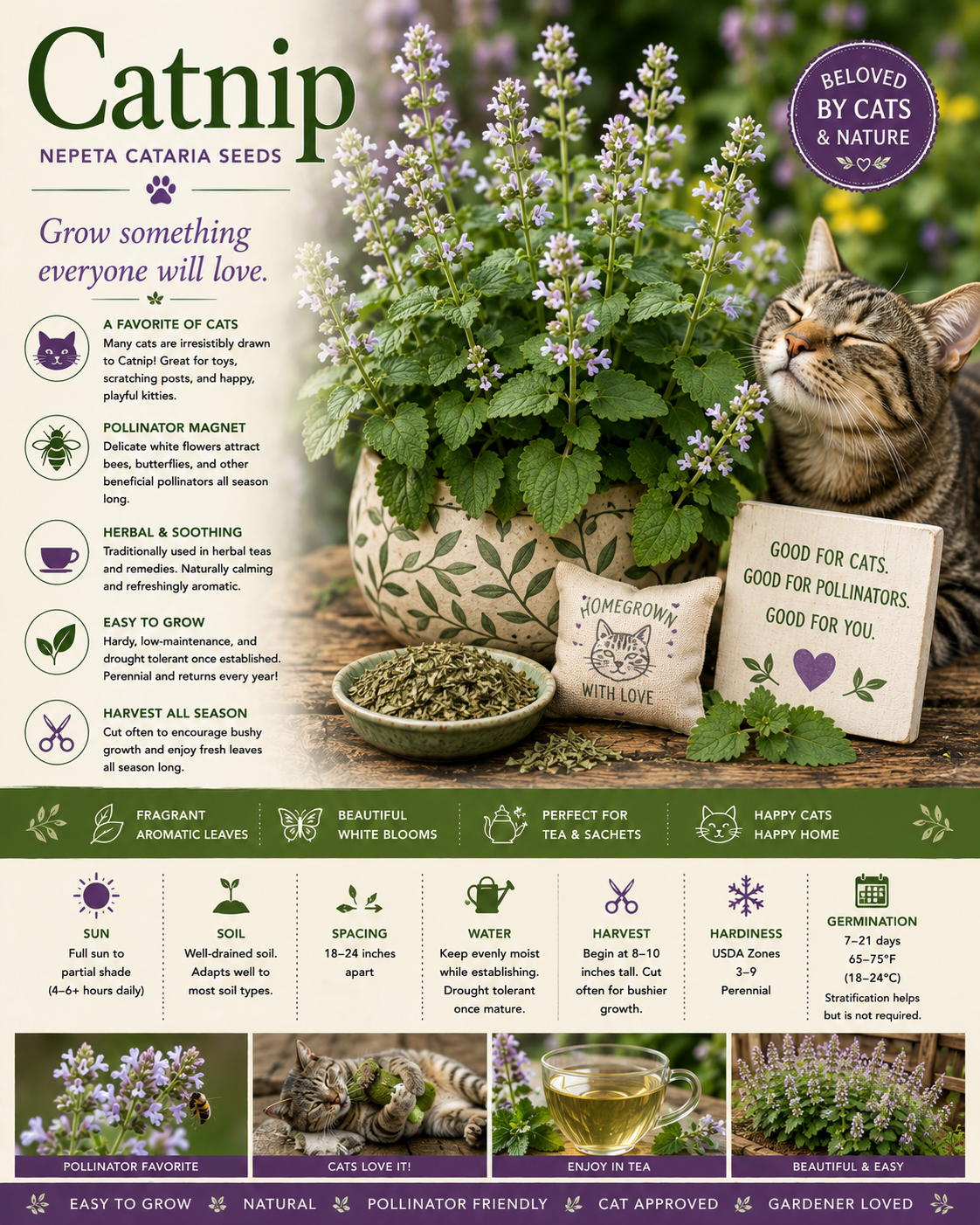
Catnip Seeds
Grow Something Everyone Will Love.
Some herbs are for the garden.
Catnip brings joy to people, pollinators, and cats alike.
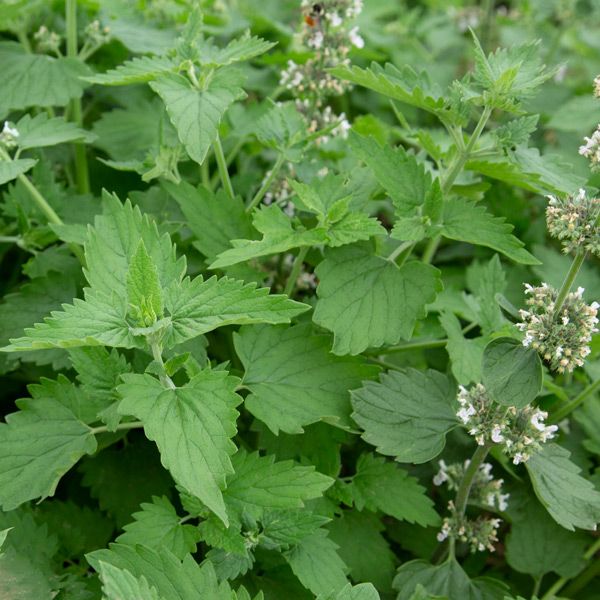
Best known for delighting our feline friends, Catnip is also one of the easiest and most rewarding herbs you can grow. Its fragrant gray-green leaves and clusters of delicate white flowers attract bees, butterflies, and other beneficial pollinators while providing a steady supply of fresh leaves for herbal tea, sachets, and homemade cat toys.
Whether you’re planting an herb garden, creating a pollinator haven, or treating your favorite cat to something homegrown, Catnip is a perennial you’ll enjoy for years.
Why Grow Catnip?
🐱 A favorite of cats.
Many cats are irresistibly drawn to Catnip thanks to a naturally occurring compound called nepetalactone, which can encourage playful behavior in many felines. While not every cat responds, those that do often find it irresistible.
🐝 A pollinator magnet.
Its nectar-rich flowers attract honey bees, native bees, butterflies, hoverflies, and many other beneficial insects throughout the growing season.
🌿 A traditional medicinal herb.
For centuries, Catnip has been used in traditional herbal practices, most commonly brewed as a calming herbal tea. Modern research has identified naturally occurring compounds—including nepetalactone, rosmarinic acid, and various flavonoids—that are being studied for their biological activity. While early findings are promising, more high-quality human research is needed before firm medical conclusions can be made.
🌸 Easy to grow.
Catnip is hardy, drought tolerant once established, and produces abundant fragrant foliage with very little maintenance.
✂️ Harvest all season.
Regular harvesting encourages bushier growth and provides fresh leaves throughout the growing season for drying, tea, or homemade enrichment for cats.
More Than Just a Cat Plant
A member of the mint family, Catnip has been cultivated for centuries throughout Europe and Asia before becoming naturalized across much of North America. Beyond its popularity with cats, gardeners value Catnip for its long bloom period, fragrant foliage, and ability to support a wide variety of beneficial insects.
Whether you’re harvesting leaves, watching bees visit the flowers, or entertaining your favorite feline, Catnip is one of the most versatile herbs you can grow.
Growing Information
Sun: Full sun to partial shade.
Soil: Well-drained soil. Catnip adapts well to sandy, loamy, and average garden soils.
Planting Depth: Sow seeds ⅛ inch deep or lightly press into the soil.
Spacing: 18–24 inches apart.
Water: Keep evenly moist while seedlings establish. Mature plants tolerate drought and prefer not to stay overly wet.
Harvest: Begin harvesting once plants reach 8–10 inches tall. Regular cutting encourages fuller, bushier growth.
Hardiness: USDA Zones 3–9. A hardy perennial that returns each spring.
Germination Tip
Catnip seeds often germinate more uniformly after 30 days of cold, moist stratification, though many gardeners achieve good results without it. Keep the soil consistently moist and warm (65–75°F / 18–24°C), and expect seedlings to emerge in 7–21 days.
Perfect For
- Herb gardens
- Pollinator gardens
- Tea gardens
- Cottage gardens
- Raised beds
- Containers
- Wildlife gardens
- Cat-friendly landscapes
Catnip pairs beautifully with echinacea, lavender, chamomile, lemon balm, salvia, bee balm, and many other flowering herbs and perennials.
Did You Know?
- About two-thirds of adult cats respond to Catnip, while many kittens under a few months old show little or no reaction.
- Nepetalactone, the compound responsible for attracting many cats, is also being studied for its insect-repelling properties.
- The flowers bloom for weeks, providing an excellent nectar source for bees and other pollinators.
- Regular trimming keeps plants compact and productive, extending both leaf harvests and flowering.
More Than Just a Treat for Cats
Every packet of Catnip seeds grows more than fragrant leaves.
It grows smiles for cat lovers.
Flowers buzzing with pollinators.
Fresh herbs for tea and homemade projects.
And one of the easiest perennial herbs you’ll ever grow.
Plant it once—and enjoy years of beauty, fragrance, happy pollinators, and happy cats.