


Description
Bouquet Dill Seeds
Fresh Flavor. Garden Favorite.
Some herbs season a meal.
Bouquet Dill brings your entire garden to life.
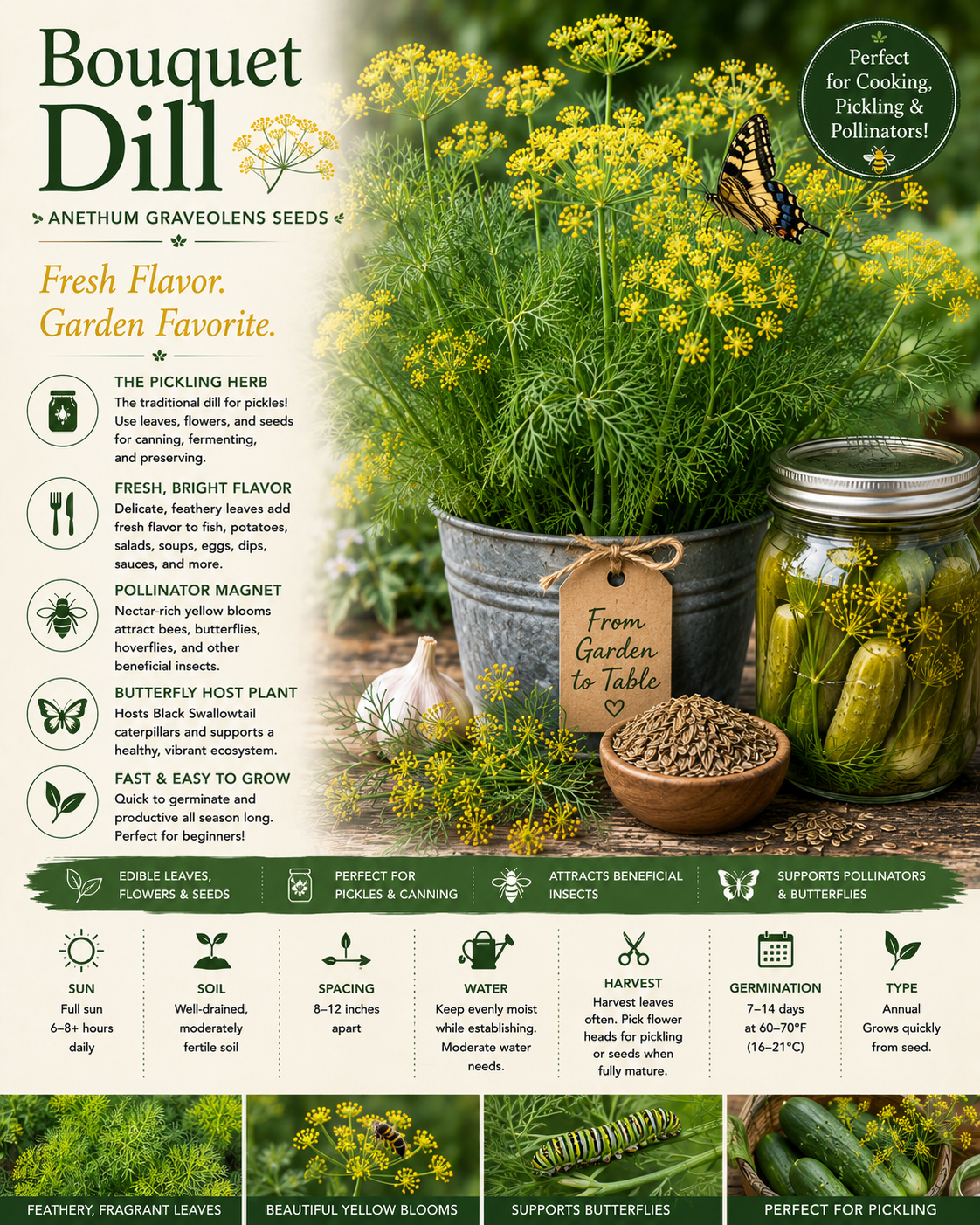
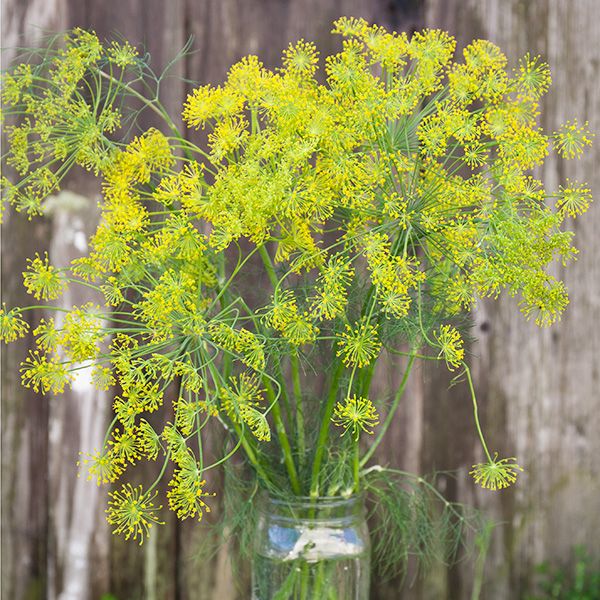
With its feathery blue-green foliage, bright yellow flower umbels, and unmistakable fresh aroma, Bouquet Dill is one of the easiest and most rewarding herbs you can grow. Harvest the delicate leaves for fresh cooking, the flower heads for pickling, and the seeds for seasoning—all while attracting butterflies, bees, and beneficial insects that help your garden thrive.
Whether you’re growing herbs for the kitchen, preserving your summer harvest, or creating a pollinator-friendly landscape, Bouquet Dill is an essential addition to every garden.
Why Grow Bouquet Dill?
🥒 The classic pickling herb.
Bouquet Dill is prized for its flavorful leaves, flower heads, and seeds, making it the preferred variety for homemade pickles, fermented vegetables, and canning.
🌿 Fresh flavor all season.
Its delicate leaves add bright, fresh flavor to seafood, potatoes, eggs, salads, soups, sauces, dressings, dips, and roasted vegetables.
🐝 A magnet for beneficial insects.
The nectar-rich yellow flowers attract honey bees, native bees, hoverflies, lacewings, parasitic wasps, butterflies, and many other beneficial insects that naturally support a healthy garden.
🦋 Supports Black Swallowtail butterflies.
Bouquet Dill serves as a host plant for the striking Black Swallowtail butterfly, whose caterpillars feed on the foliage before transforming into beautiful butterflies.
🌱 Fast-growing and productive.
Dill grows quickly from seed and often reaches harvest size in just a few weeks, making it one of the easiest herbs for gardeners of every experience level.
A Kitchen Garden Classic
Cultivated for thousands of years, dill has been valued across Europe, Asia, and the Mediterranean for both its culinary and traditional herbal uses. Its distinctive flavor comes from naturally occurring aromatic compounds including carvone, limonene, and dill ether, which give dill its fresh, slightly sweet aroma.
Today, Bouquet Dill remains one of the world’s most popular herbs for cooking, preserving, and supporting beneficial insects.
Growing Information
Sun: Full sun (6–8+ hours daily).
Soil: Well-drained, moderately fertile soil.
Planting Depth: Sow seeds ¼ inch deep.
Spacing: 8–12 inches apart.
Water: Keep the soil evenly moist while seedlings establish. Mature plants appreciate regular watering but tolerate short dry periods.
Harvest: Begin harvesting leaves once plants are 8–10 inches tall. Harvest flower heads before seeds fully mature for pickling, or allow seeds to ripen for seasoning and seed saving.
Hardiness: Typically grown as an annual in all climates.
Germination Tip
Bouquet Dill grows best when direct sown, as its long taproot dislikes transplanting. Sow seeds after the danger of frost has passed into soil warmed to at least 60°F (16°C). Keep the soil consistently moist, and expect seedlings to emerge within 7–14 days.
For a continuous harvest of fresh dill, sow a new row every 2–3 weeks through early summer.
Perfect For
- Kitchen gardens
- Herb gardens
- Raised beds
- Containers
- Pollinator gardens
- Butterfly gardens
- Companion planting
- Pickling gardens
Bouquet Dill grows beautifully alongside cucumbers, cabbage, onions, lettuce, asparagus, calendula, and many flowering annuals.
Did You Know?
- Every part of the plant is useful. The leaves, flowers, and seeds all have unique culinary uses.
- Bouquet Dill is a host plant for Black Swallowtail butterflies, making it one of the best herbs for butterfly gardens.
- Its flowers attract beneficial insects that help pollinate crops and naturally manage garden pests.
- Allowing a few plants to flower and set seed can provide volunteer seedlings for next season.
More Than Just an Herb
Every packet of Bouquet Dill seeds grows more than flavorful leaves.
It grows homemade pickles.
Fresh herbs for the kitchen.
Flowers buzzing with pollinators.
Butterflies for your garden.
And one of the easiest, most rewarding herbs you’ll harvest all season long.
Plant Bouquet Dill—and enjoy fresh flavor, happy pollinators, and abundant harvests from seed to table.