

Description
Criolla Sella Pepper Seeds
More Than Heat. This Pepper Has Flavor.
Some hot peppers are grown just to be hot.
Criolla Sella is grown because it tastes incredible.
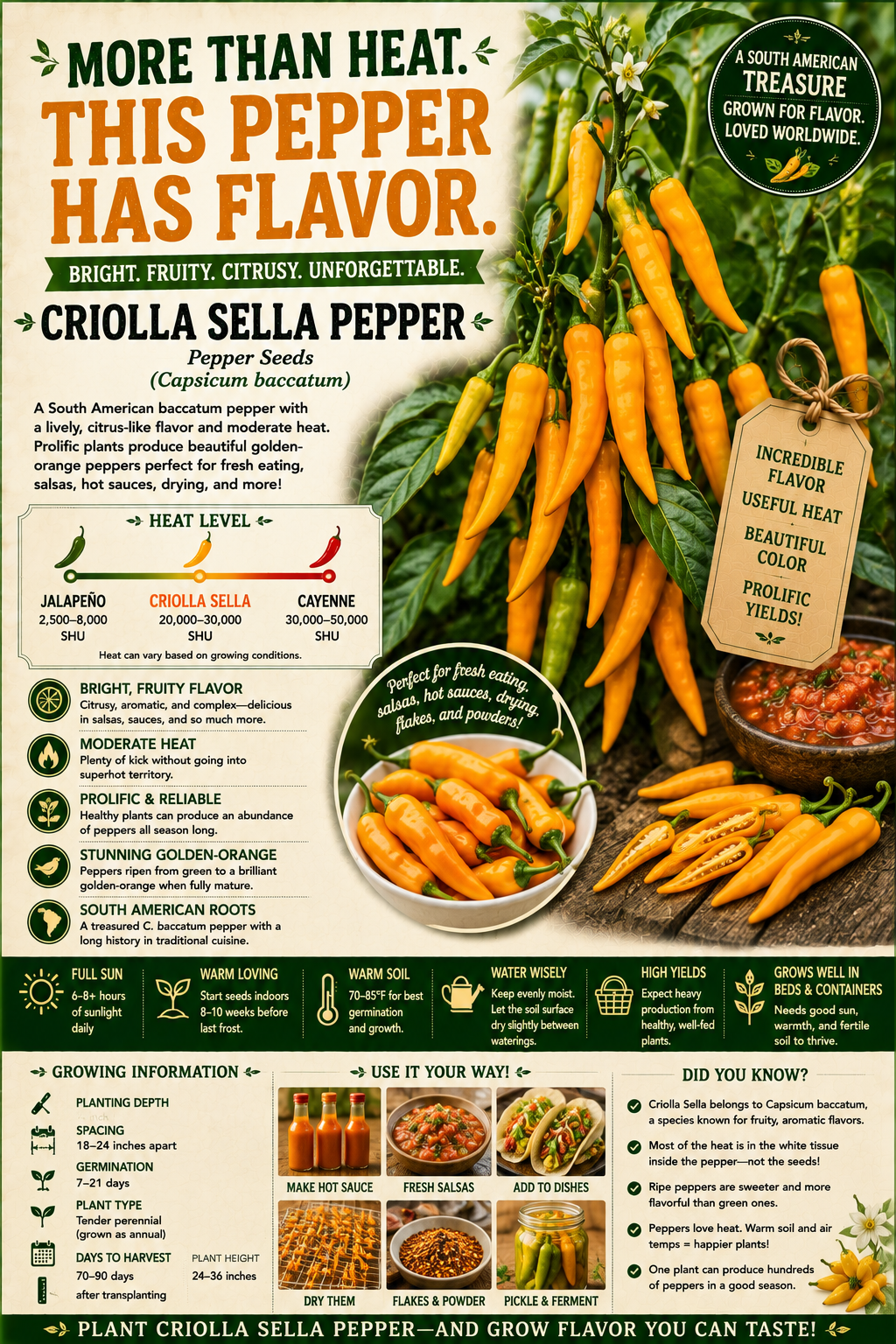
This South American Capsicum baccatum produces masses of slender peppers that ripen from green to a brilliant golden-orange. The heat is lively but approachable, accompanied by the bright, fruity, citrus-like flavor that makes C. baccatum peppers so distinctive.
Eat them fresh. Make hot sauce. Turn them into salsa. Dry them into colorful flakes and powder.
If you want a hot pepper that’s actually worth tasting, Criolla Sella belongs in the garden.
Why Grow Criolla Sella?
🌶️ Flavor comes first.
Criolla Sella combines noticeable heat with a bright, fruity character often described as citrusy—giving dishes flavor rather than simply making them hotter.
🔥 A useful level of heat.
Typically considered moderately hot, Criolla Sella brings plenty of kick without entering the extreme territory of superhot peppers.
🍊 Beautiful golden-orange fruit.
The slender peppers mature into brilliant orange-yellow fruits that practically glow against the green foliage.
🧺 Prolific producer.
Healthy plants can become loaded with peppers, providing plenty for fresh eating, cooking, preserving, drying, and hot sauce.
🌎 A South American pepper.
Criolla Sella belongs to Capsicum baccatum, a pepper species strongly associated with South American culinary traditions and the diverse group of peppers often called ají.
How Hot Is Criolla Sella?
Criolla Sella is commonly reported in the neighborhood of 20,000–30,000 Scoville Heat Units (SHU), although actual heat can vary considerably with genetics and growing conditions.
For perspective:
Jalapeño: roughly 2,500–8,000 SHU
Criolla Sella: roughly 20,000–30,000 SHU
Cayenne: roughly 30,000–50,000 SHU
Habanero: often 100,000–350,000 SHU
So expect real heat—but not superhot territory.
What Makes It Taste So Different?
Criolla Sella belongs to Capsicum baccatum, rather than the Capsicum annuum species that includes familiar peppers such as jalapeños and many bells.
Baccatum peppers are famous among pepper enthusiasts for their fruity, aromatic flavor profiles.
Their heat comes primarily from compounds called capsaicinoids, especially capsaicin and dihydrocapsaicin.
Interestingly, most of that heat isn’t produced in the seeds themselves.
It’s concentrated primarily in the pale internal tissue surrounding them.
Growing Information
Sun: Full sun — 6–8+ hours daily
Soil: Rich, fertile, well-drained soil
Planting Depth: Approximately ¼ inch
Spacing: Approximately 18–24 inches apart
Germination: Approximately 7–21 days with warm soil
Water: Water consistently, allowing the soil surface to dry slightly between waterings
Harvest: Pick green for a fresher flavor or allow peppers to fully ripen to golden-orange for maximum sweetness, fruitiness, and mature flavor
Life Cycle: Tender perennial generally grown as an annual in colder climates
Growing Tip
Peppers love warmth.
Start seeds indoors approximately 8–10 weeks before your last frost and keep the germination medium warm. A heat mat can dramatically improve the consistency and speed of pepper germination.
Don’t rush plants outside.
Wait until frost danger has passed and both daytime and nighttime temperatures have warmed.
From Garden to Kitchen
🌶️ Eat Them Fresh
Finely slice ripe peppers into tacos, sandwiches, salads, and other dishes that need a bright kick.
🥣 Make Salsa
The fruity heat pairs beautifully with tomatoes, tomatillos, onions, cilantro, lime, and tropical fruits.
🔥 Make Hot Sauce
Criolla Sella’s combination of heat and flavor makes it an outstanding hot-sauce pepper.
☀️ Dry Them
Fully ripe peppers can be dried and stored whole or crushed into beautiful golden pepper flakes.
🧂 Make Pepper Powder
Grind completely dried peppers into an intensely flavorful seasoning for year-round use.
Perfect For
- Homemade hot sauce
- Fresh salsa
- Pepper flakes
- Pepper powder
- Fermentation
- Pickling
- Tacos
- Marinades
- Containers
- Raised beds
- Hot pepper collections
Did You Know?
🌎 Not all peppers are the same species. Criolla Sella belongs to Capsicum baccatum, one of several domesticated pepper species.
🔥 The seeds aren’t actually the hottest part. Most capsaicinoids are produced in the internal placental tissue to which the seeds are attached.
🍊 Ripening changes more than color. As peppers mature, their sugars, aromas, pigments, and flavor compounds change—so green and fully ripe peppers can taste dramatically different.
🐝 Pepper flowers can self-pollinate. A single plant can produce fruit, although insects and movement can help distribute pollen.
🌱 Pepper plants are technically perennials. In frost-free conditions they can live beyond a single season, even though they’re usually grown as annuals in colder climates.
Grow Peppers for Flavor, Not Just Fire.
Criolla Sella has heat.
But that’s not what makes it special.
It’s the citrusy aroma.
The fruity flavor.
The brilliant golden color.
And the handful after handful of peppers you can turn into sauces, salsas, flakes, and seasonings.
Plant Criolla Sella—and discover how much flavor a hot pepper can actually have.